
By Reporter
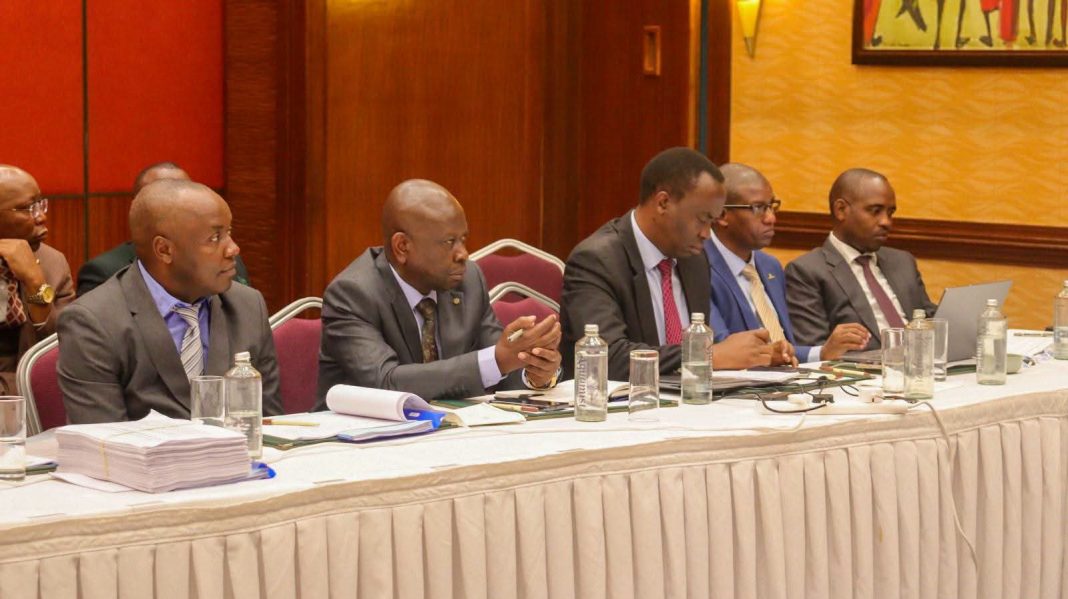
The Departmental Committee on Energy and Petroleum has sought clarification from the Kenya Power and Lighting Company (KPLC) over concerns surrounding procurement processes, contractor performance and changes to implementation sites under the Last Mile Connectivity Project.
During an oversight meeting with the utility’s management, Members of the National Assembly raised questions about the award of contracts to contractors previously associated with poor performance, as well as the reduction or removal of proposed electricity connection sites in rural constituencies.
Committee Chairperson Hon. David Gikaria (Nakuru Town East) called on KPLC to strengthen its due diligence processes to ensure that contractors awarded public projects have the technical and financial capacity to deliver.
“KPLC needs to do some due diligence in every procurement process. If you have conducted proper due diligence, you should have examined both the technical and financial capacity of the contractors. We should not find ourselves in situations where projects cannot progress because of issues that could have been identified earlier,” said Hon. Gikaria.
The Chairperson further urged the utility to review the performance records of contractors before awarding new tenders, noting that some firms previously flagged for non-performance or debarred by development partners had continued to secure contracts.
He clarified that the Committee’s oversight role was not intended to interfere with KPLC’s day-to-day operations but to ensure that public resources are utilised prudently and that procurement decisions support the timely delivery of electricity infrastructure.
Members also raised concerns over changes to project sites under the Last Mile Connectivity Project, particularly where communities had already been surveyed and residents’ identification documents collected in preparation for electricity connections.
Hon. Geoffrey Mulanya (Nambale) urged KPLC to strengthen consultation with Members of Parliament whenever project sites are reduced or relocated, noting that such changes affect communities that had already been given expectations of receiving electricity connections.
“When these sites are being reduced, the communities have already been surveyed and their documents collected. It is therefore important that you consult us and explain the reasons for the changes, particularly where funding constraints necessitate adjustments,” said Hon. Mulanya.
He cited an example from his constituency where a proposed connection site near his home was removed without prior communication, creating dissatisfaction among residents who had anticipated being connected to electricity.
“Sometimes, all that is required is to call us, sit down and consult so that we can agree on the way forward. This will help us manage community expectations and avoid unnecessary misunderstandings,” he added.
In its response, KPLC management acknowledged delays in implementing Phase Four of the Last Mile Connectivity Project, which had initially been scheduled for completion in October 2026. The utility said the revised completion target is June 2027.
Officials attributed the delays partly to administrative and financial constraints, including delays in the release of project funding and the extension of tax exemptions under the financing arrangements.
On funding, KPLC informed the Committee that it had submitted its request for the Financial Year 2026/27 project allocation in July 2026, but approval from the National Treasury was received in late October. The delay affected the processing of payments to contractors and consequently slowed project implementation.
The utility also explained that the extension of the French Development Agency (AFD) financing agreement was granted on November 18, 2026. The delay temporarily affected Value Added Tax and import duty exemptions for project materials held at customs, further contributing to implementation challenges.
To facilitate faster implementation, KPLC said it had established a dedicated bank account to support payments under 26 active Engineering, Procurement and Construction (EPC) contracts.
The contracts comprise 17 European Union-funded lots valued at KSh17 billion and nine European Investment Bank-funded lots worth KSh7.9 billion.
The utility informed the Committee that KSh4.4 billion, representing 68 per cent of the disbursements, had so far been paid directly through the dedicated account.
The Committee emphasised the importance of strengthening procurement oversight, improving coordination with elected leaders and ensuring that funding and implementation challenges do not unnecessarily delay access to electricity for communities targeted under the Last Mile Connectivity Project.