By Anderson Ojwang
Today, ODM marks two important events: the celebration of its 20th anniversary and the end of the 30-day period of mourning for the party leader, the late Raila Amolo Odinga.
But as party members and leaders gather in Mombasa today—where founder members including President William Ruto, Najib Balala, among others, will converge—the party is witnessing the emergence of leftist and rightist wings.
A Nigerian proverb aptly captures the moment: “When the mad man starts dancing in the market, those who know him watch the drums.”
ODM turns 20 at a moment when the drums inside the movement are beating in different directions.
The party that once marched as a single, defiant force behind Raila Odinga is today a mosaic of competing visions, rival power blocs, and ideological realignments redefining its future.
What unfolded in Mombasa during the anniversary celebrations was not mere celebration; it was a revealing X-ray of a party in transition.
The Leftists: Reclaiming the Opposition Mantle
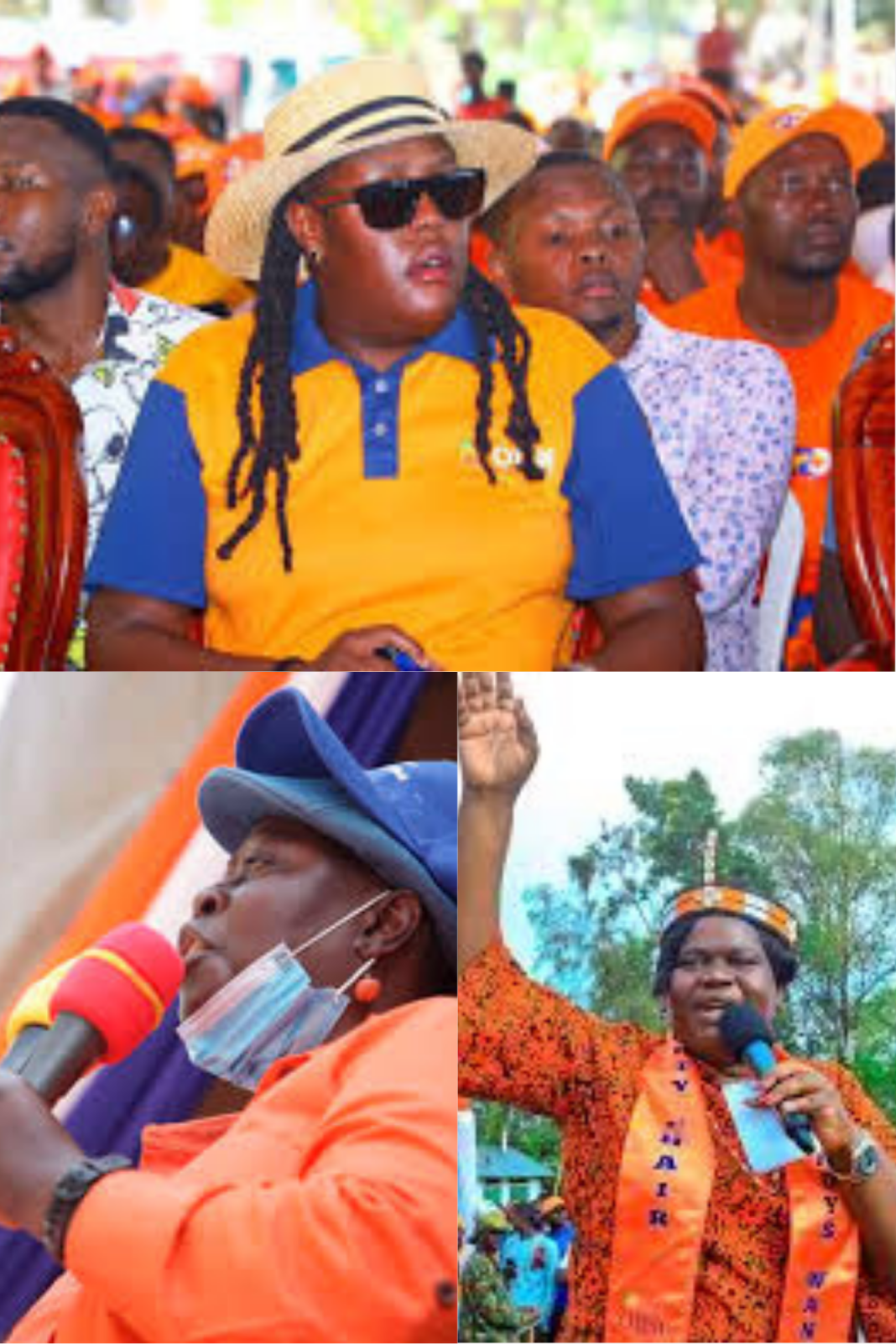
A bold, youthful, and outspoken bloc—anchored by Winnie Odinga, Babu Owino, Edwin Sifuna and backed by Siaya Governor James Orengo and Kisumu Governor Prof. Anyang’ Nyong’o—has moved to redefine ODM’s identity.
Their argument is simple and uncompromising:
ODM must field a presidential candidate in 2027, and the campaign must begin now!
“I hear that there are those who walk with us during the day and at night they want to sell the party. This cannot happen. ODM was not born in a boardroom, it was not made in a bedroom. So its future will not be discussed as pillow talk. ODM was born from protest. We are sorry because we do not know how to get it right. ODM belongs to the people,” Winnie Odinga said.
This faction believes the party risks fading into irrelevance if it abandons its traditional oppositional posture. They accuse party leaders collaborating with the government of diluting ODM’s legacy, weakening its structures, and confusing its constituents. Their tone is radical, their messaging confrontational, and their intent unmistakable: they want to ignite the Orange flame once more—the people-driven flame.
Orengo capped it when he said: “ODM party is a party for the people. A movement rising with renewed strength, unity, and purpose, more powerful than ever before. Rooted in the struggles and hopes of the ordinary citizens, ODM is stepping into a new era where the people’s voice drives every decision, shapes every reform, and fuels unstoppable momentum for real change.”
The Rightists: Cooperation Over Confrontation
On the opposite flank is a contrasting school of thought. Led by Gladys Wanga and other state-aligned leaders, and buoyed by the newly confirmed party chair Dr. Oburu Odinga, the Rightists see political stability—not agitation—as the path to relevance.
In Wanga’s camp are CS John Mbadi and his counterpart Opiyo Wandayi; others are Sam Atandi, Junet Mohammed, Opondo Kaluma, among others.
To them, cooperating with President William Ruto is not betrayal; it is strategic survival.
This faction believes:
- Ruto’s re-election in 2027 is already taking shape
- ODM must secure development space and negotiation leverage
- Hostility will only isolate the party further
Their motto is pragmatic: stay close to power today to remain viable tomorrow.
Junet wrote on his X handle: “We remain united, steadfast, and committed to the partnership between the ODM party and UDA, and will continue to support the broad-based government under President William Ruto.”
The Centre: A Quiet Middle Holding the Dam Together
Between these rival poles sits a quieter, emerging bloc—figures like Adhiambo Odinga and several moderate MPs who neither want to burn bridges nor rush succession battles. They fear that a premature contest for Raila’s mantle could fracture ODM beyond repair.
Their proposal is measured:
A structured, orderly transition, guided by Raila’s guiding angel vox dei vox populi—the people’s voice as the voice of God—not by panic or political hunger.
Whether this centrist force can withstand pressure from both left and right remains to be seen, but their stabilizing posture may be the only glue preventing the Orange house from splitting entirely.
A Party in Search of Its Compass
ODM’s current fragmentation is not merely ideological—it is existential.
The unanswered question of leadership after Raila hangs over every conversation, every mobilization, and every public statement. For two decades, his authority was the ODM’s anchor. Today, that anchor is a seed yet to germinate, whose true fruits will take shape in season—yes, not out of it—the source of both reassurance and anxiety.
Leftists want a successor now.
Rightists want to delay that conversation indefinitely.
Centrists want the voice of the people to be their radar and want Raila to supervise the transition himself.
ODM at 20, therefore, is not just a celebration; it is an inflection point.
The Road Ahead: Renewal or Rupture?
The party’s future will depend on:
- How the emerging ODM political rifts navigate its future compass, whether strategic or reluctant.
- Whether internal elections bring clarity or deepen divisions.
- Whether ODM can redefine itself without mimicking either UDA or being trapped by nostalgia.
A movement that once defined opposition politics is slowly becoming a mosaic—beautiful, complex, but fragile. The question is whether ODM’s leadership will treat this mosaic as art to be preserved or as broken glass to be swept aside.
ODM at 20 is a reminder of both its historic triumphs and its looming crossroads.
And as the Nigerian proverb warns, when a familiar dancer moves to unfamiliar drums, it is the watchers—not the dancer—who must decide what the future rhythm will be.