By James Okoth
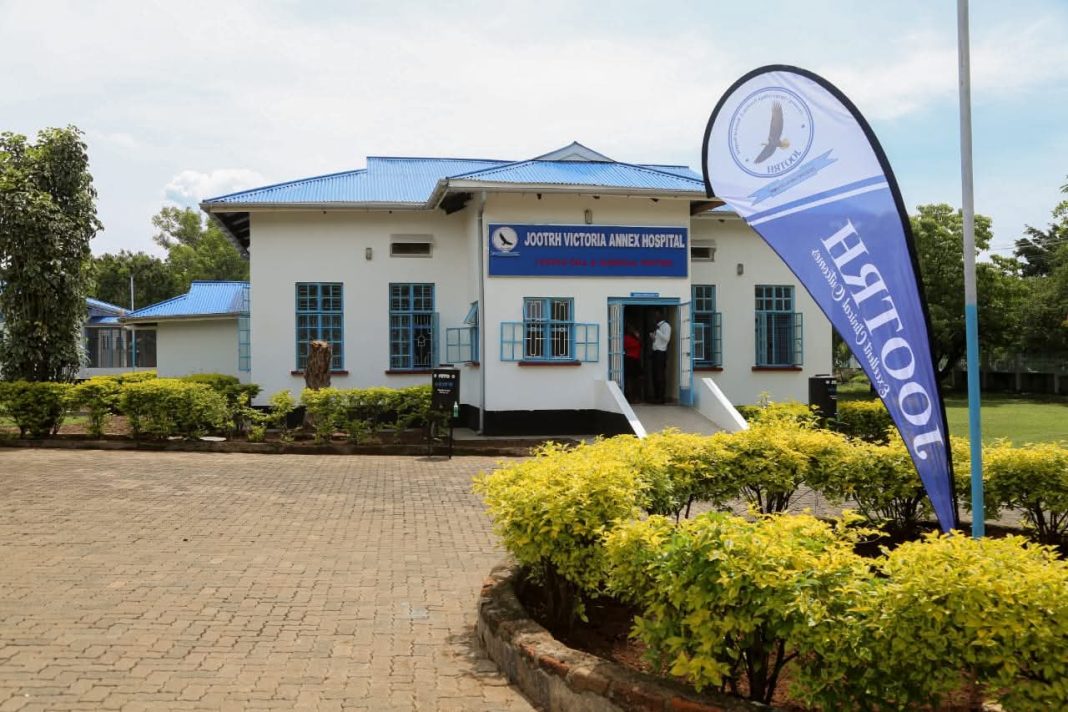
When 27-year-old Mitchelle Omullo, a vibrant sickle cell warrior and advocate, picked up her phone to call her doctor at Victoria Annex Hospital in Kisumu, she had only one request, to confirm her admission for a lifesaving medical procedure known as apheresis.
Apheresis is a medical process that removes sickled blood cells from the bloodstream and replaces them with healthy ones, preventing stroke, organ failure and other severe complications common in sickle cell disease (SCD). For Mitchelle, who undergoes the procedure every three months, it is not optional but a thin line between stability and crisis.
But this time, the line broke.
“The doctor told me the procedure could not go on,” Mitchelle says, her voice subdued but firm. “The team from Nairobi West Hospital, who bring the machine and doctors, can’t come because previous sessions haven’t been paid for. I was supposed to be done this week, but now I don’t know what will happen.”
The machine, owned by Nairobi West Hospital and operated in partnership with Terumo Blood Cell Technologies, had been used on five patients in Kisumu before the program was abruptly halted due to unpaid bills. With that, a vital lifeline for many warriors in the Lake Region was severed.
Behind the glowing headlines of progress and well-publicized ribbon-cuttings, Mitchelle’s story lays bare a stark truth on Kenya’s health system and how it remains unprepared, underfunded and dangerously dependent on short-term partnerships to manage chronic and life-threatening diseases.
The Hidden Epidemic
Kisumu County, home to the newly established Centre for Sickle Cell Disease at Victoria Annex, was meant to be a model of specialized care outside Nairobi. Yet, the crisis facing Mitchelle is a grim reflection of what thousands of families endure daily across the region.
Sickle cell disease, a genetic disorder that distorts red blood cells, is rampant in western Kenya. Experts estimate that 1.5–4 percent of newborns in Kisumu are born with SCD and without consistent care, many do not live to see their fifth birthday.
For years, health advocates have pleaded for structured funding and full integration of SCD care into public health systems. Yet, despite bold speeches and budget promises, the plight of these warriors continues to be defined by unfulfilled commitments and avoidable suffering.
When Help Doesn’t Reach the Villages
While Mitchelle battles logistical barriers in Kisumu city, Hellen, a phillanthropist and community health champion running a modest facility in the rural outskirts, has been confronting another dimension of the crisis — the silent deaths and daily struggles of sickle cell patients in forgotten villages.
“Recently, during a school meeting at Koredo Mixed Secondary, I saw a girl I had once supported with school fees,” Hellen recounts. “She looked visibly unwell. From her appearance, I could tell she might be a sickler. I sent her to a local facility, but she was turned away because she had no money or insurance.”
That encounter opened a floodgate. In just one day, Hellen identified 12 children with sickle cell disease from Koredo, Kanam and Kanjira, with some already in crisis.
“I had to pay for boda bodas to bring the sick children,” she recalls. “A week later, in Nyakach, I met a 17-year-old girl in severe pain. She, too, was a sickler, and the nearby pharmacies had no drugs. Within minutes, more children appeared, all in need of help.” She said.
Since that day, calls have poured in from Kauma, Kanyipir, Kochia and beyond, parents begging for medicines, pain relief and attention. But with no government support or donor funding, Hellen’s small facility is now overwhelmed, forced to turn away patients she knows may not survive without treatment.
A System Built on Promises
Both Mitchelle’s and Hellen’s stories paint a painful picture of extremes of neglect ranging from urban bureaucratic paralysis to rural abandonment.
In Kisumu city, the county’s flagship facility for SCD is idle, waiting for unpaid bills to be settled. In the villages, children are collapsing in classrooms, untreated, unseen and uncounted.
“Every delay is life and death,” Mitchelle says. “We’ve made progress, but we are not there yet. Sickle cell warriors need consistent care, not promises.”
County Health minister, Dr. Gregory Ganda, has previously acknowledged the magnitude of the problem, calling the Victoria Annex Centre a bridge between specialized care and community needs. Yet, the current breakdown shows that bridge is dangerously unstable.
The Cost of Delay
Each apheresis session costs tens of thousands of shillings. This is an impossible sum for most families and since the Nairobi West Hospital team suspended operations, patients like Mitchelle face indefinite delays, risking deadly complications.
At the same time, children in rural communities are succumbing quietly, with no ambulances, no pain relief and no specialized clinics within reach. Many have never even been officially diagnosed.
Advocates are calling on both county and national governments to:
- Clear pending payments and immediately resume apheresis services.
- Equip Victoria Annex Hospital with a permanent in-house apheresis machine.
- Expand community screening and treatment programs across rural Kisumu, Homabay, and Siaya.
- Integrate SCD treatment into Kenya’s universal health coverage to reduce out-of-pocket costs. The Human Toll
Behind every statistic is a name, a story and a family hanging on to hope.
Hellen’s voice trembles as she remembers the faces of the children she couldn’t help.
“They keep calling,” she says softly. “Sometimes I switch off my phone because I have no medicine to give them. You feel helpless.”
Mitchelle, too, carries the weight of a generation fighting for recognition.
“We are not asking for miracles,” she says. “We’re asking for systems that work because our lives depend on it.”
The Final Word
From the polished corridors of Kisumu’s health offices to the dusty classrooms of Koredo, the message is the same: sickle cell warriors are dying in silence.
They are not dying because medicine doesn’t exist but because bureaucracy, neglect and empty promises continue to choke the system meant to save them.
Until Kenya treats sickle cell disease not as a side note in health policy but as a national emergency, more warriors like Mitchelle and more children in forgotten villages will continue to fight battles they should never have to fight alone.