
By Billy Mijungu
I am disturbed by how politics, which is the highest level of public service and a legitimate career, is often treated like leprosy. Yet politics is not only lawful but central to how modern states function.
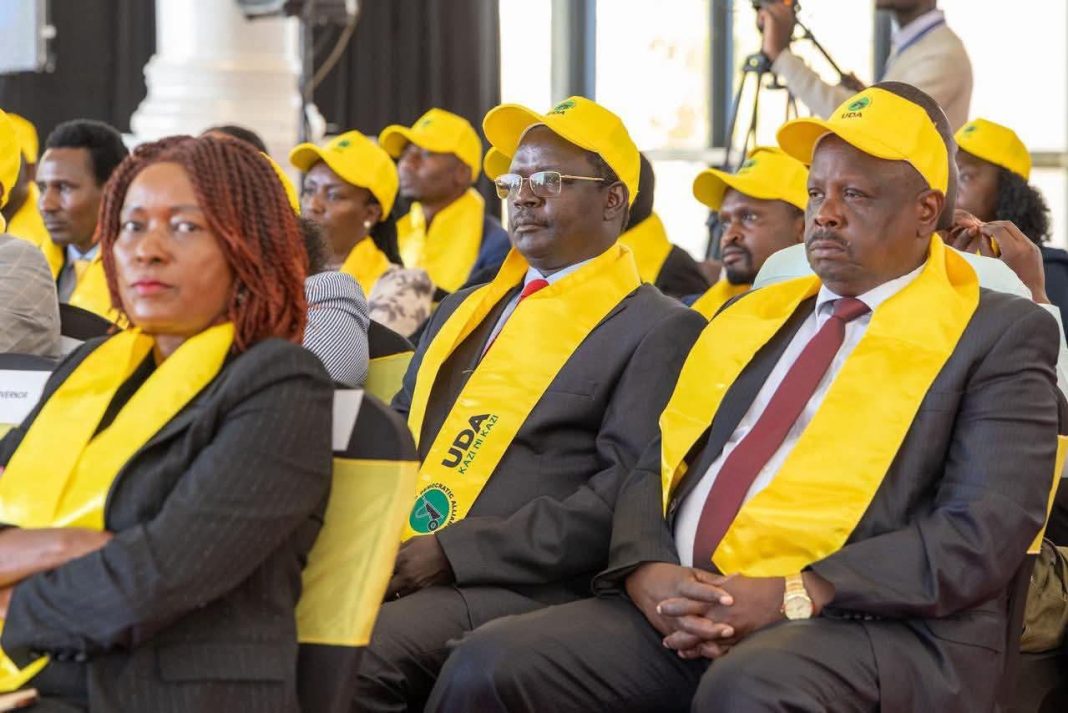
First, political parties are public entities. They receive funding from the exchequer precisely because they serve the public good. They are not private clubs. They are constitutional instruments meant to organize political participation and governance.
Political parties are the vehicles through which state affairs are managed. A party manifesto is not mere campaign rhetoric. Once a party assumes power, its manifesto is translated into public policy, legislation, and government programs that affect every citizen.
In practice, the ruling party commands the majority. Consequently, when public representatives are appointed, especially to boards and constitutional commissions, they are often drawn from the ruling party. This is neither accidental nor illegal. It is how representative governance operates. Employer commissions offer a clear example of this reality.
Kenya is a unitary state. Constitutionally, there is no legally executing opposition government. What exists are the majority in government, the minority in government, and other entities from different political parties who together make decisions through Parliament, which is the second arm of government.
The key insight is that political party differences are ideological, not personal. Participation in politics should precipitate debate based on ideas, policies, and philosophies, not anger, hostility, or personal warfare. Politics is a contest of ideas, a battle of minds, not a vendetta.
Against this backdrop, the appointment of Isaac Ruto by the President from the ruling party UDA as a public representative is lawful and proper. The law allows every Kenyan to belong to a political party. Even where one does not publicly announce party affiliation, association can often be inferred from political history, ideology, or regional voting patterns. In Kenya’s context, this is not unusual. Pretending otherwise is intellectual dishonesty.
Expecting individuals in public service to participate silently or to appear neutral to the point of having no ideological position is a form of pretence. Kenya remains, first and foremost, an ethnic-centric society, a reality the Constitution itself acknowledges by requiring balance in the interest of national unity.
Deliberate compositions in boards, commissions, Cabinet, and Parliament are intentional mosaics of different political parties and communities. This is known, accepted, and constitutionally managed. Openly identifying with an ideology or political position does not make one partisan in a negative sense. It makes one honest.
Politics is the most important and most difficult job in any society. Anyone who joins it deserves recognition, not suspicion. It is a calling that determines whether a country grows, stagnates, or fails. A nation’s identity and trajectory are shaped through political leadership.
Maturity in democracy means openly standing for something and being known for an ideological position. In the United States, even local police chiefs are elected. Judges are appointed based on ideological leanings, and presidents appoint individuals not only on merit but also on ideological alignment. Let us not pretend we are different from who we are.
As Chair of the Council of Governors, Isaac Ruto defended devolution regardless of his political persuasion at the time. That record stands. Our differences are ideological, and those ideologies are articulated and sustained through political parties. That is not partisanship. That is politics.
Follow on Facebook, X, Instagram, TikTok, and LinkedIn: @BillyMijungu #Forward #TusongeMbele