
By Anderson Ojwang
With only five days to the end of the first year of the Memorandum of Understanding (MoU) signed between the Orange Democratic Movement (ODM) of the late Raila Amolo Odinga and the United Democratic Alliance (UDA) of President William Ruto, we delve into the successes and failures as we head to the review.
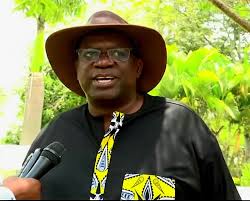
In this interactive interview, we engaged former Alego MP Sam Weya, who gives his view and verdict on the arrangement ahead of the review.
Q1: Why did ODM enter the framework?
Hon. Weya: On this day one year ago, ODM entered into a structured national cooperation framework with the government.
Our decision was guided by three principles:
• Safeguarding national stability
• Advancing constitutional and institutional reforms
• Protecting Kenyans from economic and governance excesses
This was not a coalition arrangement.
It was not a power-sharing agreement.
It was a reform-centered framework designed to de-escalate political tension and deliver measurable change.
Today, we present a factual progress review.
Q2: When and for how long was the MoU valid?
Hon. Weya:
• The MoU was signed on 7 March 2025 at the Kenyatta International Convention Centre.
• It was intended as a framework of cooperation and reform between ODM and UDA, not a formal coalition agreement.
• According to political statements, the agreement was set to run for one year and officially expire on 7 March 2026 — exactly one year after signing.
• Part of the pact required bi-monthly progress reports and a final implementation report due by the March 2026 deadline.
So the duration was roughly one year, with milestones and a final review scheduled for March 7, 2026.
Q3: What were the 10 points in the agenda?
Hon. Weya: The MoU’s 10-point agenda focused mainly on governance reforms and national cohesion rather than on elections or party alliances. Here they are in summary:
- Full implementation of the National Dialogue Committee (NADCO) report.
- Inclusivity in budgetary allocations and public appointments.
- Protecting and strengthening devolution.
- Economic investment in youth opportunities (e.g., agriculture, ICT, blue economy).
- Leadership integrity and ending opulence in public office.
- Protection of the right to peaceful assembly and compensation for past rights violations.
- Forensic audit of national debt and how it was used.
- Intensified fight against corruption.
- Stopping wasteful public spending.
- Protecting sovereignty, the rule of law, constitutionalism, and press freedom.
Q4: Why is it seen as “nothing has been achieved”?
Hon. Weya: Many observers and ODM leaders argued that by late February 2026, the committee responsible for implementing these reforms had not produced clear outcomes and was under pressure to show progress.
Some key issues noted in coverage and commentary included:
• The implementation committee was late in submitting a complete review.
• Critics said the UDA government wasn’t serious about honoring the pact.
• There was internal ODM disagreement on whether the deal was delivering for the public.
Q5: Given limited progress, what should ODM do?
Hon. Weya: This is ultimately a political judgment, but here are reasonable options ODM could consider based on democratic practice and political strategy:
a) Insist on accountability
ODM could publicly demand full transparency on what has (and hasn’t) been delivered on each of the 10 points, using the March 2026 review as leverage.
b) Use political leverage
If the government has not delivered, ODM can use parliamentary tools (debates, oversight committees) to press for concrete action.
c) Clarify its political positioning
Because the MoU focused on reforms rather than an electoral pact, ODM can publicly clarify what it plans for the 2027 General Election — whether it will run its own candidate, support a coalition, or negotiate a new agreement.
d) Propose a fresh framework or coalition
If both sides still see value in cooperation, ODM could propose a new or updated framework with clearer deliverables, timelines, and accountability mechanisms.
e) Reaffirm its independence
ODM can reaffirm its party’s autonomy and commitments to its supporters, especially if the MoU’s goals were not met.
Overall View
Hon. Weya:
• The ODM–UDA MoU was a one-year political cooperation agreement from March 2025 to March 2026.
• It outlined a 10-point reform agenda mainly about governance, inclusion, devolution, and rights.
• Implementation stalled, and many feel little progress was made.
• ODM’s options include pushing for accountability, defining its 2027 strategy, or renegotiating cooperation.
ODM Side – Criticisms & Internal Reactions
1️⃣ “Implementation Has Stalled”
Several ODM leaders argued that the agreement did not translate into measurable reforms, especially on:
• Cost-of-living relief
• Audit of public debt
• Protection of civil liberties
• Full implementation of the NADCO report
They claimed the government slowed down reforms once political tensions eased.
2️⃣ Edwin Sifuna’s Position
ODM Secretary General Edwin Sifuna was publicly cautious about extending or softening the agreement.
His key concerns included:
• Lack of structured reporting on progress
• Risk of ODM appearing absorbed into government
• Fear that the party was losing its oversight identity
He maintained the MoU was not a coalition but a reform framework — and should be judged strictly on deliverables.
3️⃣ James Orengo’s Criticism
Siaya Governor James Orengo was among those openly critical.
He suggested:
• The government was not fully committed to structural reforms
• ODM risked weakening its opposition credentials
• Grassroots supporters were confused about ODM’s political direction
Grassroots Discontent
At the county level, some ODM supporters felt:
• The party had “softened” toward the government
• Economic hardships had not reduced
• There was no visible dividend for supporting the cooperation
This created internal pressure for ODM to redefine its political position before 2027.
UDA / Government Side – Responses & Position
“The MoU Was About Stability”
Supporters of President William Ruto argued:
• The agreement helped cool post-election tensions
• It created space for economic recovery
• It reduced street protests and political instability
From their view, the drop in political temperature was itself a success.
Reform Takes Time
UDA figures maintained:
• Constitutional and fiscal reforms require parliamentary processes
• Some NADCO proposals needed legal amendments
• Economic reforms cannot be instant
They argued expectations were unrealistic within one year.
Not a Power-Sharing Deal
Government allies emphasized:
• It was not a handshake-style power-sharing pact
• ODM was not formally in government
• Cooperation did not mean shared executive authority
This was meant to counter claims that ODM had “joined the government.”
Cure for Political Tension
The disagreement boiled down to three issues:
ODM Concern | UDA Response
No visible reform progress | Reform is gradual
Risk of losing opposition identity | Cooperation ≠ coalition
Grassroots dissatisfaction | Stability benefits everyone
Politically, What This Means for ODM
Hon. Weya: Given the mixed reactions, ODM faces three strategic choices:
- Reassert opposition strength — distance itself clearly and resume aggressive oversight.
- Demand measurable benchmarks — publish a public scorecard on each MoU item.
- Redefine its 2027 position early — clarify whether it remains a reform partner, independent challenger, or coalition negotiator.
THE 10-POINT REFORM AGENDA: STATUS REVIEW
A. Cost-of-Living Relief
Commitment: Immediate measures to ease economic hardship.
Status:
• Limited interventions implemented.
• No sustained structural reduction in household costs.
• Fuel, food, and essential commodities remain high.
ODM Position: Stabilization without tangible relief is incomplete. Immediate fiscal and tax policy review is required.
B. Audit & Transparency of Public Debt
Commitment: Transparent audit and publication of debt obligations.
Status:
• No comprehensive independent audit publicly tabled.
• Public debt trajectory remains unclear to citizens.
ODM Position: A time-bound, independent audit process must be initiated and reported to Parliament.
C. Protection of Civil Liberties
Commitment: Safeguarding constitutional rights and lawful protest.
Status:
• Reduced political tensions.
• However, isolated concerns persist regarding enforcement standards.
ODM Position: Institutional safeguards must be formalized, not dependent on political goodwill.
D. NADCO Report Implementation
Commitment: Structured implementation of the NADCO proposals.
Status:
• Select legislative discussions initiated.
• Core constitutional and electoral reforms remain pending.
ODM Position: A clear legislative timetable must be published and adhered to.
WHAT HAS BEEN ACHIEVED?
Hon. Weya: ODM acknowledges:
• Political temperature has significantly reduced.
• National dialogue space remains open.
• Parliamentary processes on certain reform areas have begun.
National stability is a shared achievement — and ODM played a central role in securing it.
WHAT REMAINS UNACCOMPLISHED?
Hon. Weya: However, stability alone cannot be the final objective.
The following remain insufficiently addressed:
• Concrete cost-of-living relief
• Structured debt transparency
• Full NADCO implementation
• Institutional reform timelines
Kenyans must see reform outcomes — not just reform conversations.
ODM’S WAY FORWARD
Hon. Weya: ODM now proposes the following steps:
1️⃣ Public Reform Scorecard
A jointly published implementation tracker with measurable milestones.
2️⃣ Time-Bound Legislative Calendar
Clear deadlines for each pending reform item.
3️⃣ Economic Relief Framework
Immediate cross-party parliamentary engagement on tax and cost-of-living interventions.
4️⃣ Accountability Clause
Should agreed benchmarks remain unmet within defined timelines, ODM will re-evaluate its engagement framework.
REAFFIRMING ODM’S IDENTITY
Hon. Weya: ODM remains:
• A reform movement
• A constitutional defender
• A national stability anchor
• An independent political party
Cooperation does not mean absorption.
Engagement does not mean surrender.
Stability does not replace accountability.
MESSAGE TO KENYANS
Hon. Weya: ODM chose dialogue to protect Kenya.
We now insist on delivery to protect Kenyans.
We remain committed to:
• Democratic integrity
• Economic justice
• Devolution
• Institutional reform
Our loyalty is to the Constitution and the people — not to convenience or political comfort.
CONCLUSION
March 7, 2026 marks a review point — not an endpoint.
ODM will continue to pursue reform responsibly.
But reform must now move from discussion to implementation.