
By Habil Onyango
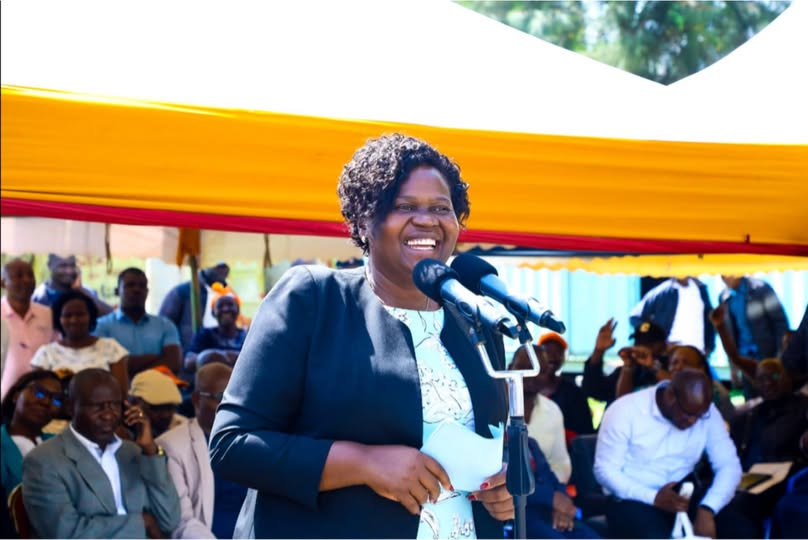
On Tuesday, Homa Bay County Governor Gladys Wanga appeared before the Senate Public Accounts Committee (CPAC), chaired by Senator Moses Kajwang, to discuss the implementation status of recommendations from the Auditor General’s reports for the 2024/2025 financial year. Initially, the Governor and her team had boycotted the committee’s session following directives from the Council of Governors.
“We have embraced the audit process as an indispensable tool for improving systems, strengthening internal controls, and ensuring value for money in public expenditure to deliver better services to our people,” said Wanga.
The committee pressed Wanga to explain her report on the lawful and effective use of public resources. The Auditor General questioned the expenditure of Ksh1,616,696,508 under the Facilities Improvement Financing (FIF) Act, 2023, citing non-compliance.
During the review of revenue records from Level 4 and Level 5 health facilities in Homa Bay County, the Auditor General found that 24 health facilities had collected a total of Ksh1,616,696,507 for facility improvements. Of this amount, Ksh915,941,725 was transferred to the FIF Special Purpose Account (SPA) at the Health Department. However, the Auditor General reported that the FIF SPA reimbursed only Ksh687,007,505 to the health facilities, resulting in a deficit of Ksh228,934,221. This situation contravened Section 5(1) of the Facilities Improvement Financing Act, 2023, which mandates that all funds raised by public health facilities must be retained within the Hospital Facilities Improvement Financing account.
“The failure to reimburse the full amount negatively impacted service delivery at the health facilities,” noted the Auditor General.
Wanga clarified that the county government had retained 20 percent of the total amount transferred to the FIF SPA. She explained that out of the total transferred, Ksh193,188,345 was lawfully retained and utilised within the healthcare sector. This retained money funded programmes such as supervising health facilities and providing support for Level 3 and 4 facilities.
Wanga also stated that the remaining Ksh687,007,504 was reimbursed to the facilities during the financial year.
“As of June 2025, Ksh45,745,875 remained unreimbursed, which formed part of the cash and cash equivalent balance of Ksh76,144,115 disclosed in the SPA balance,” Wanga informed the committee. “However, these funds were later reimbursed to the facilities in July 2025,” she added.
The Auditor General pointed out that the National Law under the FIF Act, 2023, requires that all funds collected be retained at the facilities. He noted a conflict between National and County Government laws, suggesting a need to amend the Act. According to the Auditor General, the management of the County Executive was in breach of the law by retaining 20 percent of the total FIF collections for Homa Bay, which was not aligned with National laws. Nyamira Senator Okong’o Omogeni questioned the rationale behind the 20 percent retention.
Wanga explained that when drafting the Facilities Improvement Bill, they adopted a standard legislative template circulated among the counties. “The retained money is used for supervision and support for lower-level facilities within the catchment area of Level 4 facilities, and that is the rationale behind this retention,” she informed the Senate committee. “This was a countrywide approach that we adapted for Homa Bay,” she said.
Omogeni advised that issues related to health should be discussed further between the Senate and the Council of Governors. He suggested that if the retention of 20 percent improves health service provision, the National law could be amended accordingly.
However, Kajwang noted that the Senate passed laws intending to ensure that money collected from facilities is reinvested there. “In the hierarchy of laws, National laws are superior to County laws, and if there is a need for further discussions, the Senate is open to engagement,” said the Chairman.
Wanga highlighted that the appearance of a breach in National laws results from the conflict between National and County laws, which may not fit all counties uniformly. She revealed that they are currently working on amending their own laws to align with national legislation. “All these efforts are aimed at improving service delivery and ensuring compliance,” Wanga said.
The Senate, however, raised concerns about the Ksh700 million discrepancy between the funds deposited in the FIF SPA and the money reimbursed to the facilities.
According to the Auditor General, Ksh1.6 billion had been collected from the 24 health facilities; however, the county government reported only Ksh915 million.
The Senate inquired whether the funds were classified as expenditures at the source.
However, according to Wanga, health facilities report the amounts they have claimed from the SHA as their revenue, rather than what the SHA has actually reimbursed them at any given time.
“They may report these amounts in their records, but based on the claims, they have not received the reimbursements,” she clarified.
“While every treatment leads to a claim being filed, the money does not necessarily come back to them promptly. Sometimes, we have to report revenue based on those claims, hoping to eventually receive the funds. This might have caused the confusion; we have tightened regulations we have regarding expenditures at the source,” she said.