
By Valentine Omondi
Kisumu Governor Prof Anyang’ Nyong’o has moved fast to develop a roadmap to ensure most of the pending bills are paid before next year’s general elections.
Of importance and top priority is the payment of Sh2.9 billion pending bills for contractors and suppliers in the county.
CEC Finance Mr George Okongo said as at 30th June 2025, the pending bills stood at Sh6.5 billion.
“After verification and payment of Sh2 billion, pending bills dropped to Sh4.5 billion. They were classified as contractors and suppliers accounting for Sh2.7 billion, legal and court decrees Sh1.8 billion, and old pension accounting for Sh0.9 billion,” he said.
Payment of pending bills to contractors and suppliers
Okongo said in the last year’s payment plan, they had targeted to pay Sh2.7 billion of the debt but were able to pay Sh2 billion, accounting for 74 percent.
“We did not pay Sh700 million, which was carried forward after verification into the new year,” he said.
Okongo said in this financial year, the payment plan for pending bills stands at Sh1.4 billion and estimated the carry forward to the new financial year would be Sh400 million.
“We have budgeted to pay Sh1.4 billion in this financial year and carry forward a balance of Sh400 million. I want to say it is possible for Governor Nyong’o to pay the contractors before the general elections,” he said.
Decrees and legal costs
Okongo said the county inherited Sh1.8 billion debt from the old county councils, with some of the bills having ballooned because of interest and penalties.
“There are some bills, for instance, where the initial debt was Sh20 million but rose to Sh230 million, while others had a debt of Sh75 million and because of court decrees now demand Sh120 million,” he said.
Okongo said they have been constantly harassed and detained for non-payment of the court decrees.
Old Pension
Okongo said the pending bill for Local Authority Pension and county pension, which is an old debt, was initially at Sh93 million and rose to Sh281 million due to interest and penalties.
“If you look at these pending bills, most of them are high because of interests and penalties. We have engaged in negotiations on the way forward,” he said.
He said for NSSF, the debt stands at Sh680 million inclusive of interest and penalties.
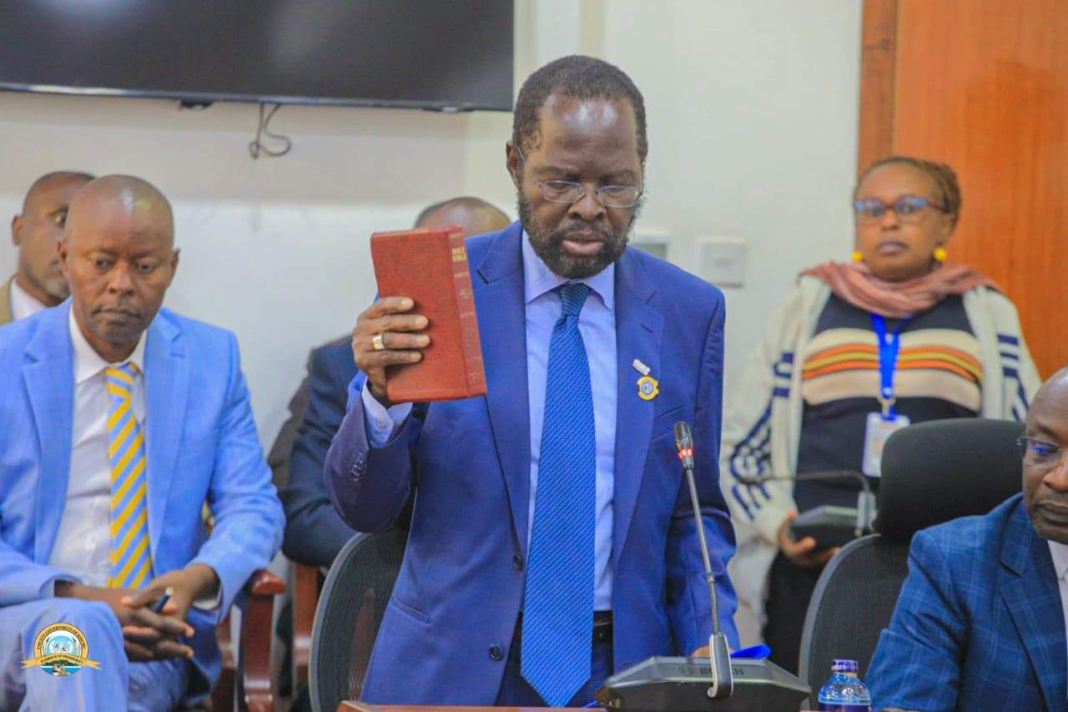
On Monday at the Senate, the senators asked Nyong’o to show payment plans for the pending bills before he exits office.
Senate Public Accounts Committee Chairman Moses Kajwang’ asked Nyong’o whether he was planning to hand over Sh5.9 billion debt to the next administration.
“Are you planning to hand over Sh5.9 billion debt to the next administration? What is the plan, because these responses, whatever is on paper, is just accounting speak. You close that year with Sh5.9 billion as debt. Whether it is legal fees or whether it is one year old or ten years old, but after 10 years of being in office, would you be handing over Sh5.9 billion as unpaid debt to the next administration?” he asked.
Kajwang’ said there was serious concern over Sh5.9 billion of unpaid pending bills, while the revenue for the year was Sh9 billion, which exceeded the debt-to-revenue ratio capped at 20 percent but was at a high of over 60 percent.
“Do you have a payment plan, and have you submitted it to the Controller of Budget, and to what extent has this debt been reduced?” he said.
The senators questioned the sharp rise in pending bills to Sh5.9 billion, demanding a clear strategy on how the county intends to reduce the debt burden.
The committee interrogated Governor Prof. Anyang’ Nyong’o and county officials over what it described as a 108 per cent increase in pending bills within a single financial year.
Committee member Senator Tom Ojienda sought an explanation on the county’s debt reduction strategy, asking what measures had been put in place to bring down the growing obligations.
Okongo said the increase was largely driven by court decisions requiring the county to settle long-standing claims, including liabilities arising from a consent agreement with the National Housing Corporation.
They also cited poor local revenue performance as a major contributor to the growing debt.