
By odiwuor Alala
The political landscape in Kenya is quietly sliding into a dangerous vacuum—one where ideological consensus has been replaced by the crude mechanics of cash, muscle, and systemic disorder.
Following the passing of former Prime Minister Raila Odinga, a profound structural shift has taken root across the nation’s political heartlands. Where political gatherings once rallied around ideological battles, constitutional reform, or long-term socio-economic visions, a far more sinister doctrine has taken centre stage: the rise of the highest-paying goon lord.
From Mass Movements to Political Mercenaries
In the absence of principled leaders who can command massive voter bases through shared historical struggles or grand visions, political space in Kenya has become aggressively transactional.
Today, political relevance is increasingly measured not by the clarity of a leader’s manifesto, but by the size of their war chest and their willingness to deploy hired youth to drown out opponents.
Governance calls for more than handouts and muscle. When the political arena rewards whoever pays the highest daily rate to violent disruptors, democracy ceases to be a contest of ideas—it becomes an auction of intimidation.
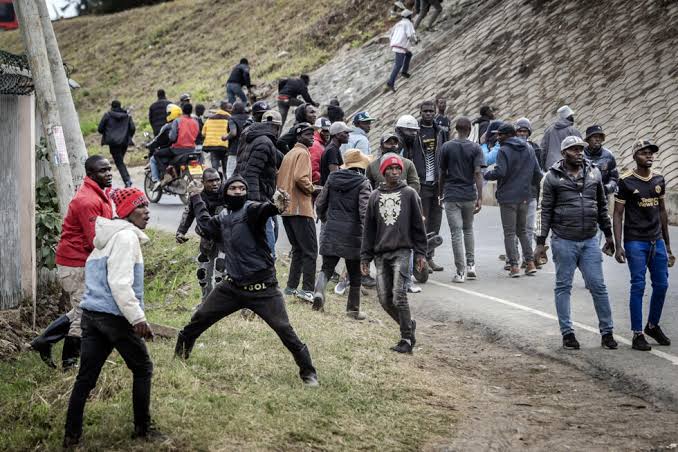
Across various regions, campaign stops have devolved into coordinated mercenary operations. Loudhailers and policy debates are routinely replaced by hired gangs paid to heckle, disrupt, and physically derail opponents from articulating their vision. This “goonocracy” creates a hostile environment where decent, visionary leaders with genuine solutions for healthcare, youth unemployment, and agriculture are silenced before they even reach the podium.
The Tragedy of the “No-Handout, No-Vote” Trap
Perhaps the most heartbreaking manifestation of this decay can be seen in regions like Nyanza and other traditional political strongholds. In local conversations across villages, markets, and urban centres, a deeply troubling sentiment has become normalised:
“Leader X has wonderful policies and a brilliant plan for our region, but he doesn’t give out cash handouts—so we won’t elect him.”
This line of thinking represents a fatal flaw in civic consciousness. When voters prioritise a short-term handout at a rally over a candidate’s capacity to fix collapsed healthcare systems, revitalise agriculture, or build sustainable local industries, they actively sign away their own economic future.
A politician who buys a vote with handouts is not giving a gift; they are buying a licence to plunder. The millions spent hiring gangs and funding handouts during campaign seasons are systematically recovered once in office through bloated contracts, neglected public works, and institutionalised corruption.
The Recipe for National Chaos
Elevating political goons from fringe agitators to key campaign assets is playing with fire.
- Normalised Political Violence: Arming or funding disenfranchised youth to disrupt rallies normalises violence, turning unemployed young people into weaponised tools for the political elite.
- Erosion of Meritocracy: Competent leaders with workable solutions are priced out of public service, leaving elected offices in the hands of wealth-driven “clearance-sale” politicians who view governance purely as a return on investment.
- Institutional Collapse: When disorder becomes the primary tool for winning elections, state institutions lose their authority to enforce the rule of law.
Reclaiming the Soul of Kenyan Governance
Kenya cannot afford to let its post-Raila political era be defined by rowdy gangs and transactional bribery.
True governance requires programmatic policy, accountability, and the courage to engage citizens on uncomfortable economic realities. Citizens—especially in regions longing for genuine development—must reject the false generosity of cash-waving politicians.
If a candidate must hire goons to suppress their opponent’s speech, it is because their own policies cannot stand on their own merit. Until the Kenyan electorate penalises candidates who rely on violence and handouts, the cycle of poverty and chaos will only deepen. The choice is stark: either vote for ideas that build hospitals, roads, and jobs today, or take the handout today and pay for it with our collective future tomorrow.