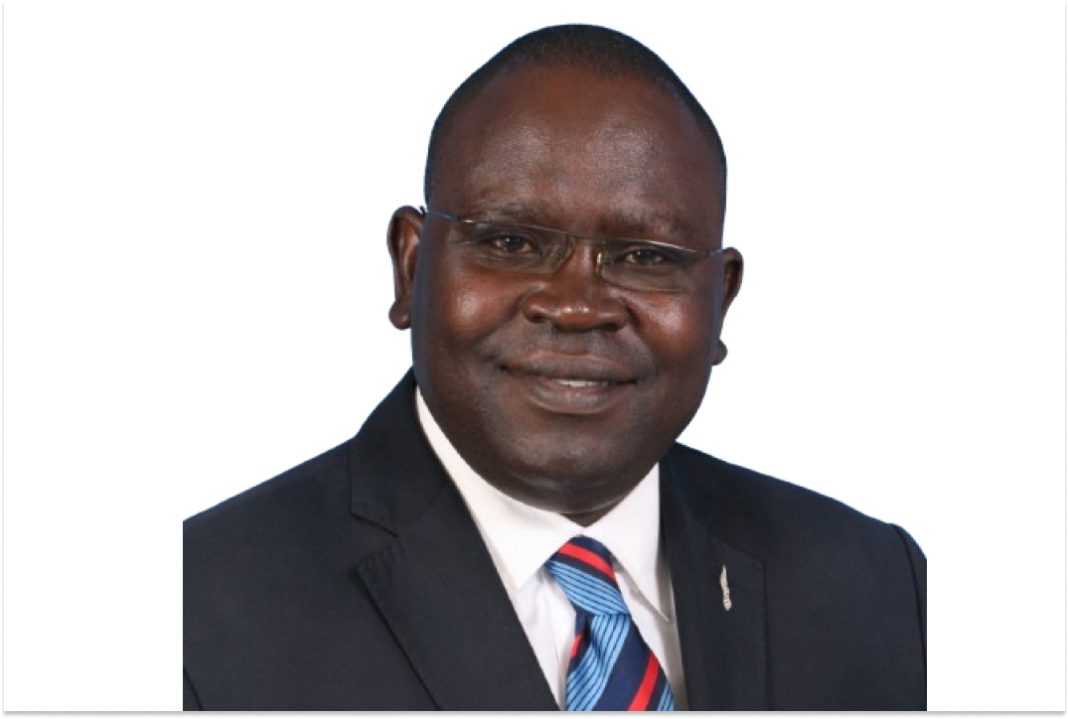
Vincent Ongore
Moi University was launched in 1984 with pomp and high expectations as the second university in Kenya. Until then, Kenya had only one university, the University of Nairobi. As the country’s population grew exponentially, there was a need to expand opportunities for university education to accommodate the thousands of students leaving high school every year. Another milestone at the time was the transformation of Kenya’s education landscape from the 7-4-2-3 (A-Level) system, inherited from the British colonial regime, to the 8-4-4 curriculum, which was billed as being more practical-oriented and relevant to the specific needs of a young society like Kenya.
It was envisaged that the 8-4-4 system of education, besides conferring employable skills on learners, would facilitate more students joining university than the 7-4-2-3 system, which took longer to release learners to college. Besides, the world was beginning to wake up to the realities of climate change and its effects on the environment and livelihoods. Countries were, therefore, in a rat race to create technical capacity in the areas of environment, forestry and climatology, to try to mitigate the negative consequences of this new phenomenon. The creation of a science-based university was, therefore, not only critical but urgent.
President Moi appointed Professor Douglas Odhiambo, a reputable scientist and scholar, to lead a committee formed to consider the viability of a second university to not only offload pressure from the University of Nairobi but also provide new thinking and research required to reverse the climate calamity that had been so accurately identified. The Professor Odhiambo-led committee proposed the creation of Moi University to offer courses in forestry, environment and natural sciences. The university admitted its first cohort of undergraduate students in 1985.
Moi University, therefore, holds a very special place in the country’s efforts to utilise scientific research in the fight against the adverse effects of climate change. It is an institution that has, for many years, captured the hearts and minds of the Kenyan scientific community and citizens. The role of Moi University, as originally constituted, would have been more pronounced at this time when Kenya is at the forefront of marshalling global efforts to curtail global warming and other consequences of irresponsible actions on the environment.
It is a painful twist of fate that, at this critical juncture when Kenya and Africa direly need local institutions to provide home-grown solutions to climate adversities, Moi University is collapsing due to mismanagement and lack of foresight! When the university was presented with an opportunity to sustain its growth trajectory that had been the hallmark of previous administrations, it opened its gates to local politicians and community leaders to mess it up. Typically, politicians are only interested in their survival, and if meddling in the affairs of a local institution can ensure their re-election, so be it. They will do it over and over again as long as the voters approve of their actions, however dastardly.
In any case, most of the leaders who mobilised their constituents to storm Moi University had hardly benefitted from university education beyond the undergraduate level. So, they did not quite understand how universities operated. All the same, they went in with impunity and gusto, and their only objective was to stop Professor Laban Ayiro from taking over as a substantive Vice-Chancellor of Moi University. They succeeded in doing exactly what they intended, and the result is the shell that Moi University has turned out to be—a pale shadow of its former robust self.
The eyesore that Moi University has become is the clearest indication yet of why meritocracy must never be sacrificed at the altar of ethnicity. In Professor Laban Ayiro, the interviewers only saw a man of Luhya extraction but deliberately overlooked his time-tested managerial adeptness that had steadied the Moi University ship during the period he had served as the Vice-Chancellor in an acting capacity.
Today, we are back to the drawing board, saddled with the aftermath of irrational decisions by politicians, community leaders and their sidekicks. The interviewers deliberately underscored the best candidate and propped up a managerial midget who has now proven beyond any reasonable doubt to be grossly incompetent, and that his appointment was a mistake in the first place. Many public universities in Kenya are struggling for various reasons, including managerial ineptitude, corruption, lack of innovation and poor capitation. For Moi University, it is well known where the rain started beating it.
Meanwhile, the stone that Moi University builders rejected has become the cornerstone of Daystar University. The Ngong Road-based institution has consistently recorded stellar performances ever since the arrival of Professor Ayiro, bringing to mind the old adage that if wishes were horses, everyone (including Moi University) would ride one. Unfortunately for the gatekeepers at the Eldoret-based university, they can only cry and lament over the spilt “mursik”, a form of fermented milk, which is a delicacy in the region.
I now agree with my lower primary school teacher of English who never missed an opportunity to remind us that “experience is the best teacher.” I am sure the ethnic bigots of Moi University are now better taught through experience. Where they thought the family name was all that mattered, it now turns out that effective management of an institution of the stature of Moi University requires a lot more. I believe it is a lesson that is now firmly riveted in the minds of ethnic lords who have no qualms about extending their imaginary authority into public institutions.
This sort of spectacle, where communities develop a sense of entitlement to the management of government institutions domiciled in their regions, has a not-very-pleasant history to it. First, a lot of government institutions in Kenya, including universities, have been created out of political expediency. Community leaders would typically visit the State House, the seat of power, and request the President to give them a university so that “our people can also access education and become learned like the other communities.” The President would then say “I have listened to your request for a university; the government will look into the matter with a view to establishing one in your region once the community donates land.”
Such interactions were very common during the Moi era. So, it was actually the government that created an impression that institutions were established expressly to benefit the local communities. With such a signal coming from the highest office in the land, it was very difficult to disabuse the local communities of the notion and belief that such institutions belonged to them and that they had every right to decide on and control their leadership, management and operations. Examples abound of universities that were created out of such ethnic considerations. Pwani University, Masinde Muliro University, Kisii University, Chuka University, and Taita Taveta University, among others, are typical examples that easily come to mind. The manner of their establishment conferred a sense of ethnic entitlement ab initio.
Besides the universities, many other institutions have also carried similar baggage. The regional development authorities, such as the Lake Basin Development Authority, Kand erio Valley Development Authority, among others, have a strong sense of ethnic identity. The Kenya Ports Authority is another example of a state corporation that has, over the years, struggled in vain to shed off its tag of a coastal Kenya outfit.
The government has not made things any better for these institutions by its tradition of preferring locals for appointment to leadership positions in the organisations. It will be remembered that the coastal communities once presented a petition to President Moi to appoint one of their own as a Managing Director of Kenya Ports Authority (KPA). Being the populist politician that he was, the President acceded to the request and ensured that at any one time during his reign, there was always a local at KPA either as the Chairman of the Board of Directors or Managing Director. Similarly, President Moi established a tradition of ensuring that, at any one point, the Chairpersons of the Board of Directors or Managing Directors of the regional authorities were locals.
This tradition has endured to date. Although such a move may temporarily pacify the local communities and help the leadership achieve its short-term political objectives, it has its serious flaws in the long run. First, it creates a false sense of ownership of state corporations by locals, and consequent resentment towards “outsiders” who are appointed to leadership positions. The extreme manifestation of this entitlement occurs whenever locals eject unwanted “foreigners” from leadership positions, either overtly or through any other pretext, as was the case with Moi University. This often happens with the connivance of the government, which chooses to either look away or encourage it through local politicians who act with abundant impunity.
The example of Moi University should suffice here, where, in the words of Professor Ayiro, he “scored at 44 per cent in management despite the fact that he had stewarded the institution to unprecedented performance as its acting Vice-Chancellor for more than one year.” The preferred local candidate scored at 97 percent on the same parameter, despite the lack of evidence of his previous exposure in a similar role!
Second, the institutions are denied the best available talents that could spur them to higher levels of achievement and growth. Whenever “foreigners” are employed against all odds, they do not receive the requisite support to help them excel in their work. Consequently, such unwanted managers are set up to fail in order to lend credence to the twisted argument that they do not understand the key contextual factors that drive performance in such institutions.
It is no wonder, therefore, that most state corporations routinely deliver sub-optimal returns to Kenyans who are the key stakeholders in them. The state corporations in Kenya were created to provide public services in highly specialised sectors that were considered too sensitive to be entrusted to private entrepreneurs with profit motives. The overriding objective was, therefore, to ensure enhanced citizen welfare through the provision of high-quality services at reasonable prices. With the government’s penchant for appointing and deploying people with inept managerial capacity to run state corporations, this noble objective of high-quality service delivery to citizens is grossly undermined.
To reverse the free fall of state corporations, the government needs to take a keen look at its policy on appointments to these institutions and also create the necessary conducive environment to facilitate superior performance. Appointments to state corporations should be done in an open, transparent and competitive manner. Besides, a robust framework for community engagement should be developed to create harmony between the institutions and their external environment. There is no room in the modern world for beating drums of war and invoking ethnic nationalism in the appointment of corporate leaders. Anybody who is still in doubt is advised to use the example of Moi University as a contemporary case study on how not to appoint leaders for state corporations.
Professor Ongore teaches at the Technical University of Kenya
vincent.ongore@tukenya.ac.ke