
By Billy Mijungu
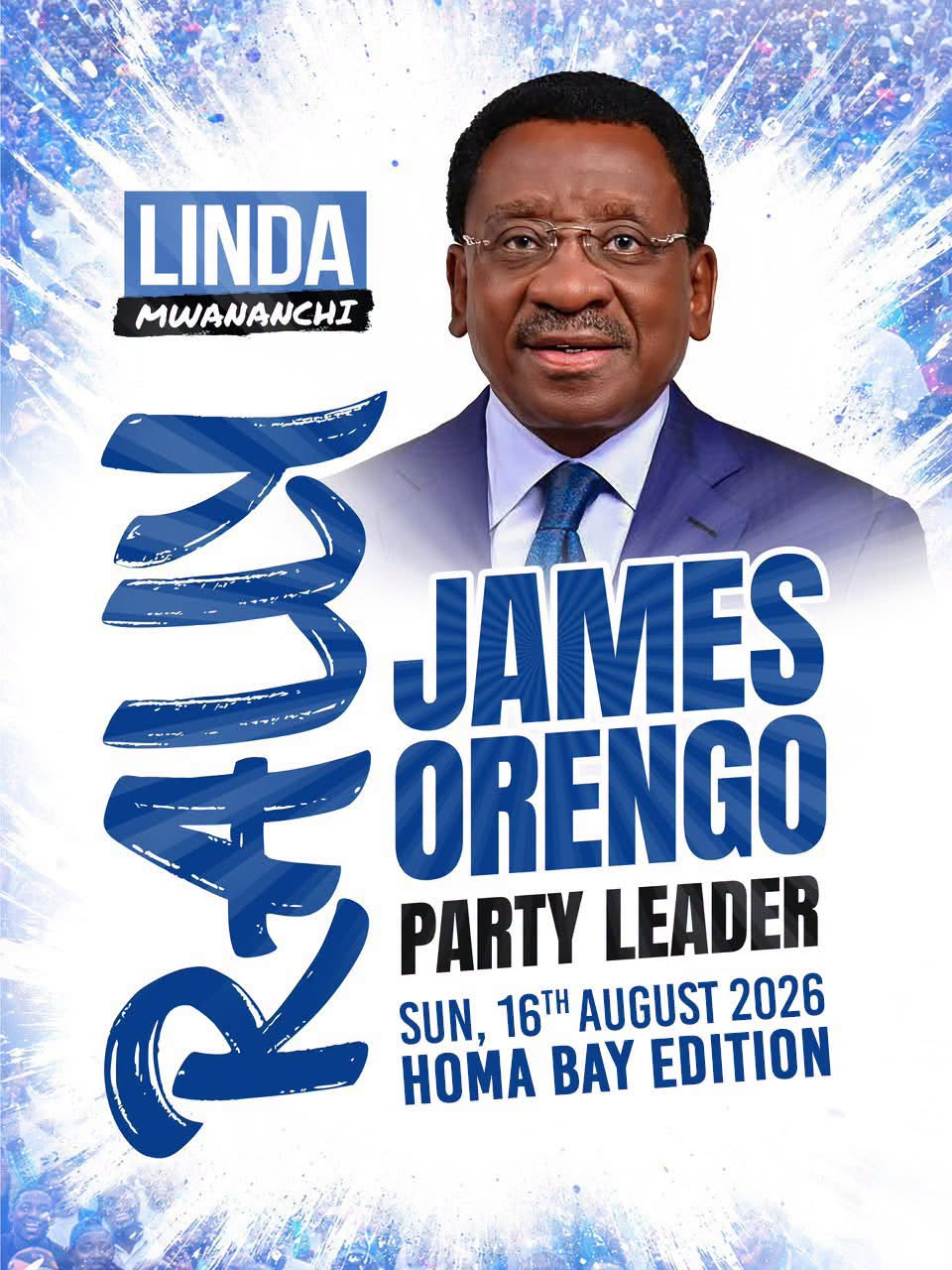
Over the last few days, James Orengo has been meeting elected leaders from Mandera and Mombasa, continuously building a national platform for the Linda Mwananchi brigade. As the party leader, he understands his responsibility. He knows that a national political movement cannot be built from one region, one community, or one political tradition. It must be deliberately constructed across Kenya.
To underscore how confident he is, while mobilisation for the Migori and Homa Bay circuit is firmly on course, preparations are already in high gear for the forthcoming Meru visit. In many ways, Meru could feel like a homecoming for Orengo because of the deep relationships he has cultivated there over decades. It is another indication that the political conversation is moving beyond traditional ethnic and regional boundaries.
With Linda Mwananchi enjoying upwards of 60 percent backing in Kisumu and Siaya, the next political frontier is clearly Homa Bay and Migori. What emerges from Homa Bay will be particularly significant because virtually every major national political conversation involving the broad-based arrangement has some connection to the county. Its leaders and political class have been deeply involved in the national administration, while figures such as Gladys Wanga, Raymond Omollo, and John Mbadi, among others, have helped shape the county’s national political influence.
Ni Mbaya! You could say.
But beneath the political calculations lies a much bigger question. Is it time for the Luo community to cast its political lot differently and more deliberately?
This is a community that understands pain, sweat, success and recovery. Its political history has largely been shaped by adversity. Yet adversity has also produced resilience, political consciousness, and an extraordinary ability to reinvent itself.
Something is happening in Homa Bay, just as it happened in Kisumu. Luos cannot be permanently told what they can or cannot do politically. The days when political instructions were simply handed down from the top and expected to be obeyed without question are changing.
Honourable Peter Kaluma and Otieno Ogindo have added fresh energy to the conversation by urging Linda Mwananchi adherents not to turn up and defend their political space. Every time influential local leaders speak badly about the future, the political ground shifts. Support moves. Conversations change. Previously unquestioned assumptions begin to collapse.
That is precisely why Migori and Homa Bay matter.
If Orengo succeeds in connecting the aspirations of these two counties with his wider national agenda, Linda Mwananchi could cease being viewed merely with half the Luos but likely all, and become a more serious national platform defended from the lake.
The question is no longer whether Homa Bay and Migori will be part of the conversation. The question is whether they will help shape it.