
By James Okoth
Schools across Kisumu County have recorded encouraging learner turnout as preparations intensify for the forthcoming national assessments, even as institutions in flood-prone areas confront the prospect of renewed disruption from the anticipated El Niño rains.
A visit to Odienya Primary and Junior School, Rabuor Comprehensive School and Alendu Primary and Junior School painted a mixed picture of resilience, preparedness and persistent infrastructure challenges facing schools as the country enters a critical examination period.
At Odienya, Head of Institution Prof. Timon Owenga said the school opened on Tuesday rather than Monday after administrators had to put in place measures to prepare for learning in an institution that has historically been cut off by flooding.
About 90 per cent of learners reported when the school opened, with Owenga attributing the relatively strong turnout partly to the role the institution plays in the community.
“For our learners, school is not just a place of learning. It also provides an opportunity for interaction with teachers and other learners, access to lunch and other amenities,” he said.
Odienya has 58 candidates sitting the Kenya Primary School Education Assessment (KPSEA) and Kenya Junior School Education Assessment (KJSEA).
The school has also invested in co-curricular activities, with learners participating in ball games and music. Its music team reached the regional level, while its ball games teams advanced to the county level. Some learners have also represented the school at higher levels of competition.
In the Junior School Science and Engineering Congress, Odienya emerged among the leading schools in Kisumu and progressed to the regional level, although it narrowly missed the national stage after finishing third.
But behind those achievements lies a history of serious accessibility challenges.
Owenga said learners and teachers were still accessing the school by boat as recently as last year, before road access improved.
“Today, Odienya is a normal school, but previously it was not accessible by road. Learners and teachers had to use boats,” he said.
The school has since become the main social centre for the surrounding community, increasing the pressure on its facilities.
Flooding has also left a trail of infrastructure needs, with the institution undertaking repairs to sanitation facilities, classrooms and offices.
Owenga called for support from the national government, county government and well-wishers to construct additional classrooms and improve school facilities.
He said an affordable school feeding programme had also helped keep learners in school, particularly given the high poverty levels within the catchment area.
At Rabuor Comprehensive School, Head of Institution Manase Okia reported a similarly strong start, with more than 90 per cent of learners reporting.
The school, however, is undergoing a major transformation through a Sh96 million M-Pesa Foundation project designed to give the institution new infrastructure.
The construction has temporarily displaced some learning activities, with learners and teachers operating from temporary classrooms.
Okia said congestion, intense heat and poor air circulation in the temporary facilities were making learning difficult.
“We are hopeful that by the second term of next year, we shall be in our new classrooms,” he said.
Despite the challenges, Rabuor continues to maintain a strong record in co-curricular activities.
The school has produced learners who have progressed to regional competitions in sports and music, including a Scottish dance performance. Some ball-game players have also been selected to represent the school at regional level.
Rabuor has additionally introduced chess, with the administration reporting encouraging progress.
The school is preparing 60 KPSEA and 90 KJSEA candidates, with Okia expressing confidence in their prospects.
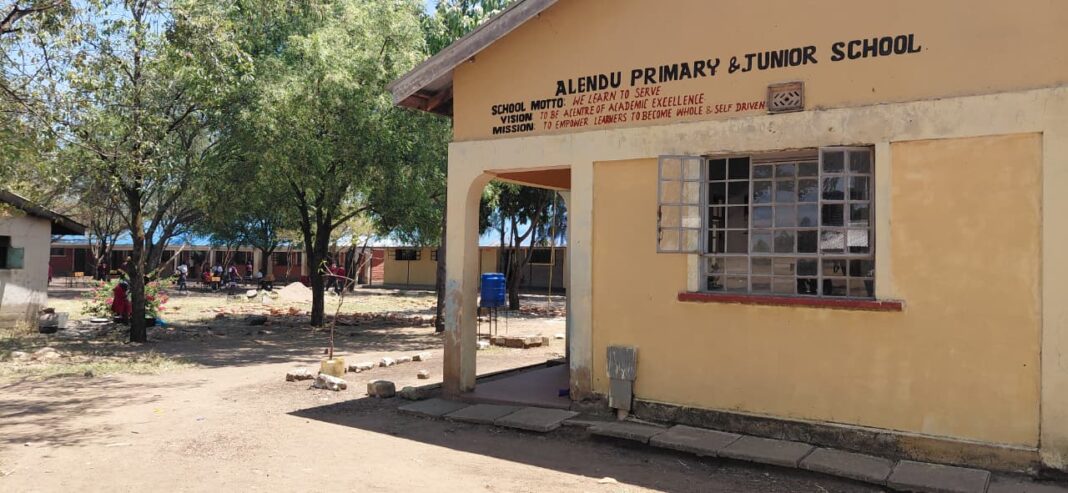
At Alendu Primary and Junior School, the focus has shifted towards intensified academic preparation.
Head of Institution Maurice Okoth said 97 per cent of learners had reported and that the school had begun an opening assessment to establish their academic preparedness.
The school is also benefiting from strong parental support, which Okoth said has made it easier to organise both curricular and co-curricular programmes.
However, the looming rains remain a concern.
Following weather warnings over the possibility of El Niño conditions, a stakeholder helped facilitate an all-weather feeder road linking Alendu to the main road.
Okoth said the improved road would ease access during wet weather but called for additional support, particularly protective equipment such as gumboots for learners.
The experiences of the three schools mirror a broader national education challenge as the Ministry of Education and schools prepare for the next phase of national assessments while simultaneously dealing with infrastructure and weather-related risks.
The strong learner turnout is a positive indicator of continuity in learning, but schools in flood-prone areas remain particularly vulnerable. For institutions such as Odienya, where flooding has historically severed road access, heavy rains could quickly reverse gains made in accessibility.
The situation also highlights the importance of preparedness beyond examination materials and academic revision.
Schools need functional classrooms, sanitation facilities, safe access roads, adequate feeding programmes and secure learning environments if learners are to sit national assessments without disruption.

For schools operating from temporary facilities, the challenge is even greater. At Rabuor, for instance, the ongoing Sh96 million infrastructure project promises a significant transformation, but the transition period is placing additional pressure on both teachers and learners.
As the examination calendar approaches, school administrators are therefore calling for a coordinated response from the education authorities, local governments, parents and development partners.
The message from Kisumu is clear: learners are ready to return to class and schools are preparing for the assessments, but sustaining that momentum will depend on how effectively authorities respond to the twin challenges of infrastructure deficits and the impending rains.
For communities such as Odienya, the school is more than an examination centre. It is a social anchor. Ensuring that such institutions remain accessible and operational during the rainy season could be critical to protecting learning continuity at a time when thousands of learners are preparing for nationally administered assessments.