
By Billy Mijungu
The demographic realities of Migori County increasingly favour Linda Mwananchi-centric candidates, with Peter Masara emerging as one of the politicians who could benefit significantly from the movement’s growing influence.
Migori has close to 500,000 voters, with approximately 300,000 coming from the Luo and Suba communities and about 200,000 from other communities. Of the latter, roughly half are Kuria, while the rest include about 50,000 Luhya voters, 30,000 Kisii voters and approximately 20,000 voters shared among Kikuyus, Somalis and other communities.
This makes Migori one of Kenya’s most cosmopolitan political counties, demanding a different kind of political accountability and leadership.
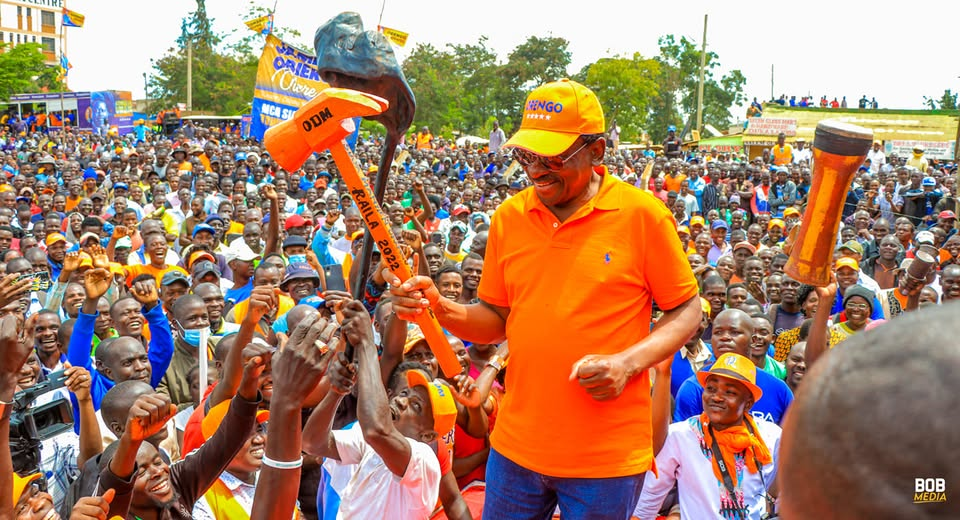
Peter Masara, the Suna West MP and himself a Suba, appears to have learnt this lesson quickly. His consistent support for peaceful campaigns, democratic ideals and political tolerance has increasingly placed him in a position of support within the Linda Mwananchi brigade, despite his stated intention to seek another term.
Masara’s persuasion beyond political slogans has enabled him to differentiate himself from what many voters see as the selfish promotion of violence and political confrontation in Migori.
He has consistently condemned violence, arguing that it undermines democratic ideals and denies citizens the opportunity to freely participate in political processes.
With Suna West and Suna East increasingly behind him, Masara could creatively emerge as the political leader of the wider border belt, extending from Suna to Nyatike and Kuria.
The Jubilee Party, which has recently gained acceptance in Kuria through the influence of former Cabinet Secretary Fred Matiang’i, could also throw its weight behind Masara on account of what supporters describe as political discipline and a commitment to peaceful politics.
If five constituencies can be effectively mobilised behind Masara, his path to the Migori governorship in 2027 becomes increasingly credible.
That would leave his opponents in the Sugarbelt region facing the difficult task of sharing the remaining three constituencies — a political reality that is already creating anxiety within one of the competing camps.
It should not be lost on the country that Peter Masara has consistently positioned himself as a change-maker across the Suna region.
In just five years, Suna West has made significant strides and, in several respects, has begun surpassing Suna East, which historically enjoyed an advantage because Migori County’s administrative headquarters are located within its jurisdiction at both the national and county levels.
The 2027 Migori gubernatorial contest could therefore become less about traditional regional arithmetic and more about who can build a genuinely cosmopolitan coalition around peace, accountability, development and democratic participation.
Masara appears to be positioning himself for precisely that contest.