
By Reporter
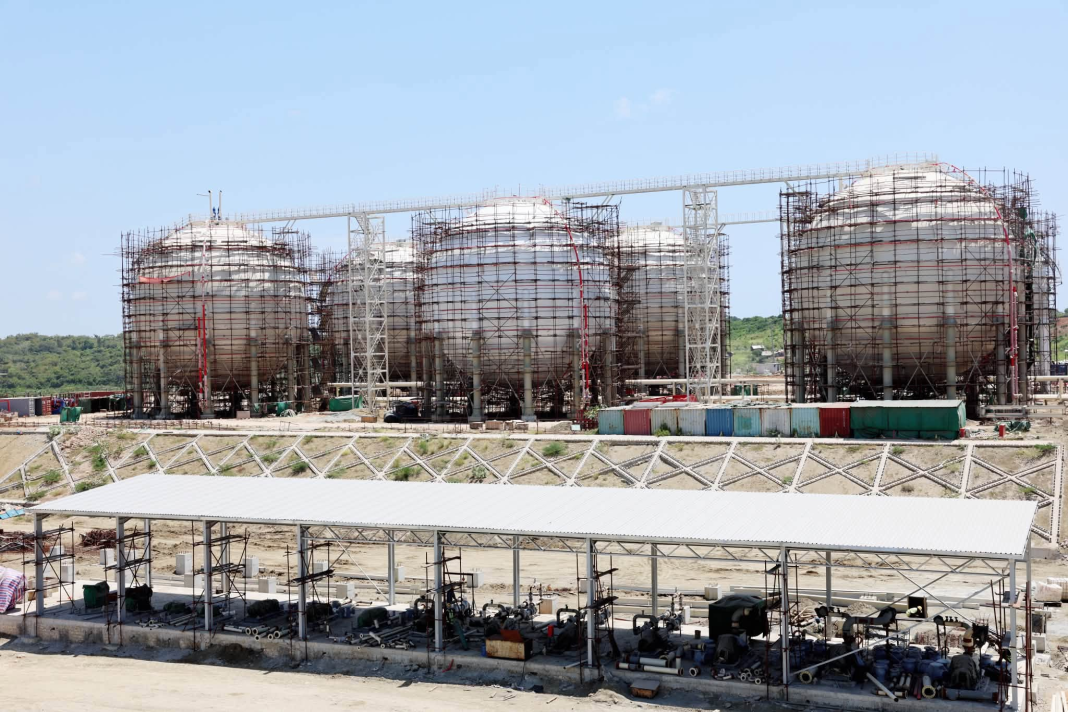
The Sh16 billion Taifa Gas liquefied petroleum gas (LPG) facility under construction at Dongo Kundu is 85 per cent complete.
The 30,000-metric-tonne storage terminal is about 85 per cent complete and should be commissioned in the first quarter of 2027.
The Senate Standing Committee on Energy inspected the facility at the weekend as part of its oversight of investments aimed at expanding LPG access and strengthening Kenya’s energy infrastructure.
Chaired by Elgeyo Marakwet Senator William Kisang, the Committee was told that the terminal comprises 12 tanks of 2,500 metric tonnes each and is expected to become the largest LPG import facility in East Africa once completed.
“This was the kind of investment that can strengthen our LPG supply chain, support the transition to clean cooking and reduce pressure on existing import infrastructure. What is important now is that the project is completed within the stated timelines and operates within all safety and regulatory requirements,” said Sen. Kisang.
Taifa Gas, a Tanzanian firm operating since 2005, runs a 7,500-metric-tonne facility and 21 filling stations in Tanzania. The Mombasa terminal marks its entry into Kenya, where 10 filling and collection points are about 60 per cent complete in Kericho, Rangwe, Gilgil, Lukenya, Meru, Mariakani, Garissa and Bungoma. These will be supplied daily by truck from the coast.
“Beyond the terminal, we are developing filling and collection points across the country so that LPG imported through Mombasa can reach consumers more efficiently,” said General Manager Jamal Humwel.
The project is expected to create about 200 direct jobs and some 90,000 indirect jobs, with roughly three people engaged for every cylinder sold.
Committee member Sen. (Dr) Boni Khalwale welcomed the project as a demonstration of what home-grown capital can achieve.
“This project shows what is possible when African investment is directed towards strategic infrastructure. Our interest is to see that the investment delivers affordable LPG to households, creates jobs for Kenyans and contributes to a stronger and more competitive energy market,” said Sen. Khalwale.
Members were also told that the terminal had secured approvals from NEMA, the Kenya Ports Authority, Mombasa County, the Director of Physical Planning, EPRA and the National Construction Authority before construction began.
The visit formed part of the Committee’s retreat with the Ministry of Energy and Petroleum on LPG infrastructure, petroleum reserves, rural electrification and fuel pricing.