
By Erick Otieno
The introduction and adoption of alternative crops to tobacco growing in Migori County is transforming the agricultural economy in the region.
The pilot project in four wards in the county has witnessed a total of 406 acres of tobacco farms turned into alternative crops.
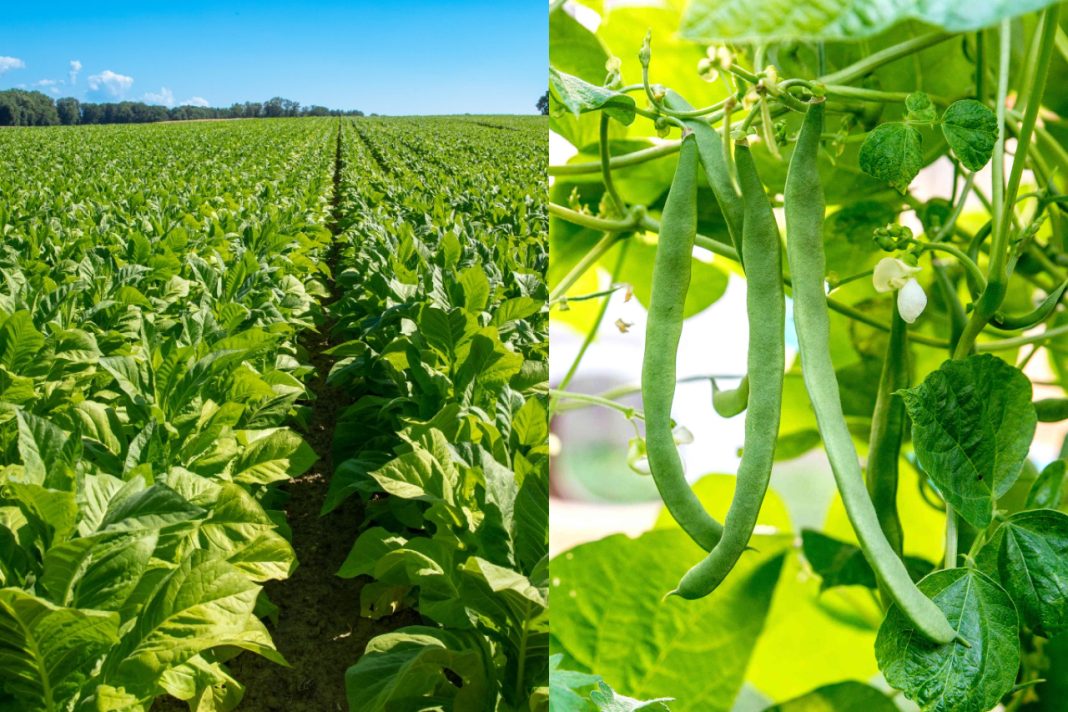
Dubbed Tobacco Free Farms Project which began in 2021 with 370 acres has witnessed an increase in beans production in the region from 134 tons to 200 tons.
The success story of alternative crops namely iron beans and their profitability has precipitated a new shift from tobacco farming to alternative crops.
At the start of 2022, the Tobacco Free Farm project has witnessed 406 acres of tobacco farms being converted to alternative crops.
With the success of the project, the funding partners include the World Food Program (WFP), the World Health Organization (WHO), the Food and Agriculture Organization (FAO) together with both the national and county governments will be scaling the initiative from four to 28 wards to scale up the production.
A survey report by the American Cancer Society titled The Economics of Tobacco in Kenya found that every year, approximately 6,000 Kenyans die of tobacco-related diseases, while more than 220,000 children and more than 2,737,000 adults continue to smoke each day.
To mitigate this problem, Kenya ratified the World Health Organization Framework Convention on Tobacco Control (WHO FCTC) in 2004.
In Kenya, the legislature passed the Comprehensive Tobacco Control Act (TCA) in 2007 to address the production, sale, labeling, advertising, promotion and sponsorship of tobacco products, among other provisions.
In addition to efforts to mitigate the use of tobacco products in the country, the WHO FCTC sought to address the supply side of tobacco control by promoting alternative livelihoods for tobacco farmers. Article 17 of the WHO FCTC addresses the promotion of economically viable alternatives to tobacco growing.
There are probably more than 50,000 Kenyan households that depend on tobacco farming directly.
Despite tobacco being grown extensively in some regions in Kenya, it is not a significant crop in terms of broader national agricultural production with recent government data indicating that it constitutes a mere 0.6% of total agricultural gross marketed production by the Kenya government of 2015.
This is equivalent to just 0.03% of GDP, based on total crops grown in Kenya accounting for 19.7% of GDP in 2014 (Republic of Kenya 2015).
This research demonstrated strongly that tobacco farming is not a particularly lucrative enterprise for most smallholder tobacco farmers in Kenya
WHO Prevention and Control of Non-Communicable Diseases Program Officer Dr. Joyce Nato said the project was an important aspect in controlling tobacco usage for the social-economic and health benefits of the local residents.
Dr.Nato who spoke during a stakeholder meeting that brought together food and health representatives said the iron beans which have become a safe saver for tobacco growers were developed by KALRO and were rich in iron, drought resistant, and mature within three months.
“We will assist tobacco farmers to do the right agriculture, market and offer bean seeds facilitation to ensure enhanced income”, Dr. Nato said.
She said WHO in partnership with FAO and WFP has introduced iron beans that mature within three months, are drought resistant, and are highly nutritious.
“There was no need to stick with tobacco farming which is unhealthy to the environment, human beings and animals, labor intensive, and takes nine months to mature with no or little profits,” she said.
Similarly, Deputy Head Ministry of Health Tobacco Control Ms. Anne Kendagor said tobacco-related illnesses like asthma and cancer were on the rise in the country and county.
Kendagor revealed that Migori County alone accounted for almost 70 percent of all the tobacco products in the country and yet only a third of the 36,000 tobacco growers were from the county.
“The Tobacco Free Farm project was an initiative to free the Migori residents from the slavery of tobacco farming,” she said.
WFP Farm to Market Alliance (FtMA) Productivity Lead Officer Mr. Michael Njagi said they will continue to provide the market for the tobacco alternative crop growers.
He said that FtMA will support the small farmers who have abandoned tobacco farming to maximize the market opportunities that have been established in 48 farmer service centers across Migori County.
“Already those that are growing iron beans have a ready market. In the first season, the WFP bought all the beans. In the second and third seasons all the beans were bought by local institutions like hospitals and learning institutions”, said Njagi.
Njagi said FtMA will continue doing mapping for market development and scale to help open new markets to the residents with the help of the Cereal Grower Association.
Migori County Deputy Governor Dr. Joseph Mahiri said the government will continue to enforce rules and regulations governing tobacco farming.
“Migori has become a bench-marking county for other tobacco growers like Busia, Bungoma Counties, and Zambia,” he said.