
By Habil Onyango
There has been a noticeable increase in incidents of police brutality, arbitrary arrests during demonstrations, discrimination against marginalised groups—including persons with disabilities and individuals belonging to gender minorities—and systemic barriers to accessing justice.
This situation persists despite the establishment of a robust legal framework aimed at the protection of rights under the 2010 Constitution, as enforcement remains inconsistent.
Dr. David Rabuor, the Director of Community Action for Health and Development (CAHED), has called upon the judiciary to enhance accessibility, particularly for grassroots communities.
“It is imperative for state actors to fully implement the National Action Plan on Human Rights, ensure independent oversight of security forces, and expand civic education to empower rights holders across all counties in Kenya,” he stated.
Dr. Rabuor highlighted the alarming trend of youth fatalities occurring at the hands of law enforcement, emphasising that very few of these cases have resulted in justice through the judicial system.
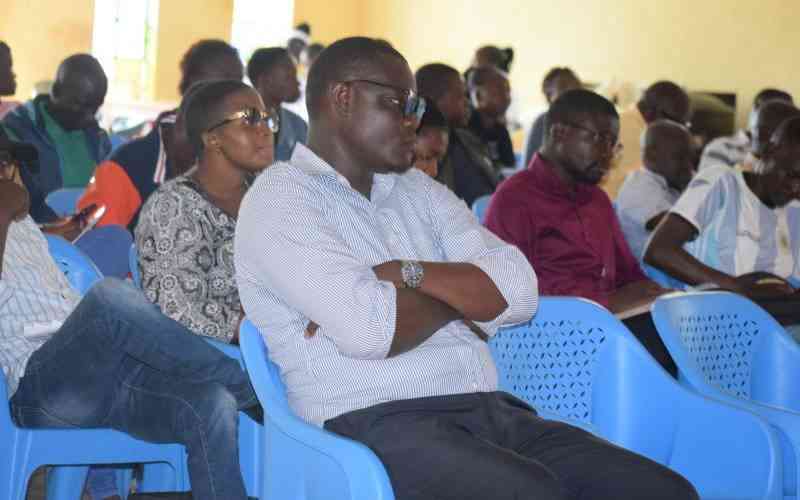
During a Youth Conference focusing on Democracy, Human Rights, and Governance (DRG), he further noted the widening disconnect between elected officials and their constituents, particularly among the youth, which poses a significant threat to representative governance in Kenya.
He elaborated that this disconnect is particularly evident within the devolved governance system, where concerns regarding the functionality, inclusivity, and responsiveness of institutions remain, despite considerable progress in establishing democratic frameworks.
Dr. Rabuor identified several critical gaps, including low civic literacy among youth, superficial engagement in policymaking processes, and the limited incorporation of youth-led initiatives into county development frameworks.
“As CAHED and other stakeholders, we call upon national and county governments to institutionalise mechanisms for youth engagement, strengthen public participation, and adhere to democratic principles without intimidation or repression,” Dr. Rabuor asserted.
He also pointed out that the governance landscape in the country is challenged by significant issues related to public accountability, corruption, and limited transparency in public service delivery.
During the conference, it was observed that youth frequently remain marginalised in county decision-making processes, despite representing the majority demographic.
Participants advocated for enhanced inter-agency collaboration, increased budget transparency, and expanded investment in governance capacity building specifically targeted at youth.
Furthermore, participants urged the Auditor General and the Ethics and Anti-Corruption Commission to improve their visibility and responsiveness to public grievances, particularly in under-resourced counties such as Homa Bay.
Senior Chief Bob Lang’o, representing the County Commissioner, urged youth to address their differences responsibly, even in interactions with law enforcement, and to refrain from resorting to violence.
He also encouraged security personnel to exercise patience when engaging with young individuals to prevent injuries and to guide them appropriately.
“Without peace and security, we cannot achieve economic progress. I urge our youth to refrain from engaging in activities that could be detrimental to our country,” he stated.
This conference was convened in the context of ongoing demonstrations by youth across the country regarding alleged abductions and fatalities of their peers at the hands of police.
The event gathered representatives from the County Commissioner’s Office, the Judiciary, Gender Affairs, and the Department of Youth Affairs from Homa Bay.
CAHED operates at grassroots, national, and global levels, focusing on Democracy, Human Rights, and Governance, striving to ensure that opportunities are made available to youth through awareness and enlightenment.