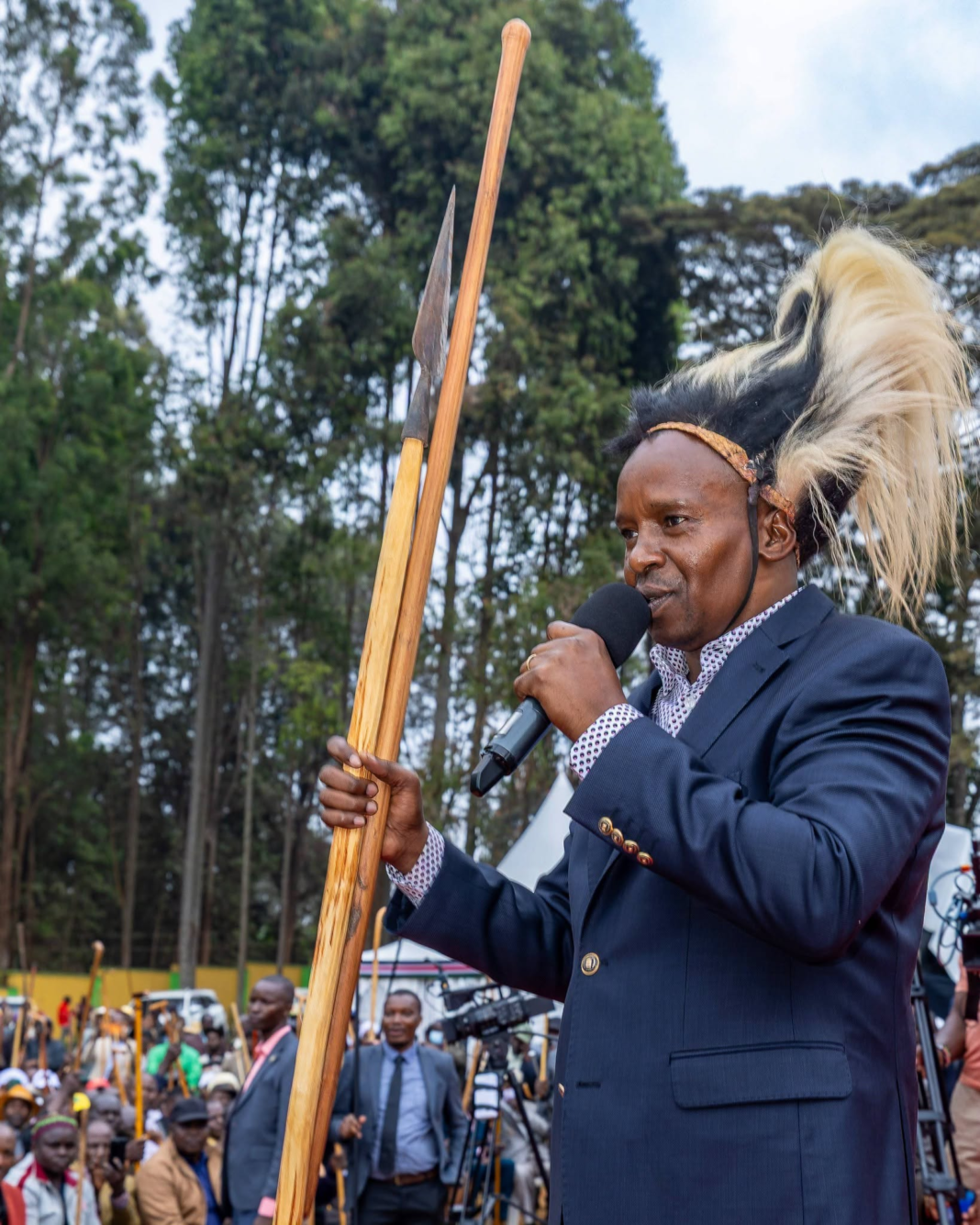

By Billy Mijungu
The question of debt keeps many Kenyans awake at night. For an individual, a family, a business, or a country, debt can become a form of economic bondage when it grows beyond the capacity to repay it. Kenya’s runaway debt problem must therefore become one of the central issues in the National Conversation. We cannot continue discussing national visions without confronting the financial means required to implement them.
So, how do we get out of this cycle of debt? We cannot give up. The problem is difficult, but it is not impossible to solve. What is worrying is that, instead of reducing the debt burden, successive governments have often relied on temporary solutions that simply push existing obligations into the future. Refinancing may provide temporary relief, but refinancing debt without reducing the underlying debt stock only postpones the problem.
Another mistake is to peg the country’s borrowing capacity primarily to economic growth at a time when economic growth has remained below five percent for several years. When the economy grows slowly, government revenues also grow more slowly, while interest payments and other obligations continue to rise. Borrowing against an economy that is not expanding fast enough creates a dangerous imbalance between what the country owes and what it can realistically generate.
Kenya therefore needs a much broader debt recovery strategy involving government, Parliament, the private sector, financial institutions, and ordinary citizens. Although the country has borrowed heavily, too much of the borrowed money has been concentrated in a relatively narrow part of the economy. Debt-financed expenditure should generate economic activity across the country, create productive assets, expand employment, and ultimately increase the tax base. When borrowed money circulates within a small group of beneficiaries, its ability to generate broad-based economic growth is greatly reduced.
Debt refinancing has also created an industry around the management of government debt. Refinancing is sometimes necessary, but it should never become the permanent business model of government. Every refinancing decision should answer one fundamental question: does it reduce the cost and risk of the debt, or does it merely postpone repayment while increasing the ultimate burden on taxpayers?
We must also examine the provisions of the Public Finance Management framework that permit government financial commitments to be made without the full implications immediately appearing in consolidated public accounts. Public finances should be transparent enough for Parliament and citizens to know, in real time, what the country owes, what it has committed itself to pay, and when those obligations will fall due. Any legal provision that creates room for obligations to remain outside the clear view of the consolidated accounts should be reviewed and, where necessary, amended.
Kenya should also reconsider how major public borrowing is authorised. Borrowing on behalf of the Republic is not a personal decision of the President or an administrative decision of the Executive. It is a decision that commits future generations. Major debt should therefore be subjected to rigorous parliamentary scrutiny and approval through plenary debate. Every constituency has a representative in Parliament, and every representative should have the opportunity to scrutinise and vote on decisions that increase the national debt burden.
We must also be honest about austerity. A debt crisis cannot be solved while government continues to spend as though resources are unlimited. Austerity does not necessarily mean abandoning development or punishing ordinary citizens. It means eliminating waste, reducing unnecessary expenditure, controlling the cost of government, and directing scarce resources towards programmes that generate the greatest economic and social return.
Government expenditure must also become standardised and predictable. Ministries, departments, and agencies should operate within clear expenditure ceilings, procurement standards, and performance targets. The country should know what it costs to run government and why those costs are necessary. Predictability would make it easier to identify waste, control expenditure, and plan debt repayment.
The first step towards solving a debt crisis is admitting that the crisis exists. We cannot solve what we refuse to acknowledge.
The Kenya Shilling must also play an important role in the debt recovery strategy. In the short and medium term, Kenya should pursue policies that strengthen the Shilling without artificially manipulating the currency. A stronger and more stable currency reduces the local currency cost of servicing foreign-denominated debt. If the Shilling strengthens because of stronger exports, increased production, lower import dependence, improved investor confidence, and sound fiscal management, the country gains an additional opportunity to reduce the cost of external debt.
The solution, however, cannot depend on the exchange rate alone. Kenya must also reduce the actual debt stock and the interest burden attached to it. Every shilling saved in interest payments is a shilling that can be redirected towards healthcare, education, infrastructure, security, and productive investment.
Then there is the question of domestic debt.
The Government must gradually reduce its dependence on the domestic financial market. When the Government borrows heavily from commercial banks and other local institutions, it competes with businesses for available credit. This can make borrowing more expensive for entrepreneurs and discourage private investment.
Returning liquidity to the banking system would create room for banks to lend more aggressively to businesses rather than primarily financing government obligations. That could stimulate enterprise, expand production, create employment, and increase household incomes. As businesses grow, the tax base also grows. More productive businesses mean more VAT, more income tax, more employment, and ultimately more government revenue.
This is the difference between borrowing to survive and creating an economy that can generate enough wealth to repay its obligations.
Kenya should therefore move from a debt-driven economy to a production-driven economy. We should borrow less, produce more, export more, consume more locally produced goods, and create conditions in which private capital can expand productive activity.
There is also an urgent need to examine the assets of the State. Kenya owns substantial public assets, some of which are underutilised or poorly managed. The country could explore carefully structured asset rationalisation, restructuring, and, where economically justified, strategic disposal of selected non-strategic assets to reduce debt. However, such transactions must be conducted transparently and competitively. We must never sell national assets simply to finance recurrent expenditure or transfer public wealth to politically connected individuals.
The objective should be to use assets intelligently to reduce liabilities while protecting strategic national interests.
Most importantly, the next President must understand that the interests of the State cannot be subordinated to personal, political, or private interests. When government decisions are influenced by private gain, state capture becomes inevitable. State capture distorts procurement, taxation, appointments, borrowing, and the allocation of public resources. It ultimately transfers the cost of private enrichment to ordinary taxpayers.
Kenya does not lack resources. What we lack is sufficient discipline in how those resources are managed.
The country can reverse its debt losses, but it will require political courage. We must stop treating borrowing as revenue, stop treating refinancing as a solution to every problem, and stop postponing difficult decisions simply because they are politically inconvenient.
The national conversation must therefore move beyond who should occupy State House and ask a more fundamental question: what kind of economy should the next administration inherit, and what kind of economy should it hand over to the next generation?
Our objective should be clear: reduce the debt stock; reduce the cost of borrowing; control government expenditure; strengthen the Kenya Shilling through production and exports; return domestic liquidity to the private sector; protect public assets; expand the tax base through economic growth rather than endless increases in tax rates; and build institutions strong enough to prevent any individual government from borrowing recklessly on behalf of generations that have not yet been born.
Kenya can get out of the debt trap.
But we must first stop pretending that tomorrow will automatically pay for the debts we create today.