
By Billy Mijungu
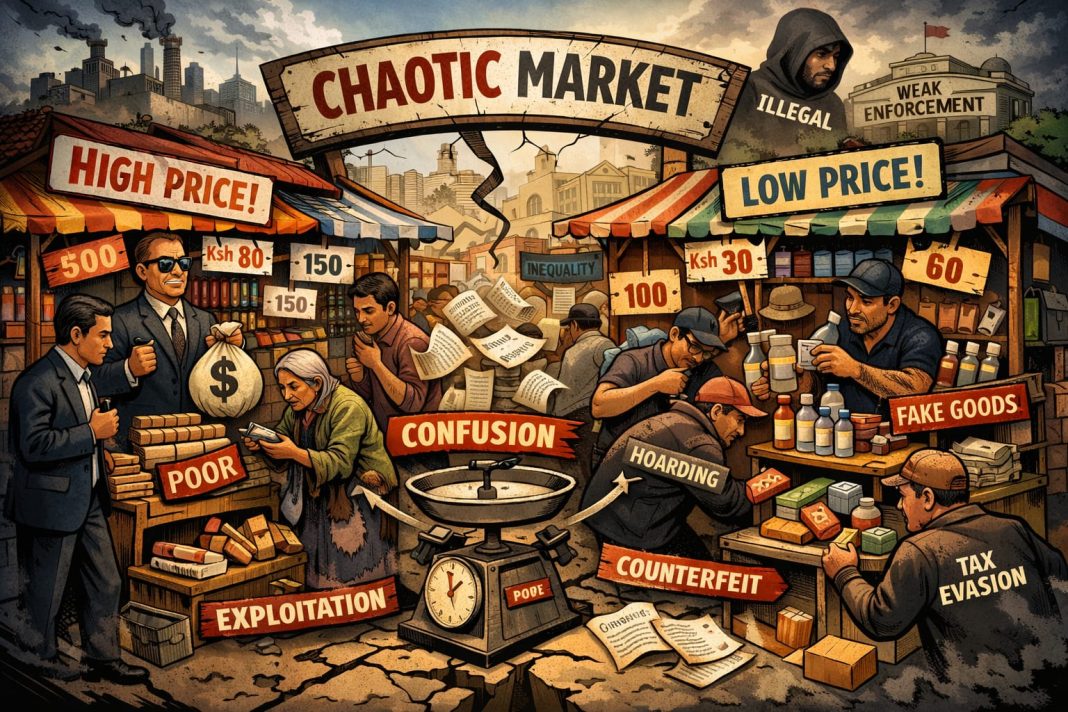
Have you ever walked into different shops looking for the same product — same size, same quality — yet found completely different prices? That is not ordinary competition. That is distortion. And distortion, when left unchecked, slowly poisons an economy.
Price inconsistency has almost become a culture. One neighbourhood charges one amount, another charges something entirely different, yet the goods are identical. The variation is not explained by transport costs or value addition. It is explained by disorder — and disorder breeds inequality.
When markets are distorted, the consumer loses first. The poor are exploited openly. The middle class is squeezed silently. Even the wealthy are overcharged without justification. Price unpredictability creates an environment where information asymmetry thrives. The seller knows more than the buyer; the buyer is left guessing. The market ceases to be fair.
Some price margins are healthy. Competition is necessary. But minimal differentials in identical goods create predictability. Predictability builds trust. Trust strengthens economic growth.
Organised sectors such as fuel and lubricants offer a contrast. Whether you are in Kisumu, Mombasa, Eldoret or Nairobi, price differences are marginal and regulated. You can budget. You can plan. Even the tax authority can forecast revenue with greater certainty because pricing structures are relatively standardised. That level of organisation stabilises both consumers and government planning.
Contrast that with ordinary retail goods. Today, bread costs one amount in one estate and something completely different two streets away. That inconsistency encourages hoarding, speculation, counterfeits and tax leakages. It also allows fake products to flood the market because enforcement becomes weak in chaotic systems.
Are we becoming an economy of fakes? The answer is simple: disorder invites illegality. When there is no structured pricing logic, counterfeiters find room to operate. Consumers, desperate for cheaper alternatives, fall prey to substandard goods.
This is where national standardisation and regulatory bodies must step in firmly. Organising the goods and services sector does not mean killing competition. It means creating predictable frameworks, fair pricing benchmarks and strong enforcement against exploitative practices.
An organised market protects consumers. It strengthens tax compliance. It encourages honest business. It builds investor confidence. And most importantly, it restores dignity to economic participation and stability.
A distorted goods market inevitably produces a distorted economy.