By Kepher Otieno In Abuja Nigeria
Jason Miller, a former senior adviser to U.S. President Donald Trump, has called for a major overhaul in U.S.-Africa trade relations, urging African leaders to reject debt-laden development models in favour of transparent, investment-driven partnerships rooted in private capital and mutual accountability.
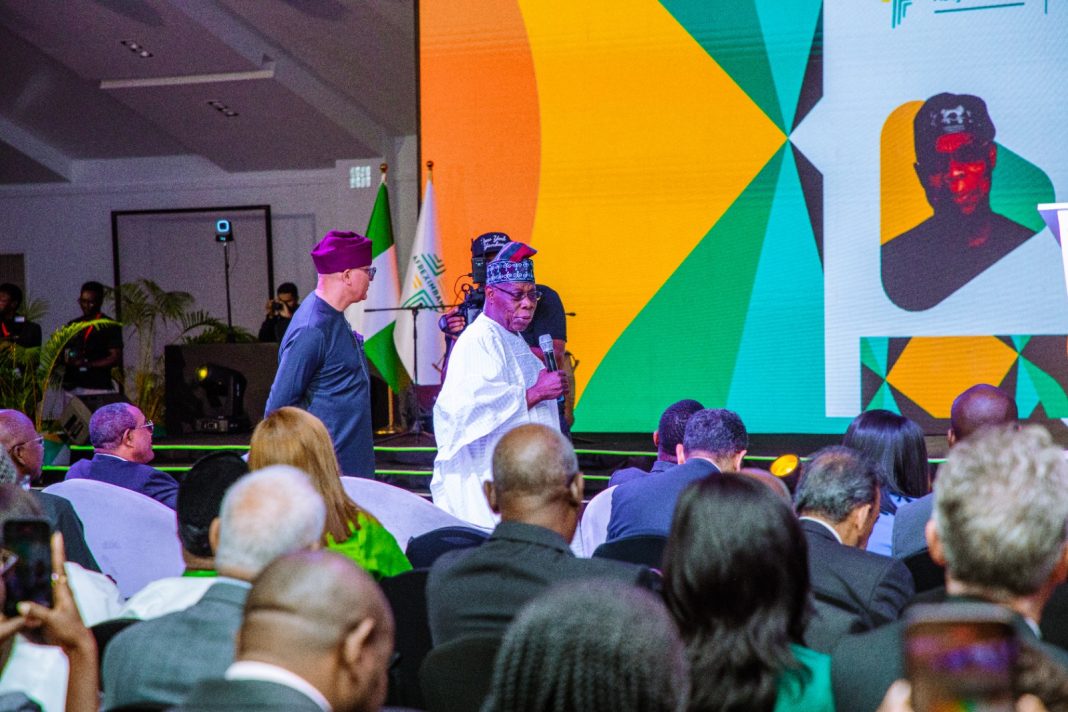
Speaking at the 32nd Annual Meetings of Afreximbank in Abuja, Miller emphasised that Africa stands at a defining economic moment, with the potential to become one of the world’s leading economic blocs by mid-century.
He warned, however, that the continent must make strategic choices to ensure that growth benefits Africans first and foremost.
“This is Africa’s century,” Miller said in a keynote address. “But if these opportunities aren’t seized strategically, Africa risks being taken advantage of again.”
Miller highlighted projections showing Africa surpassing Europe in economic size by 2050, with Nigeria emerging as one of the world’s top 10 economies. But he stressed that population growth alone is not enough.
Without proper planning, governance, and reform, he said, global competitors will continue to extract more value from African markets than they contribute.
Contrasting the U.S. with other foreign players, Miller criticised what he described as decades of exploitative investment patterns.
He argued that while some countries offer aid that comes with unsustainable debt, the U.S. offers market-driven, accountable investment—primarily through entities like the U.S. International Development Finance Corporation (DFC).
“This is not debt. This is investment,” he said. “Private capital wants returns, but it also demands transparency, governance, and results. That’s the kind of accountability that lifts countries—not sinks them.”
Miller encouraged African governments to create favourable conditions for U.S. institutional investors by stabilising their economies, enforcing legal contracts, and tackling corruption.
He pointed to recent currency reforms in Nigeria as an example of a bold step towards unlocking international investment.
He also took aim at partnerships with countries that he said have a poor track record of environmental stewardship and financial sustainability.
Citing China’s role in the region, he noted that African nations must be cautious about deals that deliver infrastructure but leave behind ecological damage and unpayable debt.
Miller’s remarks included a warning about the future of the African Growth and Opportunity Act (AGOA), a U.S. trade programme set to expire in 2025.
While AGOA currently allows eligible African nations duty-free access to the U.S. market, Miller suggested that its renewal is not guaranteed.
He questioned the logic of continuing preferential trade terms for countries that maintain tariffs on U.S. goods or align politically with America’s strategic rivals.
“Why should the U.S. offer one-way trade preferences when African nations impose tariffs on American goods or cozy up to our adversaries?” he said.
Miller advised African leaders to approach trade discussions with clear priorities, measurable goals, and credible reform agendas.
He urged them to engage with the U.S. business community directly—especially institutional investors and corporate executives—and avoid relying solely on diplomatic channels.
He pointed to Gulf nations like Saudi Arabia and the United Arab Emirates as examples of how targeted reforms and strategic alignment can attract sustained American investment.
He also recommended that African policymakers better understand the political dynamics in Washington, particularly by paying attention to former President Trump’s communication style and policy priorities.
Miller concluded his address by announcing his new role as Senior Adviser to Gateway Partners, a private equity firm investing in emerging markets.
He said he intends to use the position to direct U.S. capital towards Africa’s most promising sectors, including infrastructure, energy, and supply chains linked to emerging technologies.
“Don’t settle for lip service,” he said. “Demand real partnerships. That’s how Africa becomes powerful, wealthy, and great—on its own terms.”