
By Anderson Ojwang
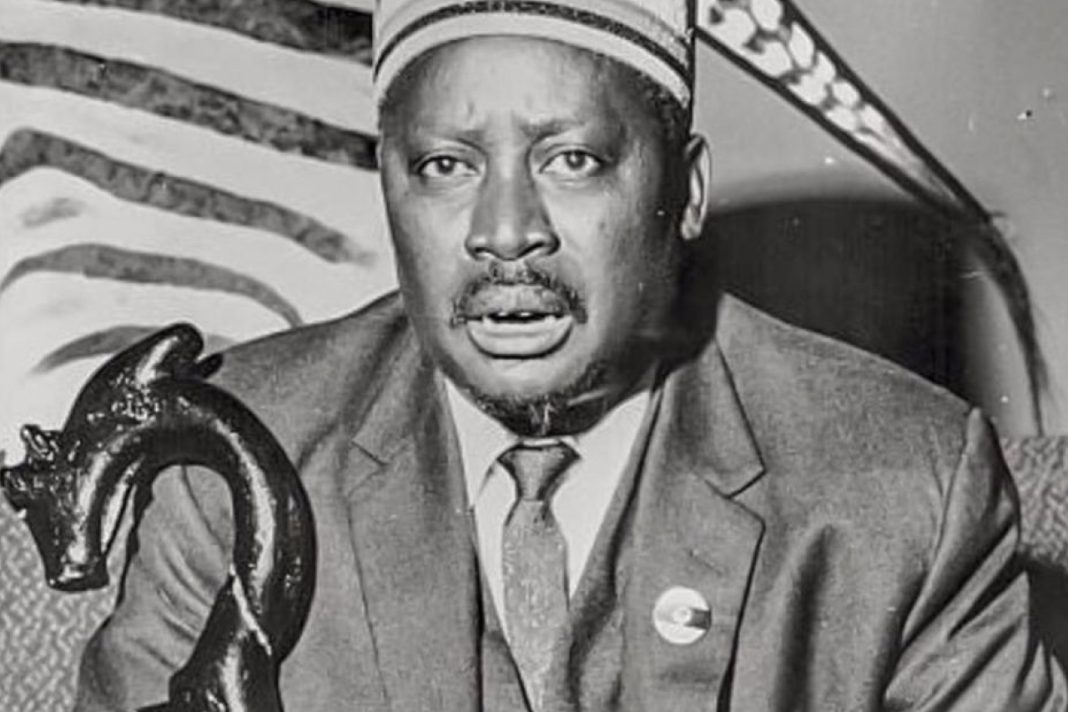
Fifty-eight years ago, Kenya’s first Vice President, the late Jaramogi Oginga Odinga set a precedent by digging a political pit that has turned out as graveyard for successive politicians who have walked in his path.
The decision by Oginga has continued to shape the country’s political landscape and left high-profile politicians in the obituary.
Currently, the country is witnessing a falling out in President William Ruto’s government where his deputy Rigathi Gachagua is facing an impeachment in the national assembly, a replica of 1966.
On April 14, 1966, Oginga shocked and shook the nation by bowing to the pressure from his opponents and made history as the first vice president in a post-colonial era to resign.
“It is fairly clear that there is pressure and desire that I should leave the government, the authority concerned however, showed reluctance to say openly to the public.
If I thought there was the slightest chance to put things right from within the government, then the desire to remove me from the office would not worry me, as indeed, it has not done for the last year, however, Wananchi my honest opinion is that the present government has reached a point of no return. It can only do for the people the little that the underground master allows it to do.
I, therefore, find it impossible to be part of it and my decision, from now on I should be free and join wananchi that their voice be heard,’ Oginga said at his resignation.
And by that, Oginga opened the country’s pandora box to resignation and political grave that has destroyed and consumed the careers of politicians in the country.
After his resignation, Oginga formed Kenya’s People Union (KPU) as his political vehicle.
The friction between Oginga and President Jomo Kenyatta continued, and in 1969 the former vice president was arrested after a public spat at a chaotic opening of Russia Hospital currently New Nyanza Teaching and Referral Hospital in Kisumu.
At the chaotic function, at least eleven people were killed, and dozens were injured in riots.
After the incident, KPU was banned making Kenya a de facto party state under KANU.
Oginga was detained along with other KPU members for eighteen months until the Government decided to free him on 27 March 1971.
Subsequently, Oginga was consigned to political limbo until after Kenyatta’s death in August 1978.
However, President Daniel Arap Moi tried to reintegrate Oginga into national politics by appointing him as the chairperson of the Cotton Lint and Seed Marketing Board.
He did not last long in the post, after he allegedly accused Jomo as a land grabber and that was why they had differed.
Oginga attempted to register a political party in 1982, but The Constitution of Kenya (Amendment) Act, 1982 (which made Kenya a de jure single-party state), foiled his plans.
After the failed 1982 coup, Oginga was placed again under house arrest in Kisumu.
In 1990, he tried in vain with others to register an opposition party, the National Democratic Party but in 1991 he co-founded and became the interim chairperson of Forum for Restoration of Democracy (FORD).
The formation of FORD triggered a chain of events that were to change Kenya’s political landscape, culminating in 2002 ending KANU’s 40 years in power – eight years after Odinga’s death.
FORD split before the 1992 election with Oginga vying for the presidency on Ford Kenya ticket and finished fourth with a share of 17.5% votes.
However, he regained the Bondo parliamentary seat after he was forced out of parliamentary politics for over two decades.
Nairobi advocate Patrick Ouya says Oginga’s political precedent of resignation altered the country’s politics and will continue to dictate the pattern of the game.
He says former cabinet ministers who have resigned from the government have become and remained political deadwoods.
“Any politician who has resigned from the government has been confined to oblivion. They have never made it back to the system and have died miserably and frustrated. The living ones are pale shadows of their former self,” he says.
He cites minister Kenneth Matiba who resigned, contested for presidency lost, and died miserably.
Similarly, the first country’s minister for Information and Broadcasting, the late Achieng Oneko, resigned to join Oginga in KPU and was only politically resuscitated by the 1992 general elections and served a single term as Rarieda MP.
Political analyst Dr. Obondi Otieno says Kenya’s Iron Lady Martha Karua’s political career came crashing down after she resigned as the minister for Water in the coalition government.
“The fiery and iron in Karua is long gone. She is a pale shadow and that is why they performed poorly in Mt Kenya in the last presidential election where she was the running mate to Azimio La Umoja candidate Raila Odinga, “he says.
He says resignation takes the gas from the political feet of the politicians and makes them seen as cowards and ones who cannot sustain a fight to a logical conclusion.
Ouya said, that when the late Masinde Muliro resigned from the Ministry of Public for voting against the government in the parliament over the JM Kariuki probe, he died in the opposition.
Former vice president Josephat Karanja was forced to resign after a censure motion to discuss his conduct was tabled in the house.
But today, Rigathi is sitting tight for a duel with his boss and the assembly and may rewrite Oginga’s story and change the narrative of political resignations in the country.