
By Anderson Ojwang
One of the greatest mistakes the people of Kisumu and the Orange Democratic Movement (ODM) leadership made in the county government was replacing the performing first governor, Jack Ranguma, with Prof. Peter Anyang’ Nyong’o.
Nyong’o exits the stage, leaving Kisumu County in the trenches and a dungeon from which it will take years to emerge and become economically viable once again.
While Ranguma left the county with a clean slate and no pending bills, Nyong’o is exiting the stage as the only known governor in the country to have left his county with a debt burden of Sh14 billion.
As Nyong’o exits, the once-vibrant Kisumu economy is in the doldrums, with the collapse of informal and formal sectors leaving hundreds jobless, while others have been forced to relocate to rural areas.
Nyong’o’s controversial arrival at the helm of the Kisumu County administration followed the infamous Thurdibuoro tallying centre, which allegedly declared him the winner after the party leadership had indicated that he was trailing Ranguma at the official Aga Khan tallying centre.
The mantra of Nyong’o transforming Kisumu County into Europe was utopian and a mirage. It was a case of how the ODM government could have performed nationally had it ever won the country’s leadership.
The excitement and political storm that marked the candidature of Kisumu Senator Prof. Anyang’ Nyong’o for the county gubernatorial seat in 2017 have turned into gnashing of teeth and bitter tears.
How Did Kisumu County Arrive at a Sh14 Billion Debt?
Kisumu County Government finds itself burdened with huge debts arising from unpaid suppliers, contractors and court decrees, threatening the actual operations of the government.
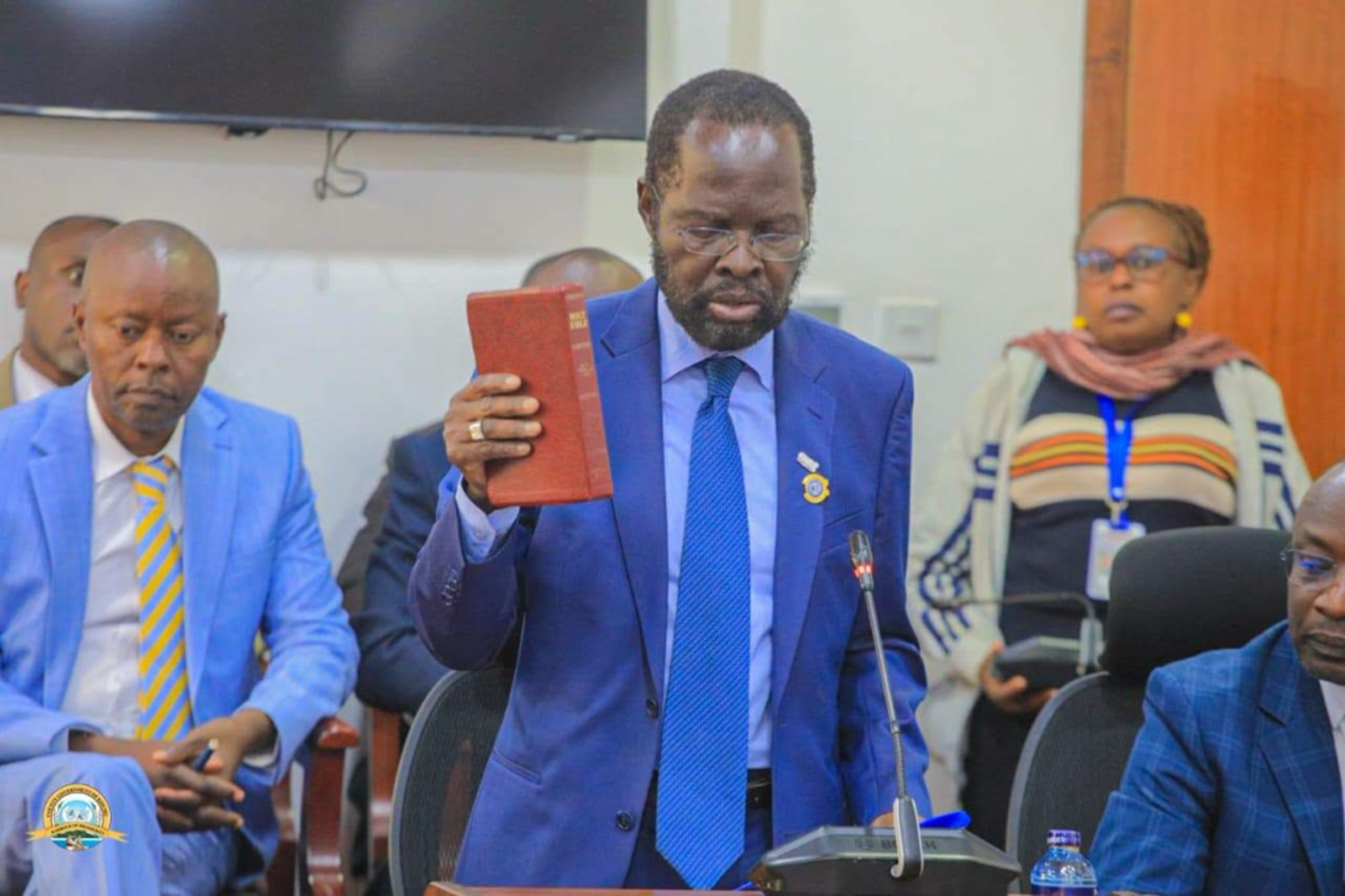
At a recent Senate Committee meeting, Nyong’o and his team struggled to explain what had befallen Kisumu City.
Senate Public Accounts Committee Chairman Moses Kajwang’ asked Nyong’o whether he was planning to hand over a Sh5.9 billion debt to the next administration.
“Are you planning to hand over Sh5.9 billion debt to the next administration? What is the plan, because these responses, whatever is on paper, is just accounting speak. You close that year with Sh5.9 billion as debt. Whether it is legal fees or whether it is one year old or ten years old, but after 10 years of being in office, would you be handing over Sh5.9 billion as unpaid debt to the next administration?” he asked.
Kajwang’ said there was serious concern over Sh5.9 billion in unpaid pending bills, while the revenue for the year was Sh9 billion. This meant that the debt-to-revenue ratio exceeded the 20 per cent cap, reaching more than 60 per cent.
“Do you have a payment plan, and have you submitted it to the Controller of Budget, and to what extent has this debt reduced?” he said.
The senators questioned the sharp rise in pending bills to Sh5.9 billion, demanding a clear strategy on how the county intends to reduce the debt burden.
The committee interrogated Governor Prof. Anyang’ Nyong’o and county officials over what it described as a 108 per cent increase in pending bills within a single financial year.
Committee member Senator Tom Ojienda sought an explanation of the county’s debt reduction strategy, asking what measures had been put in place to bring down the growing obligations.
The Sh7 Billion Court Award
At the Kisumu High Court, Justice Omido, in Case No. HCJR/E015/2025 between Spacebuster Limited and the County Government of Kisumu and Kisumu City Board, awarded Sh7.3 billion to the petitioner.
In the judgment, the court directed the Chief Officer for Finance, Kisumu County Government; the City Manager, Kisumu City; and the Secretary, Kisumu City Board, as the responsible accounting officers within the financial structure of the County Government of Kisumu, to take the necessary action.
The court ordered the respondents to pay the applicant KSh7,347,913,816, plus interest at court rates from the date of judgment, bringing the aggregate total to KSh7,936,185,766 as at 23 September 2025, being the amount awarded in the judgment and decree of the High Court.
An order of mandamus was issued in favour of the applicant against Kisumu City Board and the County Government of Kisumu.
The grounds upon which the application was premised were that the applicant had instituted Kisumu HCCC No. E006 of 2022 against Kisumu City Board and the County Government of Kisumu, arising from alleged unlawful acts, including the demolition of its property, for which it sought damages for loss of income and other losses suffered as a consequence.
POSITION AND ORDERS
In the result, and for the reasons set out hereinabove, I find that the applicant’s motion dated 18 December 2025 is merited.
Accordingly, the court makes the following orders in respect thereof:
An order of mandamus is hereby issued compelling the respondents, in their respective capacities as the responsible accounting officers, to satisfy the judgment and decree issued in Kisumu HCCC No. E006 of 2022, Spacebuster Limited v Kisumu City Board & Another, together with the costs and interest lawfully accruing thereon, in the amounts appearing as due under the certificate of order against the Government and the certificate relating to the taxed costs.
The respondents shall, within one hundred and eighty (180) days from the date of delivery of this judgment, pay the applicant the decretal sum, together with the costs and interest lawfully accruing thereon, as certified under Section 21 of the Government Proceedings Act.
The period of one hundred and eighty (180) days is granted having regard, in particular, to the exceptional magnitude of the decretal sum, and is intended to afford the respondents reasonable time within which to make the necessary lawful financial and administrative arrangements for satisfaction of the judgment debt.
For the avoidance of doubt, the period of one hundred and eighty (180) days granted herein does not vary, review or otherwise interfere with the judgment and decree in Kisumu HCCC No. E006 of 2022. It merely specifies the period within which the respondents shall comply with the order of mandamus issued by this court. Further, the period shall not be construed as a stay or suspension of the judgment or decree.
The pendency of Civil Appeal Nos. E176 of 2025 and E182 of 2025 shall not, in the absence of an order of stay or other lawful order suspending payment, relieve the respondents of the obligation imposed by this order.
In default of compliance within the period aforesaid, the applicant shall be at liberty to move the court for appropriate consequential orders in accordance with the law.
The applicant shall have the costs of the application.
What Did Nyong’o Tell the Senate?
In response, the Finance CEC, George Okongo, was hard-pressed and found himself under intense scrutiny over his responses.
Okongo said the increase was largely driven by court decisions requiring the county to settle long-standing claims, including liabilities arising from a consent agreement with the National Housing Corporation.
They also cited poor local revenue performance as a major contributor to the growing debt.
According to the county, a Sh2.5 billion payment plan had been prepared, with Sh1.9 billion already paid, translating to 76 per cent performance in settling pending bills under the payment plan.
Okongo further disclosed that the county owed its staff about Sh1.3 billion in unpaid obligations.
Governor Nyong’o acknowledged the concerns raised by senators and assured the committee that the county would address the issues.
“Once we get the report of discussions today, we will sit down and go through what has been discussed today and go to practical work on the questions that have been raised,” Nyong’o said.
The governor maintained that some of the pending bills had been inherited from previous administrations, while others resulted from national government policies and court rulings requiring immediate payment.
The committee is expected to continue scrutinising the county’s financial records as it seeks accountability over the management of public resources and the settlement of pending bills.