
By Valentine Omondi
Kenya’s opposition is increasingly presenting itself as the political alternative capable of ending President William Ruto’s administration in 2027. Meetings are being held, alliances explored and political declarations made, with prominent figures including former Deputy President Rigathi Gachagua, Nairobi Senator Edwin Sifuna and Wiper leader Kalonzo Musyoka positioning themselves at the centre of the emerging political arrangement.
However, beneath the growing enthusiasm for a united opposition lies a problem that could become its biggest electoral weakness: the leaders appear more united by their desire to defeat Ruto than by a clearly defined vision of how they would govern Kenya.
The opposition’s challenge is no longer simply about bringing together influential politicians or calculating how many votes different communities can deliver. It is about managing competing ambitions, establishing credible leadership and convincing Kenyans that the proposed coalition represents something more substantial than an arrangement designed around the 2027 presidential election.
While Gachagua has emerged as one of the most outspoken figures in the anti-Ruto camp, Sifuna has cultivated a growing political following through the Linda Mwananchi movement, particularly among young Kenyans. Kalonzo, meanwhile, brings years of political experience and an established national presence.
But having influential personalities around the same political table does not automatically produce a united political movement.
Gachagua’s Mountain Politics and the National Leadership Question
Gachagua’s growing influence within the opposition has become both an asset and a potential source of division.
Since his impeachment and subsequent political fallout with President Ruto, the former Deputy President has positioned himself as a leading voice against the current administration. His political influence, particularly in the Mt Kenya region, makes him an important figure in any serious attempt to challenge Ruto.
However, one of the most persistent criticisms of Gachagua’s politics is his apparent tendency to place the interests of the Mountain region at the centre of his political messaging, sometimes at the expense of a broader national conversation.
His frequent references to the region’s political strength, alleged marginalisation and need for political protection have helped him consolidate support among sections of the Mt Kenya electorate. But they have also raised questions about whether his political vision extends sufficiently beyond his traditional support base.
This concern became particularly visible in his recent proposal to bring together Mt Kenya, Western Kenya and Ukambani through an alliance involving himself, Sifuna and Kalonzo.
While the proposal demonstrates an understanding that the Mountain cannot independently secure the presidency, his explanation relied heavily on regional voting arithmetic. Gachagua estimated that Mt Kenya commands approximately 35 per cent of the national vote and argued that support from other regions would provide the additional numbers needed to cross the presidential threshold.
In one of his remarks, he declared:
“Between I, Sifuna and Eugene Wamalwa and Kalonzo Musyoka; the election is done.”
The statement captures the numerical calculations driving some of the opposition’s coalition negotiations. However, it also raises a bigger question: Is the opposition building a national political movement or simply assembling powerful regional voting blocs?
There is nothing inherently wrong with political leaders mobilising support from their communities. The problem arises when national leadership begins to appear like a negotiation between regional political owners, with communities treated as voting assets whose support can be delivered through individual political agreements.
A presidential candidate is expected to speak to the interests of the entire country, not just the community from which they draw their strongest political support.
Gachagua must therefore demonstrate that his political ambitions are about building a national alternative rather than positioning himself as the principal defender and negotiator of Mountain interests.
His influence is important, but the opposition cannot afford to make regional loyalty the foundation of its national leadership project.
The concerns over his leadership approach have also become increasingly public. On November 2, Democratic Party leader Justin Muturi accused Gachagua of political bullying and double-speak, warning that attempts by individual leaders to dominate the opposition could undermine its 2027 ambitions.
Muturi questioned whether the objective was to win the presidency or control parliamentary seats and devolved political positions at the expense of the bigger national ambition.
Former Defence Cabinet Secretary Fred Matiang’i has similarly warned against a situation where a few politicians dictate the direction of the entire opposition.
Matiang’i said:
“I will support anyone picked through an inclusive, acceptable, and respectful process. I have a serious problem with two or three people frogmarching everybody to a particular corner.”
These criticisms expose a difficult contradiction. The opposition is seeking to convince Kenyans that it can provide better democratic leadership, yet its own members are already questioning the inclusiveness of its political negotiations.
Gachagua may have considerable political influence, but influence should not be confused with ownership of the opposition.
Sifuna’s Youth-Driven Popularity and the Question of Political Substance
If Gachagua represents the opposition’s established political machinery, Sifuna represents a different political proposition: a younger political voice whose popularity has increasingly found acceptance among Gen Z and other youthful voters.
Through Linda Mwananchi, the Nairobi Senator has built a platform around constitutionalism, accountability, democratic governance and resistance to political arrangements that he considers contrary to the interests of ordinary Kenyans.
His sharp political messaging, confidence and ability to connect with younger audiences have helped him develop a following that extends beyond his Nairobi political base.
His popular slogan, “Mimi ndiye Sifuna”, has resonated with sections of the youth, particularly those looking for a different political generation and a departure from the familiar faces that have dominated Kenya’s politics for decades.
This growing enthusiasm has also pushed presidential speculation around him into the national conversation.
On September 27, Linda Mwananchi leaders settled on Sifuna as their preferred presidential candidate, signalling that the movement was not merely interested in influencing ODM’s internal politics but was also considering a bigger national political role.
The movement subsequently announced plans to establish structures across all 47 counties, with its headquarters unveiled on October 30.
These developments suggest that Sifuna’s political ambitions are moving beyond public rallies and confrontational political messaging.
However, there is a distinction between being popular among young voters and commanding the national support required to win a presidential election.
The enthusiasm surrounding Sifuna should not be dismissed. Young people have demonstrated their ability to influence national political conversations, mobilise around common grievances and challenge established political narratives.
But the same youth support that has elevated Sifuna must eventually translate into organised political structures, a clear national programme and a convincing electoral strategy.
There is also the question of whether the enthusiasm surrounding him is driven more by his political ideas or by the excitement of having a youthful face challenging established political figures.
His growing popularity should not become an excuse for avoiding difficult questions about his experience, policy positions and readiness to lead a national government.
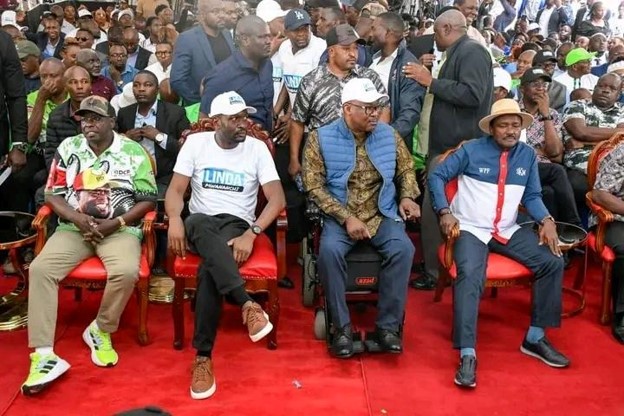
The October 30 Linda Mwananchi headquarters launch exposed another challenge when Kalonzo faced heckling after questioning the manner in which Sifuna’s presidential ambitions were being discussed.
The incident was particularly revealing because it happened at an event associated with a movement that has repeatedly presented itself as an alternative to established political practices.
If opposition leaders cannot comfortably accommodate questions about presidential ambitions within their own political gatherings, what happens when they have to negotiate an actual presidential ticket?
Sifuna deserves recognition for building a political platform that has attracted public attention, particularly among young Kenyans. Nevertheless, political popularity and the ability to govern a country are two different tests.
The Linda Mwananchi movement must demonstrate that it has the organisation, policy direction and national reach required to compete beyond the enthusiasm of its existing supporters.
The danger is not Sifuna’s ambition. It is the possibility that political hype could become a substitute for the difficult work of building a viable national alternative.
A Coalition United Against Ruto but Divided on What Comes Next
Perhaps the biggest weakness facing the opposition is the absence of a publicly demonstrated common governing programme.
A coalition cannot survive on presidential ambitions and opposition to an incumbent alone.
Kenyans are dealing with questions surrounding taxation, unemployment, public debt, the cost of living, healthcare, education and the state of the economy. These are issues that require specific policy proposals rather than political declarations.
Sifuna has placed considerable emphasis on constitutionalism and civil liberties, Gachagua has focused heavily on political betrayal and the Mt Kenya electorate, while Kalonzo has emphasised constitutional governance, accountability and economic relief.
Matiang’i has also positioned himself around competent leadership, employment and economic recovery, while Martha Karua has consistently emphasised integrity, human rights and accountability.
These positions are not necessarily incompatible. In fact, they could form the foundation of a strong opposition manifesto.
The problem is that the leaders have yet to publicly demonstrate how these different priorities will be reconciled into one coherent programme.
What is their common position on taxation? How would they address unemployment among young people? What would their economic recovery strategy look like? How would they manage public debt and improve healthcare services?
More importantly, what would distinguish their proposed government from the administration they are seeking to replace?
These are questions that cannot be answered by repeatedly declaring that Ruto must go.
The opposition must understand that Kenyans are not simply looking for a new collection of politicians to occupy State House. They want to know what will change in their lives if the current administration is replaced.
The NARC Lesson the Opposition Cannot Afford to Ignore
Kenya’s political history offers an important lesson through the formation of the National Rainbow Coalition (NARC) ahead of the 2002 General Election.
The coalition brought together several opposition forces that had previously operated separately, eventually producing a united front against KANU and President Daniel arap Moi’s succession arrangement.
Its success was not simply about the popularity of individual politicians. It was about political negotiations, compromise and the ability to rally behind a common presidential candidate.
The current opposition faces a similar opportunity, but also a different set of complications.
Unlike a coalition that has already agreed on its political destination, the emerging opposition arrangement is still navigating competing presidential ambitions, questions of regional influence and disagreements over who should lead the negotiations.
Gachagua, Sifuna, Kalonzo, Matiang’i and other opposition figures may all have legitimate reasons to seek leadership positions. However, the ability to compromise will determine whether their political cooperation survives beyond public declarations.
The opposition should also recognise that agreeing on a presidential candidate without agreeing on a governing programme could simply postpone its internal disagreements until after an election victory, should one happen.
The Nightmare May Not Be Ruto, but the Opposition Itself
President Ruto’s re-election ambitions present the opposition with an opportunity to consolidate its political strength. His administration’s record on taxation, the cost of living, employment and governance gives his critics considerable material with which to challenge him.
But defeating an incumbent requires more than identifying public dissatisfaction. It requires offering a credible alternative that voters can trust.
The opposition’s biggest danger is that its leaders could spend so much time negotiating who gets what, who commands which political region and who deserves the presidential ticket that they forget to explain what they intend to do for the country.
Gachagua must demonstrate that he can rise above regional politics and embrace a genuinely national leadership agenda. Sifuna must prove that his youth-driven popularity can translate into a serious national political organisation and a workable governing programme. Kalonzo and other experienced opposition figures must also be willing to accommodate a new political generation without turning every disagreement into a contest for supremacy.
Ultimately, the opposition cannot demand unity from Kenyans while failing to practise it among its own leaders.
The 2027 election should be about competing visions for Kenya, not simply assembling political heavyweights around a common enemy.
And perhaps the most uncomfortable question facing the opposition is this: If Gachagua, Sifuna, Kalonzo and their colleagues cannot agree on how to share political space before taking power, what assurance do Kenyans have that they will agree on how to govern the country after taking it?