
By Habil Onyango.
The onset of devolution in Kenya officially began with the promulgation of the 2010 Constitution, which replaced a heavily centralised state with a two-tier government system.
The transition materialised operationally following the country’s first general election in March 2013, establishing 47 distinct County Governments designed to bring public resources, representation, and services closer to local citizens.
Some of the core objectives at inception included decentralisation of power through transferring political authority, administrative duties, and decision-making from Nairobi to local regional units.
It also focused on public participation, mandating citizen involvement in local development planning, budgeting, and project identification, as well as equitable sharing of resources by ensuring marginalised and remote regions receive fair financial allocations through national revenue.
Many are currently enjoying the fruits of devolution, including a number of elected leaders and locals from all 47 counties within Kenya.
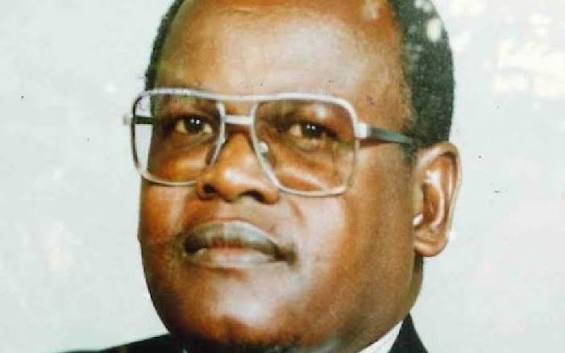
However, one notable figure, the late Dr Chrispine Odhiambo Mbai, a former University of Nairobi political science lecturer and influential chairman of the devolution committee during the 2002–2004 Bomas of Kenya Constitutional conference, never lived to realise, reap, or witness the benefits of devolution.
Widely regarded as an intellectual architect of Kenya’s system of decentralised governance, he was assassinated in September 2003 at the height of intense national debates over executive power and regional representation.
Mbai led the critical Bomas committee tasked with structuring how power and resources would be distributed away from the imperial presidency.
On Sunday, September 14, 2003, unknown gunmen broke into his Nairobi Woodley home and fatally shot him, with nothing stolen, in what investigators and the Truth, Justice and Reconciliation Commission (TJRC) later concluded was a targeted political assassination linked to his stance on devolution.
The killers and masterminds behind his death have never been officially identified or prosecuted.
He is remembered as a martyr of the new constitution; his work lives on through the structure and operation of modern devolved governance across Kenya.
In his remembrance, a committee led by his wife Mrs Margaret Mbai, Dr Mbai Secondary School Principal Mr Odongo, and the institution’s Board of Management Chairman Mr Kotonya has organised a memorial service.
The event will be held on Saturday, September 12, 2026, at Dr Mbai Mixed Secondary School in his rural home in Kochia, Rangwe Constituency, Homa Bay County, where he was laid to rest.
According to one of the committee members, Hon Juma Awuor, President William Ruto, senior government officials, politicians, and all 47 county governors have been invited to attend.
He said the memorial will be an interdenominational prayer meeting for the family and friends.
Awuor added that this will mark 23 years since the assassination of a man whose sacrifice paved the way for Kenya’s 2010 Constitution.
“Let us all gather as a family, one community, and one nation to remember a man who gave so much and asked for so little. Together, we can light the path for our children’s future,” he said.
“23 years ago, Kenyans have benefited from devolution since its introduction in 2003, with public surveys showing that a strong majority of citizens feel it has improved local service delivery and brought resources closer to grassroots communities,” he added.
Awuor noted that the devolution Mbai fought for has significantly transformed some parts of the country, where previously marginalised areas have seen the construction of local roads, tarmac networks, street lighting, and water boreholes that were neglected under the centralised system.
He highlighted that healthcare has expanded, with county governments building new health centres and upgrading regional hospitals, making medical care more physically accessible, while funds are now directed straight to local economies, helping to address regional inequalities, especially in remote northern counties.
“This was the man who risked his life for the benefits of Kenyans, and we will be celebrating him,” said the former Homa Bay Town East Member of the County Assembly.
“Although his killers were never fully brought to justice, his framework survived to form the backbone of the devolved county system embedded in Kenya’s 2010 Constitution,” he added.
However, according to Homa Bay Bunge La Wenyenchi Speaker Walter Opiyo, despite Mbai risking his life for this great initiative, some county officials are involved in misusing county funds and inflating administrative costs, which have hindered the full realisation of development goals.
“Many newly formed county administrations lack adequate technical expertise, robust human resource management structures, and strong internal controls,” said Opiyo.
“He also pointed out disparities in local revenue collection capabilities, delays in disbursements from the national government, and overlapping mandates between national and county sectors, which continue to affect several counties,” he added.
Opiyo further revealed that devolution has faced accountability and oversight challenges, with managing public funds transparently remaining difficult as local oversight systems attempt to curb corruption and misallocation at the grassroots level.