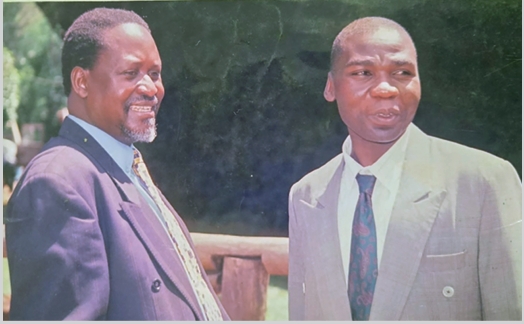
Dr.Edris N.Omondi(Advocate)
“Charles Dickens once wrote in A Tale of Two Cities, ‘It was the best of times, it was the worst of times…we had everything before us, we had nothing before us, we were all going direct to Heaven, we were all going direct the other way—in short, the period was so far like the present period, that some of its noisiest authorities insisted on its being received, for good or for evil, in the superlative degree of comparison only.'”
In this timeless opening line, Dickens sets the stage for a reflection on the duality of life—how the passage of time can simultaneously bring us joy and sorrow, success and failure, hope and despair.
Time, in all its complexity, is a force that shapes the very essence of our lives. We cannot control it; we can only navigate through it, making the best of every fleeting moment.
The Gift of Time
The truth is, time is both a gift and a mystery. It belongs to the gods, as the saying goes, and we, mere mortals, must simply sail through it.
There is no command we can give over its flow; it neither waits for us nor slows down. But what we do with the time we’re given—how we choose to fill it—defines the quality of our lives.
As I age gracefully, I have become more acutely aware of this fact.
The days slip away, I have become more spiritual, deliberate and aware of the years accumulate, and with each passing moment, I am reminded that my time on this earth is limited, and indeed as the good book says help me number my days.
Time and Health: The Foundation of Living Well
Consider the example of Nelson Mandela, who, after spending 27 years in prison, emerged not only as a political leader but as a symbol of resilience and wisdom.
As Mandela grew older, he became more spiritual, more reflective, and more attuned to the deeper meanings of life.
He had no control over the time lost in prison, but he made every minute count when he finally stepped into freedom.
Through his advocacy for peace, equality, and forgiveness, he redeemed his years and left a legacy that will endure far beyond his lifetime.
Mandela’s example is a reminder that, with time, we must also prioritize our health.
As we age, we can no longer take our bodies for granted.
Good health becomes more than just a physical state—it becomes a reflection of how we’ve spent our time.
Those who maintain their health—through regular exercise, proper nutrition, and mental well-being—are the ones who find joy and purpose in their later years.
Its a challenge, a cross I am willing to carry- Time, when invested in health, yields strength, vitality, and longevity. Without it, wealth and success pale in comparison.
The Spiritual Journey: Aging with Grace
As time passes, many of us turn inward, seeking peace and spiritual growth.
With age often comes a deeper sense of understanding, a quiet wisdom that only the years can impart.
We become more attuned to the fragility of life and more aware of our spiritual needs. People like Mahatma Gandhi, whose later years were marked by spiritual reflection and commitment to truth, show us that the journey through time isn’t just about accumulating material wealth, but about aligning with a greater purpose.
In his final years, Gandhi often spoke about the importance of living with love, compassion, and a sense of duty to others.
He understood that time, though fleeting, could be a tool for spiritual growth and personal transformation.
His example teaches us that, as we age, we can find deeper meaning through introspection, service, and connection to something greater than ourselves.
It is not in power or wealth that we find fulfillment, but in living with intention, peace, and happiness.
Aging Like Fine Wine: The Beauty of Time’s Passage
There is a saying that “aging is like fine wine—it gets better with time.”
As we age, we may find that, with each year that passes, we become more resilient, more compassionate, and more understanding of life’s complexities.
Time, in its own mysterious way, adds richness and depth to our character.
Take my friend Reginald Dunham, for example.
In his 60s, Dr. Dunny as i fondly call him, is impacting Africa, influential, and spiritually centered than ever before.
What makes his story remarkable is not just a rich history he carries with him or a great Baptist minister impacting Africa, but the way he has selflessly used his time to help others.
As he ages, he shares the wisdom of his experiences, empowering others to live their best lives.
He is a living example that time, when spent in alignment with one’s values, results in fulfillment that goes far beyond material possessions.
Dunham’s journey highlights a key aspect of aging: it’s not about what you have, but how you live.
In fact, many of those who live the most fulfilling lives in their later years are the ones who prioritize happiness, inner peace, and human connection over power and status.
Time spent cultivating relationships, pursuing passions, and serving others is the most valuable kind of time.
Living in the Moment: A Call to Action
The passage of time brings inevitable challenges—aging bodies, missed opportunities, regrets, and losses.
But it also brings the chance to make a difference, to leave a legacy, and to find peace with oneself.
The key is to redeem the time we have, making every minute count in the areas that truly matter— Your spirituality,health, wealth, and strength.
The more we embrace the passage of time, the more we realize that it’s not about accumulating wealth, building empires, or attaining power. It’s about living fully and meaningfully, with a heart open to learning, growth, and love.
It’s about finding contentment in the present moment, rather than chasing after a future that may never come.
It’s about letting go of the things we cannot control, and focusing on the things that bring us true happiness.
As we grow older, we begin to understand that happiness isn’t something to be sought after in distant dreams or grand accomplishments.
It’s something we create in the here and now, through relationships, through gratitude, and through the small moments of joy that come with each passing day.
As a pastor friend from India, once authored-how to recreate our world-that’s where our true happiness is as we age gracefully.
Conclusion: Embracing the Gift of Time
In the end, time is not something we can control, but something we must navigate with wisdom, grace, and intentionality.
Whether we’re young or old, we all have the same gift of time, and it is up to us how we spend it.
Like the characters in Dickens’ story, we may experience both the best and worst of times, but it is in how we choose to spend each moment that we truly shape our lives.
So, as we sail through life, let us remember that time, though fleeting, is a precious gift.
Let us embrace the opportunities it offers, nurture our health, and cultivate meaningful relationships.
As we age, we don’t need to be obsessed with wealth or power; instead, we can focus on becoming better versions of ourselves, like fine wine, more complex, more fulfilled, and more attuned to the beauty of life.
For in the end, it is not in the passing of time that we find our worth, but in how we choose to live it.
(Dr. Edris Omondi is a Preacher, Social Thinker, Mentor, Writer, Author and a Public Motivational Speaker)