
By Reporter
The Kenya Institute of Primate Research (KIPRE) is partnering with Nairobi Enterprises Limited (NEL) to develop an antivenom, which is expected to improve the treatment of snakebite victims in Kenya and the wider region.
Kenya continues to face a significant snakebite burden, with the Ministry of Health reporting more than 19,000 cases annually and over 1,000 deaths.
The Departmental Committee on Health has expressed satisfaction with progress in the development of the first antivenom designed specifically for snake species found in East Africa.
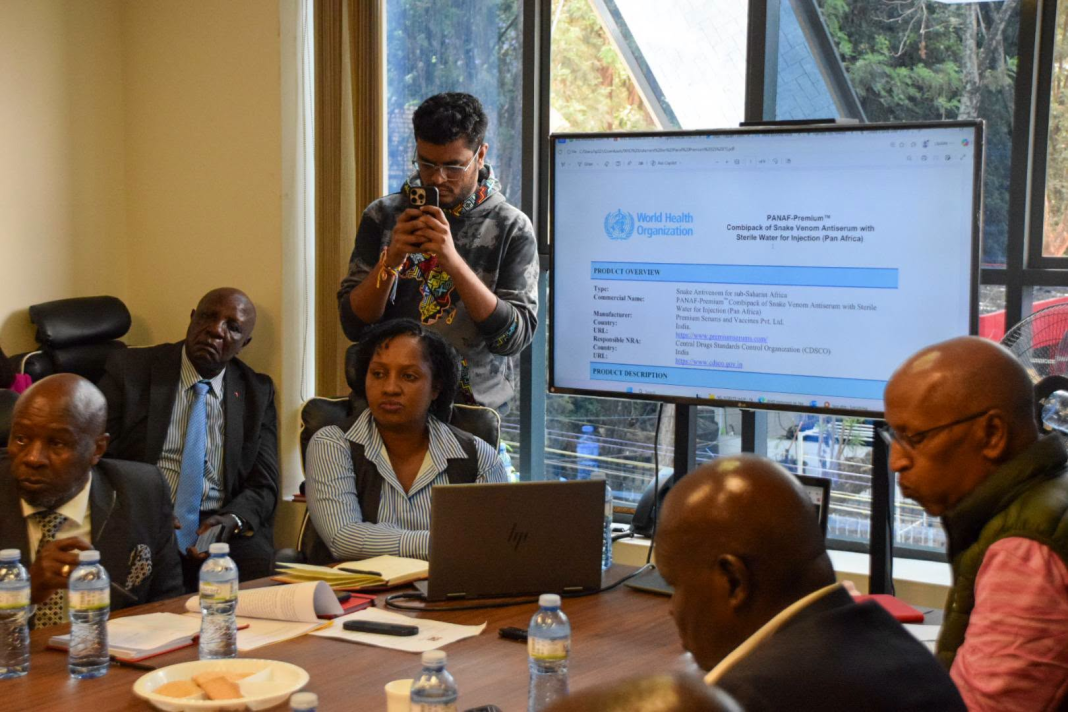
Members of the Committee, led by Chairperson Hon. Dr James Nyikal (Seme), made the remarks during a budget oversight visit to Nairobi Enterprises Limited.
The company’s Managing Director, Mr Rajan Dhanani, and a team from KIPRE, led by Director General Dr Peter Mwethera, briefed the Committee on the progress of the project.
“We are committed to conducting world-class biomedical research and fostering scientific innovation that improves the health and well-being of Kenyans and the region,” Dr Mwethera said.
He told the Committee that the team expected to have the antivenom ready by the end of the year.
Dr Mwethera said the product would be developed to target snake species found in the region, noting that imported antivenoms might not always provide effective treatment against local snakes.
“The antivenom will be specific to the region. Right now, the antivenom we have is developed outside the continent, and sometimes it is not effective because the snakes found here are different.
“That is why we are working on our own product. We will no longer need people to come to hospital with dead snakes to get effective treatment,” he said.
Committee members commended KIPRE for promoting African-led scientific research and developing local solutions to public health challenges.
They observed that the limited availability of antivenoms suited to regional snake species posed a public health risk and pledged to support the institution through budgetary allocations.
“Kenyans are waiting for an effective and cost-effective antivenom. You can count on our support as a Committee as you come up with innovative scientific solutions to challenges facing the public,” Dr Nyikal said.