
By Billy Mijungu
There is a political calculation taking shape in Kenya, and those dismissing James Orengo’s movements as routine political courtesy may wake up too late. Bob is not touring Kenya for photographs. He is building a political proposition.
To understand what is happening, you have to understand Orengo. This is a man who entered Parliament in 1980 at the age of 29 as Kenya’s youngest Member of Parliament. He was not simply an MP. He became one of the unmistakable faces of Kenya’s struggle for multiparty democracy and constitutional reform. He endured the politics of confrontation, stood with the forces that challenged the KANU establishment and became part of the generation that fundamentally changed Kenya’s political architecture. He has been a presidential candidate, Cabinet Minister, Senator, Senate Minority Leader and is now Governor of Siaya.
He has also built a formidable reputation as a lawyer and human rights advocate. You cannot erase four decades of political memory from a man and expect him to behave like a newcomer.
That history explains the current movement.
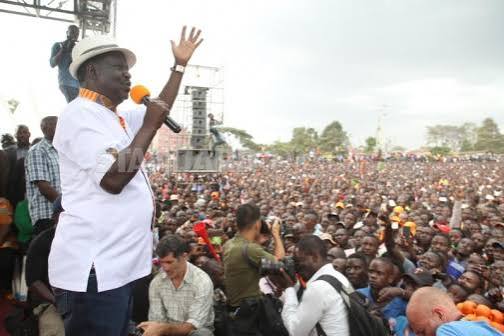
Look at where Orengo is going and, more importantly, look at who is receiving him. Kwale, Mombasa, Kilifi, Nyeri, Homa Bay repeatedly, Kisumu, Siaya and a Maa delegation at his home.
His political engagements now stretch into Kirinyaga, Mandera, Migori, Nyeri, Kiambu and Taita Taveta.Some will call it courtesy. Others will call it coincidence.I call it preparation.
Orengo understands something that many politicians discover only when it is too late. Presidential negotiations are not won on the day people sit around the table. They are won months and years before that table is set. They are built through relationships, numbers, trust, networks and the ability to speak to people who do not necessarily vote the same way you do.
That is precisely what Orengo appears to be constructing.
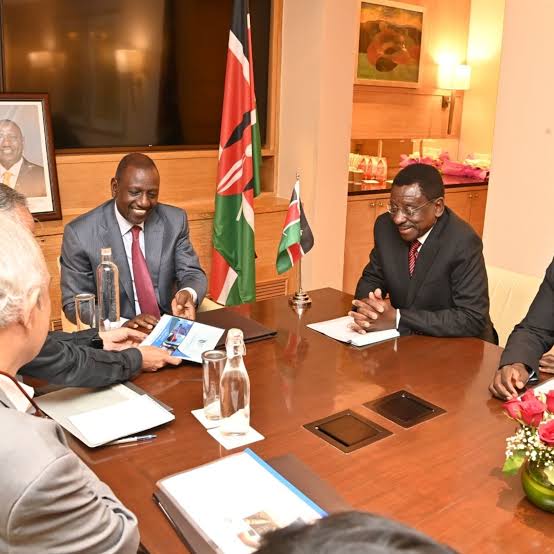
His interactions with people such as Hon. Aisha Jumwa and Hon. Chirau Ali Mkwakwere are politically significant because they demonstrate a willingness to cross traditional political boundaries. This is the politics of accommodation. This is the politics of creating options before the negotiations begin.
And then comes the question nobody wants to ask loudly.
Who exactly is negotiating for the Luo community?
ODM once occupied that position almost by default. But politics has changed. The old arrangements have been exhausted, and yesterday’s political receipts cannot automatically purchase tomorrow’s political bargain.
The Luo community cannot afford to arrive at the next national negotiation table as spectators waiting to be allocated a position. Someone must build the numbers before the negotiations. Someone must create relationships beyond Nyanza. Someone must make it impossible for the national political establishment to ignore the community.
Orengo is positioning himself to do exactly that.
He is not merely protecting an old political generation. He is cultivating the next one. He is creating a space where young leaders, sitting leaders, aspirants and political actors from different communities can interact with Nyanza without the old suspicion and rigid political boundaries.
When the national political table is eventually assembled and figures such as Sifuna, Rigathi, Kalonzo and Matiang’i are fighting for strategic space, Orengo will not be standing outside the room waiting for an invitation.
He will walk in with a constituency.
Kisumu is already critical. Siaya is moving. Homa Bay and Migori remain the great test. If Linda Mwananchi manages to consolidate those two counties, the political arithmetic changes completely.
And once the numbers change, the conversation changes.
Suddenly the question will not be whether Orengo deserves to negotiate. The question will be how anyone can negotiate without him.
This is why those writing Orengo off as an ageing political figure are making a dangerous analytical mistake. Political relevance is not measured by noise. It is measured by networks, organisation, history and the ability to convert relationships into political leverage.
Orengo has all four.
And then there is Babu Owino.
Whatever one thinks of Babu, his political energy and influence among younger voters cannot simply be dismissed. Put that energy alongside Orengo’s experience, networks and institutional memory, and you begin to see a potentially formidable political combination emerging in Nyanza.
The political establishment should therefore pay attention.
This is not about whether Orengo wants the presidency. It may not even be about whether he wants the premiership.
It is about whether he wants to make himself indispensable to whoever eventually occupies State House.
That is a different game.
And Bob knows how to play it.
So when the presidential negotiation table is finally set, do not ask why James Orengo is there.
Ask a more uncomfortable question.
Who can afford to negotiate without him?
Because Orengo is not coming to the table to ask for political charity.
He is coming with numbers, history, relationships and a bill to settle.