
By Simon Okola
C.E.O/ Lead Consultant, Agenda Beyond Borders
Africa has received another major clean-finance signal.
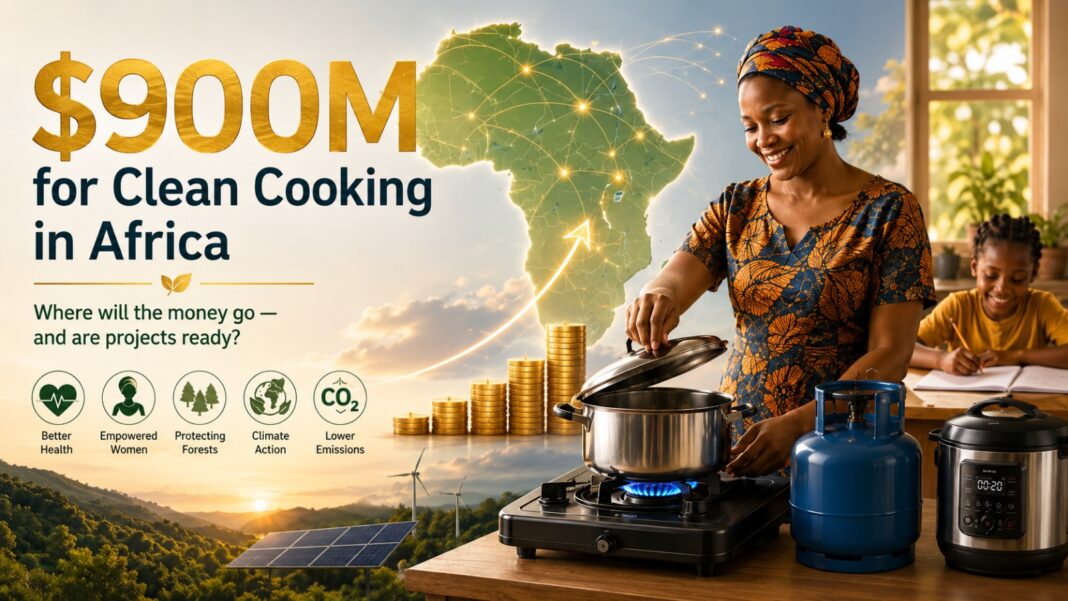
On 9 July 2026, the International Energy Agency announced $900 million in new financial commitments for clean cooking in Africa. The new commitments build on the $2.2 billion mobilised at the inaugural Summit on Clean Cooking in Africa in 2024, bringing the combined commitments associated with the two processes to approximately $3.1 billion.
This is encouraging. But it is important to understand precisely what has been announced.
The $900 million is not one central fund sitting in a single account. It represents a collection of public- and private-sector commitments that will probably be delivered through different governments, development banks, investment funds, companies, results-based financing facilities, and country programmes.
It is also a commitment—not yet a disbursement.
The real climate-finance question is therefore not only how much has been promised. It is where the money will flow, how quickly it will be deployed, which technologies will be prioritised, and whether African institutions have projects ready to absorb it.
Africa’s clean-cooking challenge in numbers
Nearly one billion people in Africa still lack access to clean cooking. Across sub-Saharan Africa, only approximately 23% of the population had access to clean cooking in 2024. Almost 12 million people gained access that year, three times the annual rate recorded in 2010. Yet population growth moved even faster, meaning the number of people without clean cooking still increased by approximately 14 million.
This is the uncomfortable reality: Africa is making progress, but the access gap is still expanding.
The consequences extend far beyond the kitchen.
Polluting cooking practices expose households to smoke from wood, charcoal, crop waste, animal dung, kerosene and other fuels. Globally, household air pollution was responsible for an estimated 2.9 million premature deaths in 2021, with women and children carrying a disproportionate share of the burden.
In Africa, the lack of clean cooking is associated with approximately 815,000 premature deaths annually. Women and girls spend an average of around four hours each day gathering fuel and cooking, reducing the time available for education, paid work, enterprise and community participation. Traditional cooking practices are also connected to the loss of approximately 1.3 million hectares of forest each year.
The 2026 IEA assessment estimates that traditional cooking methods generate approximately 1.2 billion tonnes of carbon-dioxide-equivalent emissions annually through direct emissions and forest degradation—comparable to emissions from international aviation and shipping combined.
Clean cooking is therefore simultaneously a health, gender, climate, forestry, energy-security, and economic-development issue.
How significant is the new $900 million?
The IEA estimates that closing Africa’s clean-cooking gap requires approximately $4 billion in investment every year.
Against that requirement, the new $900 million represents approximately:
- 22.5% of one year’s required investment
- The equivalent of about 2.7 months of Africa’s annual clean-cooking financing requirement
- Approximately $225 million per year if distributed evenly over four years
The combined $3.1 billion in commitments from 2024 and 2026 is equivalent to approximately 77.5% of one year’s required investment.
These numbers reveal both the importance and the limitation of the announcement.
Nine hundred million dollars is substantial. But it does not close Africa’s clean-cooking financing gap. If distributed over several years, its annual contribution will represent only a relatively small portion of the investment required each year.
The commitment must therefore be used as catalytic capital—funding that reduces risk, prepares markets, and mobilises additional public, commercial, and household investment.
What happened to the previous $2.2 billion?
The encouraging news is that some of the earlier commitments are already moving.
By the end of May 2026, approximately $740 million of the $2.2 billion committed in 2024 had been disbursed across almost 30 African countries. More than 40% of public-sector commitments and about one-third of private-sector commitments had been delivered.
Approximately three-quarters of the disbursed financing went directly into country-level projects and investments.
Kenya received the largest share, accounting for approximately 19% of the disbursed financing. If that percentage is applied to the reported $740 million, it represents roughly $141 million. Uganda, Tanzania and South Africa each received around 7%, equivalent to approximately $52 million per country. These calculated amounts are estimates because the percentages published by the IEA are rounded.
This does not mean the new $900 million will follow the same country distribution. However, it demonstrates an important climate-finance principle:
Countries with stronger policies, clearer pipelines, functioning delivery institutions, and credible private-sector partners are more likely to attract and absorb financing.
Funding follows readiness.
Where is the new money likely to go?
The complete country-by-country and programme-by-programme allocation of the new $900 million has not yet been publicly detailed. However, the deployment pattern of the earlier commitments provides a reasonable basis for constructing an indicative projection.
If the new financing follows approximately the same allocation pattern as the first round, it could look like this:
1. Cookstoves, cylinders and household equipment
Around two-thirds of previous disbursements went towards the distribution and installation of end-use equipment.
Applying that proportion to $900 million suggests that approximately $600 million could support cookstoves, cylinders, electric-cooking appliances, and household installation costs.
This is likely to include LPG stoves, improved biomass systems, electric pressure cookers, induction cookers, biogas systems, and bioethanol technologies, depending on national conditions.
2. Technical assistance and market development
Approximately 14% of previous disbursements supported technical assistance and market development.
Applied to the new commitment, this would represent approximately $126 million.
This funding could support:
- National clean-cooking strategies
- Market assessments
- Consumer-awareness campaigns
- Regulatory and standards development
- Institutional capacity building
- Project preparation
- Gender and social-inclusion systems
- Monitoring, reporting and verification
This component is especially important because many countries do not suffer from an absence of technologies. They suffer from weak institutions, fragmented markets, and poorly prepared projects.
3. Investment funds and clean-cooking companies
Around 13% of earlier financing went into investment funds and direct stakes in clean-cooking companies.
Applying that share to $900 million would produce approximately $117 million for working capital, equity, concessional finance, guarantees, and enterprise expansion.
African clean-cooking businesses frequently struggle to secure patient capital. They must finance inventory, establish distribution networks, develop payment systems, provide after-sales services, and survive the time between equipment delivery and results-based payments.
Commercial finance alone is often too expensive or too short-term for these business models.
4. Infrastructure
Approximately 7% of previous disbursements supported infrastructure.
A similar allocation would provide roughly $63 million for LPG storage, bottling facilities, electricity distribution, biofuel production, warehousing, transport, and last-mile distribution.
The actual infrastructure requirement could be considerably higher.
Sub-Saharan Africa currently has around 800,000 tonnes of LPG storage capacity, with at least another 250,000 tonnes under construction. The region has also expanded pellet manufacturing and bioethanol production, while approximately 20 major cookstove manufacturing facilities are operating across the continent. Existing manufacturers have announced plans that could double production capacity.
Without infrastructure, household-level subsidies will not produce a sustained transition. A stove without affordable, reliable fuel quickly becomes an unused asset.
5. LPG and alternative technologies
Nearly half of previous summit disbursements supported LPG-related solutions. If the same pattern continued, as much as $450 million of the new commitments could be associated with LPG infrastructure, equipment, and market development.
However, LPG cannot be Africa’s only clean-cooking strategy.
Approximately 30% of globally traded seaborne LPG passes through the Strait of Hormuz. Recent disruptions demonstrated how imported-fuel dependency can expose households to international supply and price shocks.
A resilient African clean-cooking strategy therefore requires a diversified portfolio that includes electric cooking, LPG, biogas, bioethanol, and high-performing biomass technologies where appropriate.
How many people could the $900 million reach?
The number of beneficiaries will depend on technology, geography, subsidy levels, infrastructure costs, household contributions, and the share of financing used for direct equipment deployment.
However, it is possible to construct an illustrative projection.
A World Bank-supported clean-cooking programme in Uganda combines $10 million from the Energy Sector Management Assistance Program with $10 million from the International Development Association. The project aims to provide 353,000 clean-cooking solutions benefiting more than 1.6 million people. That represents approximately $12.50 in programme financing per intended beneficiary, although this figure should not be treated as a universal unit cost.
Suppose approximately $600 million of the new commitments were directed towards household equipment, following the previous allocation pattern.
At an illustrative cost of:
- $12.50 per beneficiary, the financing could potentially support access for approximately 48 million people
- $25 per beneficiary, it could potentially support approximately 24 million people
A reasonable indicative range would therefore be 24 million to 48 million people.
This is not a forecast of guaranteed delivery. It is an Agenda Beyond Borders scenario showing the possible scale of impact under efficient implementation.
Actual results may be lower where financing must first construct infrastructure or support expensive last-mile distribution. They could be higher where consumer contributions, carbon revenues, private capital, and government subsidies leverage the committed funds.
Africa still needs to accelerate dramatically
The latest access gains are promising, but they remain insufficient.
Approximately 12 million Africans gained clean-cooking access in 2024. An earlier IEA pathway estimated that around 80 million people would need to gain access annually for Africa to achieve universal clean cooking by approximately 2040—nearly seven times the current annual pace.
Finance must therefore do more than purchase appliances.
It must create markets that continue operating after grants and concessional facilities have ended.
That requires businesses that can supply fuel reliably, financial institutions that understand the sector, governments that establish supportive regulations, and consumers who can afford both the initial appliance and the recurring energy cost.
Are African projects ready?
This may be the most important question.
Africa has no shortage of clean-cooking ideas. What remains limited is the number of projects that are sufficiently prepared to receive investment at scale.
A finance-ready clean-cooking project must demonstrate at least eight elements:
- A clearly defined market – The project must know who its customers are, what they currently use, how much they spend on fuel, and what prevents them from switching.
- Appropriate technology – Technology selection must reflect household income, cooking practices, electricity reliability, fuel availability, and cultural preferences.
- A sustainable financial model – Projects need realistic estimates of equipment costs, fuel costs, customer acquisition, maintenance, distribution, repayment, and long-term revenue.
- Affordable consumer financing – Pay-as-you-go systems, microfinance, targeted subsidies, carbon revenues, and results-based financing can reduce the upfront burden on low-income households.
- Reliable supply chains – A project must demonstrate that stoves, cylinders, spare parts, fuels, and technical services will remain available after the initial distribution.
- Strong MRV systems – Investors and donors will expect evidence of appliance distribution, sustained usage, fuel displacement, emissions reductions, health benefits, gender outcomes, and consumer satisfaction. Counting stoves distributed is not enough. Projects must verify whether households are consistently using the new technology and whether they have returned to charcoal or firewood because of cost, supply shortages, or cultural preferences.
- Environmental and social safeguards – Projects must identify safety risks, waste-management requirements, labour conditions, land implications, affordability risks, and possible exclusions of low-income or remote households.
- Institutional capacity – The implementing organisation must have suitable governance, procurement, financial management, data systems, and technical personnel.
Without these systems, commitments may remain undisbursed—or flow mainly to large international institutions and established companies rather than local African organisations.
The role of carbon finance
Carbon markets can play an important role in making clean-cooking technologies more affordable.
Revenue from verified emissions reductions can subsidise appliances, strengthen distribution systems, and support after-sales services. Results-based structures can also link payments to verified sales, installation, and continued usage.
However, carbon finance is not free money.
Clean-cooking projects must establish credible baselines, demonstrate additionality, monitor sustained appliance usage, account for fuel stacking, avoid double counting, and apply conservative emissions assumptions.
Weak carbon accounting could generate short-term revenue but damage investor confidence and the reputation of the entire sector.
High-integrity MRV will therefore become one of the most valuable capabilities in Africa’s clean-cooking market.
From commitments to functioning markets
The $900 million announcement is a major opportunity—but the ultimate measure of success will not be the size of the commitment.
It will be:
- How much is disbursed
- How quickly it reaches projects
- How much additional capital it mobilises
- How many households consistently adopt clean cooking
- Whether fuel remains affordable
- Whether women save time
- Whether household air pollution declines
- Whether forests and emissions are protected
- Whether African enterprises become commercially sustainable
Africa does not simply need more stoves.
It needs functioning clean-cooking ecosystems.
Governments must establish coherent policies and remove unnecessary taxes and tariffs. Financial institutions must provide suitable capital. Development partners must invest in preparation and market development. Businesses must demonstrate commercial viability. Community organisations must support awareness and adoption. MRV systems must verify that promised outcomes are actually achieved.
The Agenda Beyond Borders perspective
The new commitments should encourage African governments, enterprises, NGOs, and development organisations to begin preparing projects now.
Waiting for a funding announcement before developing an investment case is often too late.
Organisations should assess their project pipelines, conduct market studies, develop financial models, strengthen MRV systems, identify implementation partners, and prepare credible evidence of demand.
The central lesson is clear:
Climate finance does not flow only to the places with the greatest need. It flows to institutions that can translate need into credible, measurable, and investment-ready projects.
The $900 million can change millions of lives. But its impact will depend on the quality of the projects, institutions, and delivery systems waiting to receive it.
Agenda Beyond Borders supports organisations with climate-finance readiness assessments, project and investment-case development, financial structuring, MEAL and MRV systems, proposal preparation, and institutional capacity building.
Request a Climate-Finance Readiness Conversation with Agenda Beyond Borders:
- Website: www.agendabeyondborders.org
- Email: info@agendabeyondborders.org