By Anderson Ojwang
The age-long dream by soccer fanatics from Western Kenya to have the Mashemeji Derby played in the region is coming to reality in Homa Bay County during the Madaraka Day celebrations.
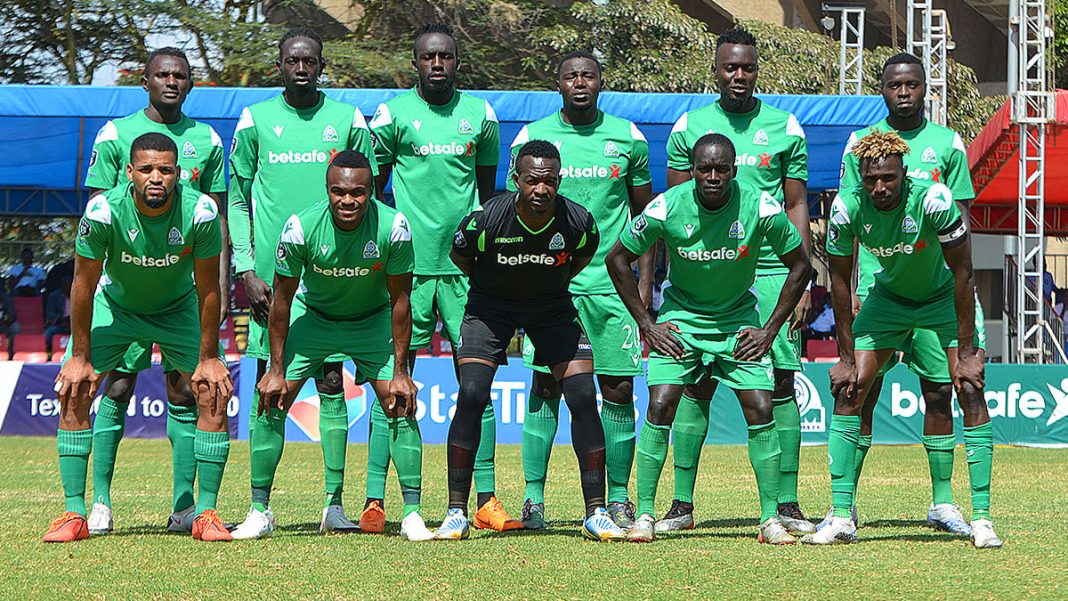
President William Ruto is finally fulfilling the six-decade-old dream of staging the Mashemeji Derby—pitting the famous Gor Mahia against their arch and bitter rivals AFC Leopards—in the region.
It is indeed history in the making: the first time Gor Mahia and AFC Leopards will face off outside Nairobi, which has long been the home ground for the two of the country’s most popular teams.
For Gor Mahia, it is a historic moment to host AFC Leopards at the Raila Odinga Stadium, just 40 kilometers from the home of Gor K’Ogalo, the former Chief of Kanyamwa in Ndhiwa, from whom the team draws its name.
And for AFC Leopards, it will be historic for the team to exert revenge on Gor Mahia in front of their home fans and gain bragging rights, after suffering a series of successive losses to Gor Mahia in past Mashemeji Derbies, save for a few draws.
When President Ruto announced that the Madaraka celebrations would be hosted in Homa Bay County, he opened the door for the derby to be played at the stadium.
The stadium, a pet project of former Governor Cyprian Otieno Awiti—also a former deputy patron of Gor Mahia and an avid supporter of the team—will on June 1st, 2025, become part of the country’s history.
Awiti is credited for constructing the stadium and naming it after opposition leader Raila Odinga, himself a former footballer.
It will be a double-historic moment: the stadium will host the Madaraka Day celebrations and later, the Mashemeji Derby, which will be attended by top dignitaries.
Awiti left the stadium 80 percent complete, while President Ruto expanded and completed the facility to international standards, with a seating capacity of 20,000 people and additional amenities.
Internal Security and Administration Permanent Secretary Dr. Raymond Omollo said Homa Bay town, which previously had modest infrastructure, has been elevated into a national hub capable of hosting one of the country’s key national public holidays.
“Homa Bay town has witnessed a comprehensive infrastructural upgrade, and the plan to prepare the town for its historic role is on schedule,” he said.
Omollo said the transformation has resulted in a fully modernized Raila Odinga Stadium, upgraded road networks, the rehabilitation of Kabunde Airstrip, improved public facilities, and a rejuvenated waterfront.
“At the Raila Odinga Stadium, the government expanded the seating capacity and upgraded the facilities, ensuring it meets national ceremonial standards for the event.
The seating has been increased to accommodate 20,000 spectators, while the construction of terraces, roofing of pavilions, and installation of security features will ensure the safety and comfort of all guests,” he said.
He added that the stadium will have a media zone, emergency exits, floodlights, and modern parade grounds—making it suitable for sports tournaments, regional events, and national state functions.
Omollo said that in a bid to improve access to the venue and overall transport in the area, the government is upgrading more than 35 kilometers of roads within and around the town.
Gor Mahia was formally established on 17 February 1968 as a merger of Luo Union and Luo Sports Club (also known as Luo Stars) and won the national league in their debut season.
Some of its original leaders included politicians Tom Mboya and Jaramogi Oginga Odinga. However, the club’s roots date back to 1915, participating intermittently in local tournaments in Western Kenya. Various groups used the name at different times.
After the merger of Luo Union and Luo Sports Club, the team was named after a legendary medicine man from Kanyamwa, Ndhiwa, in Luo mythology. His name was Gor Mahia (“mahia” means “magic” in Luo), known for his magical powers.
The club’s famous nickname, K’Ogalo, stems from the medicine man’s full name—Gor Wuod Ogada Nyakwar Ogalo (Gor, son of Ogada, grandson of Ogalo). He was known as Gor Mak’Ogalo or Gor K’Ogalo in short, meaning “Gor of Ogalo’s homestead.“
Several prominent Luos met in Nairobi to christen the club. The name Gor Mahia was selected from a shortlist of Luo cultural heroes and warriors such as: Nyathi Kwach; Lwanda Magere from Kano; Okore Wuod Ogonda Mumbo from Kisumu; Ogutu Wuod Kipapi from Ugenya; Kech Kamajwala from Asembo; and Tao K’Ogot from Ugenya.
Gor Mahia won the league title in their inaugural season in 1968 with legendary striker William Ouma “Chege” scoring 19 goals. They won the league title again in 1974. In 1976, Gor Mahia became the first Kenyan football club to win the National League unbeaten, led by playmaker and coach Allan Thigo.
AFC Leopards enjoys support from the Luhya community. It was originally known as Abaluhya Football Club Leopards Sports Club, officially abbreviated as AFC Leopards, and was founded in 1964 by football enthusiasts from the Luhya community.
With 12 top-flight league titles, AFC Leopards is Kenya’s third most successful club, behind Tusker (13 titles) and Gor Mahia.
From the 1960s, or even earlier, various Abaluhya teams were formed for invitational matches—setting the stage for the birth of Abaluhya United.
On 12 March 1964, the East African Standard reported the formation of a new club, Abaluhya Football Club, from the amalgamation of Marama, Samia United, and Bunyore—all Nairobi-based clubs in Division 1 of the Kenya National Football League.
The merger also included lower division clubs such as Kisa, Tiriki, Bukusu Brotherhood, Busamia, Lurambi, Butsotso, Bushibungo, and Eshirotsa—building the club’s strong base and future success.
Chairman of AFC Leopards, Dr. Dan Shikanda, promised Gor Mahia a tough match and pledged to take revenge on their rivals.
“I can tell you—we are coming to Homa Bay for a win, nothing less or more. We want to tame our rivals in their own backyard. We want to be part of history. We are prepared for the game. It is our game to lose,” he said.