By Kepher Otieno
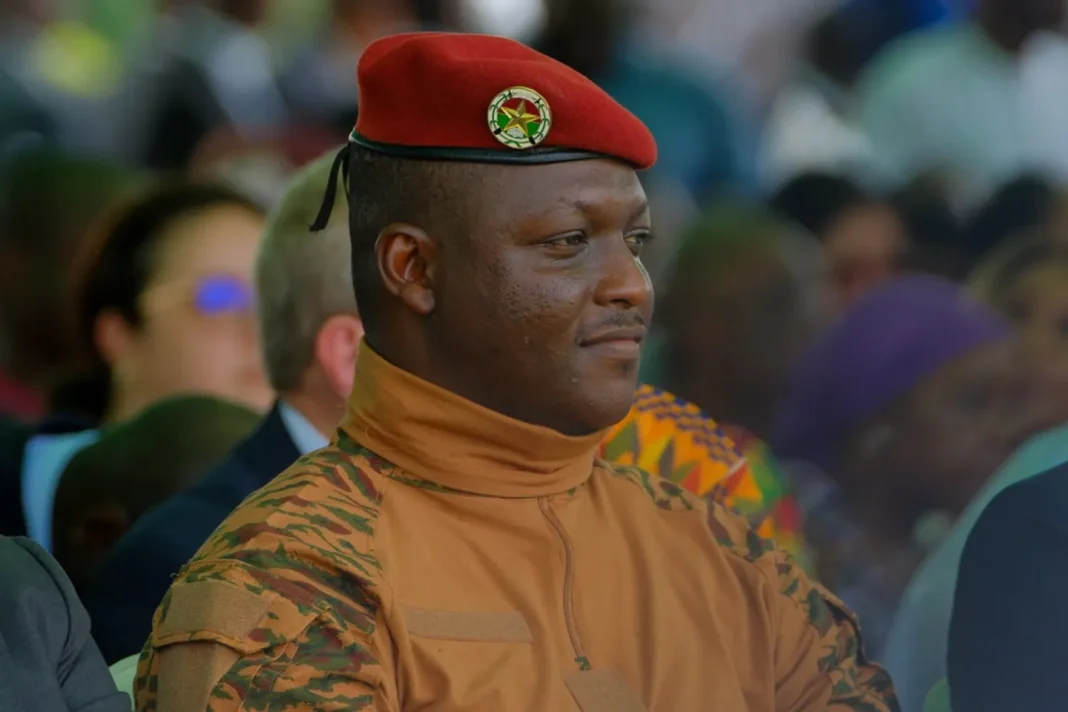
Burkina Faso’s 34-year-old President Ibrahim Traoré is not just governing a landlocked West African nation; he is attempting to lead a continental awakening. In fiery speeches and bold policy proclamations, Traoré has called out foreign media and global powers for what he terms the “institutionalized narrative of neocolonialism“—a persistent portrayal of Africa as a continent of misery, disease, corruption, and poverty.
For years, he argues, Africa’s image has been shaped not by its realities, but by a deeply entrenched Western lens, one that ignores its wealth, dynamism, and potential.
Traoré, a former military captain who ascended to power amidst political instability, is now emerging as a Pan-African figure with a sharp critique of the status quo.
His accusations against foreign media resonate with a long-standing frustration: that Africa, despite being the bedrock of global resource wealth, is seen only when it bleeds, not when it thrives.
“We are rich in gold, diamonds, cobalt, and fertile land, yet we are portrayed as beggars,” Traoré declared in a recent public address. “The phones you use, the satellites in space, the electric cars on your streets—they all run on minerals dug from African soil. But what do we have to show for it?”
He is not wrong. The Democratic Republic of Congo is home to over 60% of the world’s cobalt reserves, a critical component in lithium-ion batteries that power modern electronics and electric vehicles.
Yet, paradoxically, Congolese citizens often find such technology prohibitively expensive, and basic infrastructure remains lacking. Traoré’s point is blunt but piercing: how can a continent so rich be so poor?
It’s not just Congo. Africa’s natural wealth is staggering. Ethiopia has undertaken one of the most ambitious reforestation projects in human history.
Kenya is experiencing a surge in its entrepreneurial ecosystem, earning it the title of “Silicon Savannah.” Rwanda is a case study in post-conflict transformation, and Ghana is redefining economic self-reliance.
But these success stories are too often buried beneath headlines of famine, coups, and conflict.
Traoré says it’s time for “African reconnaissance”—a spiritual, economic, and political reawakening.
He calls for the end of exploitative neocolonial ties and insists that Africa must begin to use its resources for the benefit of its people. “No more extraction without transformation. No more gifts that are chains,” he proclaimed.
The message is resonating. From Dakar to Dar es Salaam, from Accra to Addis Ababa, his words are striking a nerve, especially among the youth. In a continent where over 60 percent of the population is under 25, Traoré’s vision carries the vigor of a generational shift. Even outside Africa, his anti-neocolonial rhetoric is finding sympathetic ears.
Russia’s President Vladimir Putin recently welcomed him with a red-carpet reception and a military helicopter salute—a symbolic embrace that underscores the shifting global alliances around Africa’s future.
But history urges caution. We’ve seen this vision before fade unceremoniously.
Muammar Gaddafi, Libya’s former strongman, once championed the idea of a “United States of Africa.” He funded cultural and agricultural programs, including the donation of vans to Kenyan cultural councils and a proposed deployment of overn1,000 tractors to support African farmers. He aimed to reduce dependency on Western aid by empowering traditional institutions and revitalizing agrarian economies. Yet, Gaddafi’s ambitions, though grand, ended violently—and controversially—leaving behind a vacuum and a legacy marred by repression.
Traoré’s challenge, then, is not just to echo Gaddafi’s dreams but to avoid his missteps. Sovereignty without accountability can quickly slip into autocracy. Pan-Africanism without inclusivity risks becoming another tool for elite entrenchment.
Still, the moment feels different. Today’s African populations are more connected, more informed, and more determined than ever before.
Digital tools are empowering grassroots movements, and citizens are demanding transparency and reform from within. If Traoré can harness this energy while resisting the temptations of demagoguery, he might just succeed where others failed.
In the final analysis, Traoré is daring to ask a question that many African leaders have long whispered but rarely shouted: Why must Africa be rich underground and poor above?
It’s a question worth asking—and one worth answering.
Only time will tell if he will endure the storms of global pressure, internal dissent, and historical repetition. But one thing is certain: a new chapter in Africa’s long story is being written. And Ibrahim Traoré, bold and unflinching, has positioned himself as one of its authors.
Traoré forward ever, backward never.
Africa is watching. The world is listening. And perhaps, this time, the story will be different.
The writer is a media consultant and regular commentator on governance, democracy and development.
Kepherpeace@gmail.com