By James Okoth
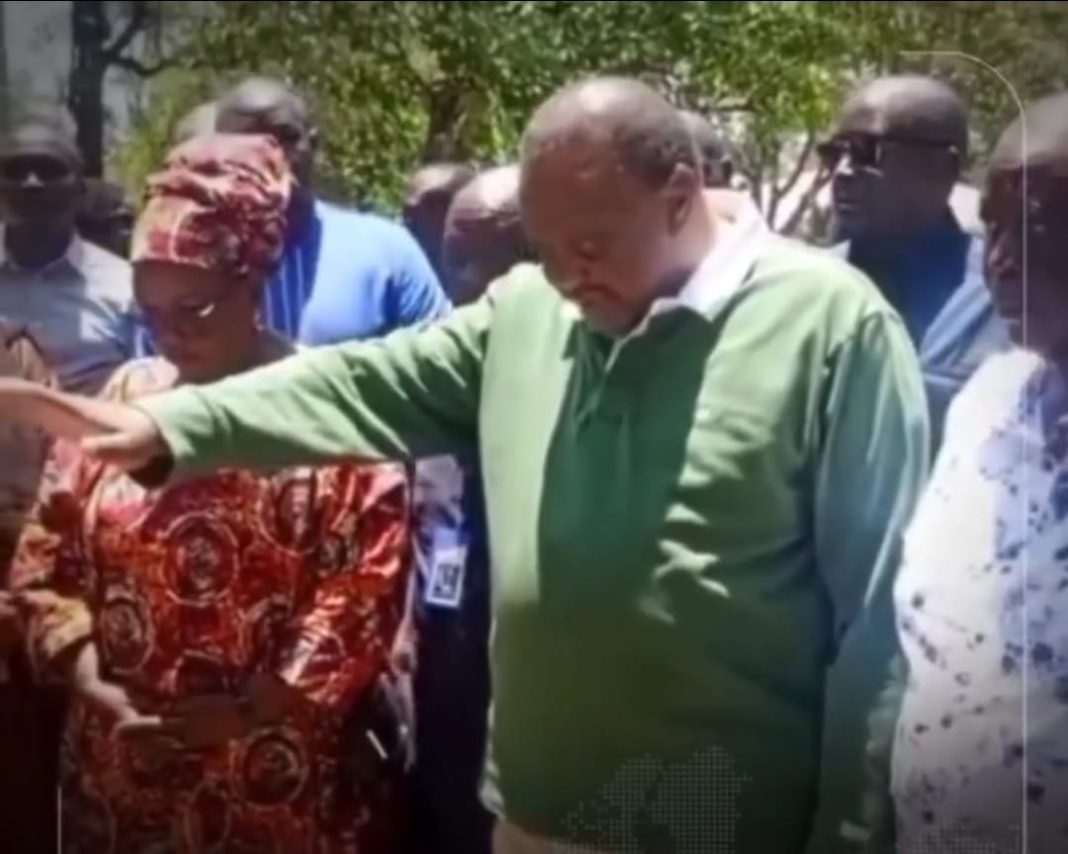
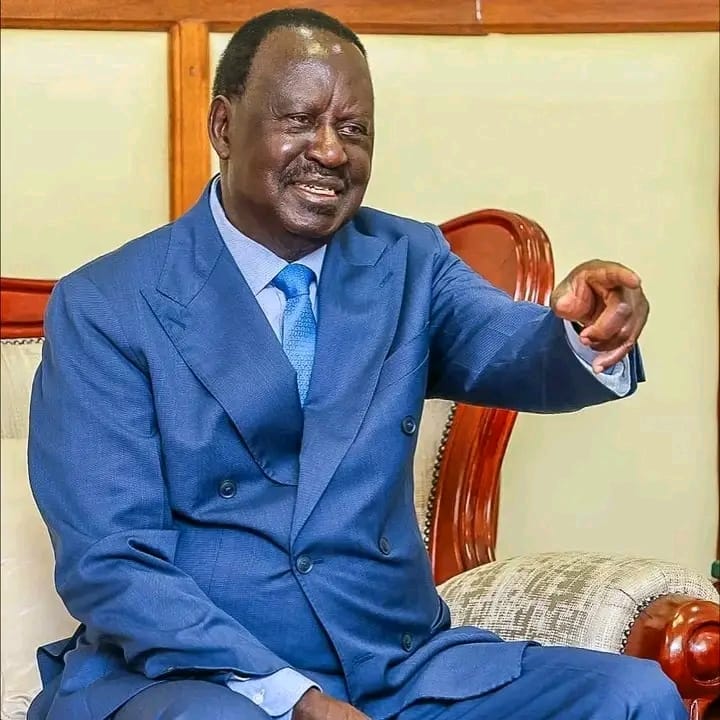
When the soil closed over Raila Amolo Odinga at Opoda Farm, it did more than bury a man — it sealed the era of Kenya’s most prolific political tutor.
Across the political divide, men and women who had once found both purpose and protection under his shadow stood exposed — no longer protégés, but orphans in a political wilderness.
The country watched as disciples without a patriarch looked at each other with quiet confusion.
For decades, Raila was not just a political leader; he was a school. A movement.
A political seminary from which Kenya’s current and next generation of leaders graduated — some loyal, others prodigal.
Now, his absence has left them scrambling for identity, as though the very air of politics had thinned overnight.
The Architect and His Apprentices
No Kenyan politician has produced as many giants — and rivals — as Raila Odinga.
From William Ruto to Kalonzo Musyoka, Musalia Mudavadi, Eugene Wamalwa, Hassan Joho, Wycliffe Oparanya, Charity Ngilu, Anyang’ Nyong’o, James Orengo, Junet Mohamed, John Mbadi, Opiyo Wandayi, and Samuel Atandi, all passed through his crucible of political steel.
Each learnt the rhythm of defiance, the art of mass mobilisation, and the moral vocabulary of opposition from one man — Baba.
He taught them patience in betrayal, endurance in loss, and humility in victory — though few ever mastered all three.
To work with Raila was to be both forged and tested; to oppose him was to grow sharper, for he fought his enemies with strategy, not spite.
In a political landscape built on convenience, Raila raised conviction as currency.
He turned defeat into a doctrine and taught a nation to see losing as learning — a lesson that shaped Kenya’s democratic resilience itself.
Ruto — The Rebellious Son Who Learnt Strategy
Today, President William Ruto stands as perhaps Raila’s most successful graduate — though one who left the classroom early.
It was in the crucible of ODM that Ruto learnt the grammar of populism, the pulse of street politics, and the gospel of defiance.
The chants of “ODM! Tuko Tayari!” that once lifted Raila’s rallies in 2007 now echo in Ruto’s “Bottom-Up” crusades — different slogans, same soul.
Even his campaign theatrics — the direct connection with hustlers, the sense of siege against the elite — are dialects of Raila’s old language.
The teacher may be gone, but the student rules the republic.
And yet, at Raila’s funeral, when Ruto chanted “ODM!” and the crowd roared back, it wasn’t just nostalgia — it was the orphan’s tribute to the master who first showed him how to lead from the ground up.
Kalonzo — The Loyal Lieutenant Turned Custodian
Stephen Kalonzo Musyoka, ever the loyal lieutenant in Raila’s many coalitions, now finds himself at an existential crossroads.
For years, he was the bridge between Raila’s idealism and political reality — the one who patched cracks when tempers flared.
But with Raila gone, Kalonzo’s calm diplomacy suddenly feels lonely, almost antiquated in an age of loud populism.
He wept openly in Opoda, not just for the man but for the partnership that gave him relevance.
Kalonzo’s greatest fear is not losing political space — it’s losing ideological anchorage.
Without Raila’s moral compass, even the faithful risk wandering into transactional politics.
Mudavadi — The Pragmatist Who Learnt Timing
For Musalia Mudavadi, Raila was both rival and mirror.
He borrowed Raila’s calm but not his risk.
He learnt patience but not protest.
If Raila was fire, Mudavadi was ash — steady, surviving, but rarely sparking.
Under Raila’s mentorship in the early 2000s, Mudavadi found how to articulate reform in economic terms.
But his instinct for stability often kept him from the storms that made Raila a legend.
Now, with the elder gone, Mudavadi’s quiet diplomacy seems almost pale beside the roar of populism that defines Kenya’s next phase.
Still, as he sat by the graveside, head bowed, one sensed a man mourning the last true statesman of conviction — the only one who could unite Kenya’s contradictions and make peace sound revolutionary.
Joho and Oparanya — The Governors of Style and Substance
From the Coast to Western Kenya, two governors — Hassan Joho and Wycliffe Oparanya — embody Raila’s dual legacy: charisma and competence.
Joho inherited Raila’s flair for theatre; Oparanya, his discipline of numbers.
Joho’s sunglasses and speeches turned rallies into festivals of loyalty, while Oparanya’s spreadsheets gave ODM a reputation for managerial maturity.
But with Baba gone, both men find their political stage dimmed.
ODM was never just a party — it was a movement built around a heartbeat.
Without the heartbeat, the dance feels forced.
Their next chapters will determine whether they can transform inherited loyalty into independent leadership — or whether they, too, will fade into nostalgia.
Junet Mohamed — The Jester Who Became a Strategist
Junet Mohamed, once dismissed as Raila’s comic relief, quietly evolved into the bridge between the high table and the grassroots.
Behind the laughter was a mind honed in the fires of Raila’s political theatre.
He mastered the art of messaging — of turning complex ideology into memorable lines.
But Raila’s death leaves Junet suddenly voiceless, like an actor whose stage lights have gone out mid-performance.
He must now choose whether to remain the echo of a legend or reinvent himself as the strategist of a new ODM order — one less about personality, more about purpose.
John Mbadi — The Technocrat’s Burden
When John Mbadi was appointed the first Luo Cabinet Secretary for Finance, history smiled.
It was the ultimate vindication of Raila’s long fight to break ethnic ceilings in public leadership.
Mbadi’s discipline, intellect, and party loyalty had made him the embodiment of ODM’s technocratic side — steady, silent, strategic.
Now, with Raila gone, Mbadi carries not just a docket but a destiny.
He is expected to balance service to the Republic with loyalty to a fallen mentor’s ideals — a delicate dance that will define whether ODM’s reformist spirit survives in government corridors.
Opiyo Wandayi — The Engine That Must Now Drive Itself
Opiyo Wandayi, now Cabinet Secretary for Energy, was one of Raila’s most trusted organisational generals — a man who knew both the fire of the streets and the structure of Parliament.
He was the whip who held ODM together during storms of division, and the strategist who gave the movement intellectual muscle.
His appointment to Cabinet was Baba’s quiet endorsement of generational transition.
But with the patriarch gone, Wandayi must now learn to generate power — not just manage it.
Can he light the next phase of ODM’s journey, or will he, too, dim under the weight of compromise?
Samuel Atandi — The Defector in the Mirror
Then there is Samuel Atandi, the eloquent, youthful legislator who once wore Raila’s loyalty like a badge — only to now pledge allegiance to President Ruto.
His shift, symbolic and controversial, represents the fragmentation of ODM’s once-iron grip on Luo Nyanza.
To some, Atandi is a realist aligning with power; to others, a prodigal chasing convenience.
In him lies the reflection of a generation torn between ideology and opportunity — the orphans who find it easier to defect than to rebuild.
Yet, even in his defection, he carries traces of the master’s mentorship — the confidence, the cadence, the conviction — only redirected elsewhere.
Orengo and Nyong’o — The Intellectual Custodians
In the intellectual wing of the movement stood James Orengo and Prof. Anyang’ Nyong’o — men of letters and loyalty.
For them, Raila was not a politician but a philosopher of struggle.
He gave meaning to protest, dignity to dissent, and reason to risk.
At Opoda Farm, Orengo’s voice cracked as he said, “we are not just burying Raila; we are burying courage.”
That line captured the mood of an entire generation of reformists — now ageing, surrounded by political mercenaries who speak of reform but practise convenience.
The scholars of struggle now stand as curators of a fading gospel.
The Next Line — Orphans and Inheritors
Beyond the familiar names, a new crop of leaders — Winnie Odinga, Edwin Sifuna, Babu Owino, Gladys Wanga, Jeremiah Kioni, and others — stare at a different inheritance: a movement without its moral monarch.
They are the orphans of energy — restless, articulate, but unanchored.
Without Baba’s presence to calibrate the rhythm of protest, they risk mistaking noise for ideology, rebellion for reform.
For them, Raila’s death is both tragedy and test.
Will they carry forward the philosophy or merely perform it?
Will ODM become a think-tank of democracy or a relic of resistance?
The Political Republic of Orphans
In truth, Kenya itself feels politically orphaned.
For decades, Raila Odinga was the conscience of the Republic — the voice that called out excess, that legitimised opposition, that made power earn its place.
His absence exposes a vacuum not just in ODM, but in national moral leadership.
In every corner of politics, there are traces of his tutelage — in Ruto’s rhetoric, in Kalonzo’s alliances, in Mudavadi’s diplomacy, in Joho’s charisma, in Mbadi’s intellect, in Wandayi’s discipline, in Junet’s humour, and even in Atandi’s ambition.
But no one carries the whole.
Each holds a fragment of the gospel — none, the gospel itself.
The Sun Without Its Orbit
Raila Odinga did not just raise politicians; he raised Kenya’s political consciousness.
He was the sun around which orbits formed — some bright, others faint.
Now the sun has set, and the planets drift — luminous but lost, each seeking gravity of its own.
The orphans of Raila’s political house may one day find their voices again.
But for now, Kenya listens to an echo — the fading timbre of a man who taught a nation to speak truth to power, and power to conscience.
And when history writes of this moment, it will say: the teacher died, but the lesson refused to.