
By Simon Okola
COP 30 may have closed in Belém, Brazil, but its real test will be in Antalya, Türkiye, where COP 31 will take place from 9 to 20 November 2026. The question for Kenya is not whether we attended another global climate conference. The sharper question is this: will Kenya arrive at COP 31 with bankable restoration portfolios, credible performance data, and climate finance-ready institutions, or will we arrive with another folder of aspirations? COP 30 took place in Belém from 10 to 21 November 2025, while COP 31 is officially scheduled for Antalya in November 2026.
For Kenya, COP 30 matters because it quietly clarified the rules of the next climate finance race. It was not only about speeches, pledges, and diplomatic theatre. It was about predictability of finance, direct access, adaptation funding, loss and damage, transparency, national systems, and the uncomfortable truth that countries without credible pipelines will struggle to attract serious climate money.
The COP 30 draft text on Article 9.5 of the Paris Agreement places strong emphasis on the predictability and clarity of financial support. It reiterates that developed countries are expected to communicate indicative quantitative and qualitative information, including projected public financial resources for developing countries. This is a major signal. The global system is moving from vague promises to forward-looking finance information. Kenya must respond by moving from project wish-lists to performance-backed investment pipelines.
The same draft text also points to issues that should matter deeply to Kenya: making finance flows consistent with low-emission and climate-resilient development, mobilizing private finance through blended finance and enabling regulatory frameworks, addressing the needs of developing countries, strengthening absorptive capacity, and learning from previous climate finance delivery failures. In plain language, COP 30 tells us that climate finance will increasingly follow countries that can prove readiness, not countries that merely prove vulnerability.
This is where Kenya’s opportunity lies.
Kenya has already placed itself in the climate leadership conversation. Its second Nationally Determined Contribution estimates that USD 56 billion will be required for mitigation and adaptation actions between 2031 and 2035. Of that amount, Kenya expects about 19 percent to be mobilized domestically, while about 81 percent, approximately USD 45.36 billion, will require international support. That figure should shake us awake. It is not a slogan. It is an invoice. And the world will not pay that invoice simply because Kenya has climate needs. The world will respond when Kenya has credible data, strong institutions, transparent tracking, investable projects, and a clear line between finance received and climate outcomes delivered.
This is why I argue that Kenya now needs a Restoration Performance Intelligence and Climate Finance Readiness Framework for nature-based solutions.
Nature-based solutions are no longer soft environmental language. They are becoming part of the hard architecture of climate finance. Kenya has launched a 10-year strategy to restore 10.6 million hectares of degraded land, aiming to increase tree cover from 12.13 percent to 30 percent by 2032, with community involvement as a central pillar. Kenya has also committed under AFR100 to restore 5.1 million hectares by 2030. These are powerful commitments, but commitments alone do not unlock finance. Performance does.
Restoration performance intelligence means Kenya must know, with evidence, what is being restored, where it is being restored, who is benefiting, what carbon and biodiversity outcomes are being generated, what water and soil benefits are emerging, and whether communities are genuinely better off. It means restoration must be monitored through credible MRV systems, satellite data, county-level reporting, community verification, safeguards, and finance-linked indicators. A tree planted for a camera is publicity. A restored landscape with measurable survival rates, livelihood gains, carbon integrity, and biodiversity value is an asset.
COP 30 also matters because of the Green Climate Fund. The COP 30 draft guidance notes that the GCF had approved USD 19.3 billion for 336 adaptation and mitigation projects across 134 developing countries. It also notes 158 accredited entities, including 106 direct access entities, and 144 readiness grants for national adaptation plans and adaptation planning processes. These numbers tell Kenya something important: access is possible, but access is competitive. The draft guidance also urges the GCF Board to simplify access modalities, reduce procedural burdens, improve timely delivery, and strengthen direct access, including support for direct access entities and non-governmental access.
Kenya should read that as a practical instruction. By COP 31, our national and county institutions, universities, conservation agencies, community-based institutions, and private-sector actors should not only be asking for climate finance. They should be prepared to receive, manage, report, and defend it. That means fiduciary systems, procurement systems, safeguards, gender and inclusion frameworks, grievance mechanisms, carbon accounting, restoration baselines, benefit-sharing rules, and project preparation facilities. Without these, climate finance remains a door we admire from outside.
The Fund for responding to Loss and Damage is another reason COP 30 matters. The draft text welcomes the operationalization of the Fund through the Barbados Implementation Modalities, which provide grant-based interventions for 2025 and 2026 using bottom-up, country-led, country-owned approaches to strengthen national responses to loss and damage. Even more importantly, the text notes that national governments of all developing countries may submit funding requests through direct access via direct budget support, subject to modalities to be decided by the Board.
For Kenya, this is not abstract. Droughts, floods, crop failure, livestock losses, coastal risks, water stress, and displacement are not climate projections. They are lived realities. If Kenya wants to benefit from loss and damage finance, we need more than disaster stories. We need loss and damage data systems. We need county-level damage assessment protocols. We need valuation tools for non-economic losses. We need local evidence on how climate shocks affect livelihoods, ecosystems, health, education, and cultural assets. The future of loss and damage finance will reward countries that can translate suffering into credible claims without reducing people’s pain to paperwork.
The Global Environment Facility draft guidance also carries a clear message. It welcomes efforts to simplify processes, strengthen collaboration with the GCF, Adaptation Fund and Climate Investment Funds, and improve timely access to resources. It emphasizes flexible and adaptable procedures for developing countries, continuity of national technical teams, country-driven programming, and stronger local capacity through national and regional institutions. For Kenya, this aligns directly with the need to build a permanent restoration intelligence architecture instead of temporary project units that disappear when donor funding ends.
Kenya has also taken a major step by launching the National Carbon Registry. NEMA says it is Kenya’s Designated National Authority for carbon markets and is hosting and administering the registry. The registry is expected to strengthen oversight, registration, measurable climate benefits, accountability, and protection against double counting. This is critical. Carbon markets without integrity are a fast road to scandal. Carbon markets with strong performance intelligence can become a serious climate finance channel for restoration, clean energy, agriculture, wetlands, rangelands, blue carbon, and community conservation.
But let us be honest. Kenya’s biggest risk is not lack of ambition. Kenya’s biggest risk is fragmented readiness. One ministry speaks finance. Another speaks forests. Counties speak local priorities. Communities speak survival. Investors speak risk. Donors speak safeguards. Carbon buyers speak verification. Scientists speak data. Unless these languages are translated into one coherent national readiness system, Kenya will keep losing time in the corridor between promise and payment.
That is why COP 30 matters for COP 31. It gives Kenya one year to prepare.
By COP 31, Kenya should have a national portfolio of climate finance-ready nature-based solutions. Not scattered proposals. A real portfolio. It should include county-level restoration pipelines, GCF-ready adaptation proposals, GEF-aligned biodiversity and land degradation programmes, loss and damage response packages, carbon market-eligible projects, and community-owned restoration models with transparent benefit sharing. Each project should show the problem, geography, cost, finance instrument, implementing entity, safeguards, expected climate impact, livelihood impact, biodiversity gain, gender and youth inclusion, MRV method, and repayment or grant justification.
The COP 30 Article 9.5 text asks future climate finance communications to improve information on access, projected finance, implementation needs, balance between mitigation and adaptation, geographical coverage, inclusion of vulnerable communities, methodologies, assumptions, and how finance responds to developing country priorities. Kenya should mirror this same logic in its own climate finance readiness work. If funders are being pushed to be clearer, Kenya must also be clearer about what it needs, where it needs it, how it will use it, and how results will be measured.
The politics of climate finance is shifting from sympathy to credibility. Countries that combine vulnerability with readiness will move faster. Countries that combine restoration ambition with performance intelligence will attract better finance. Countries that can show data, safeguards, local ownership, and investable pipelines will shape COP 31 outcomes instead of waiting for them.
Kenya has the landscapes. Kenya has the policy ambition. Kenya has counties on the frontline. Kenya has communities who understand land, water, livestock, forests, and survival better than any consultant flown in for a workshop. What Kenya must now build is the intelligence layer: the system that proves restoration is real, finance is traceable, carbon is credible, benefits are fair, and climate resilience is measurable.
COP 30 matters because it has shown the direction of travel. COP 31 will reward those who arrive prepared.
For Kenya, the message is simple: Antalya should not find us clapping for other countries’ finance breakthroughs. It should find us ready, organized, data-rich, locally grounded, and bold enough to say: here is our restoration portfolio, here is the evidence, here are the communities, here are the safeguards, here is the finance gap, and here is the return for people, nature, and climate.
Climate finance is no longer waiting for good intentions. It is looking for readiness. Kenya must meet it there.
About the Author
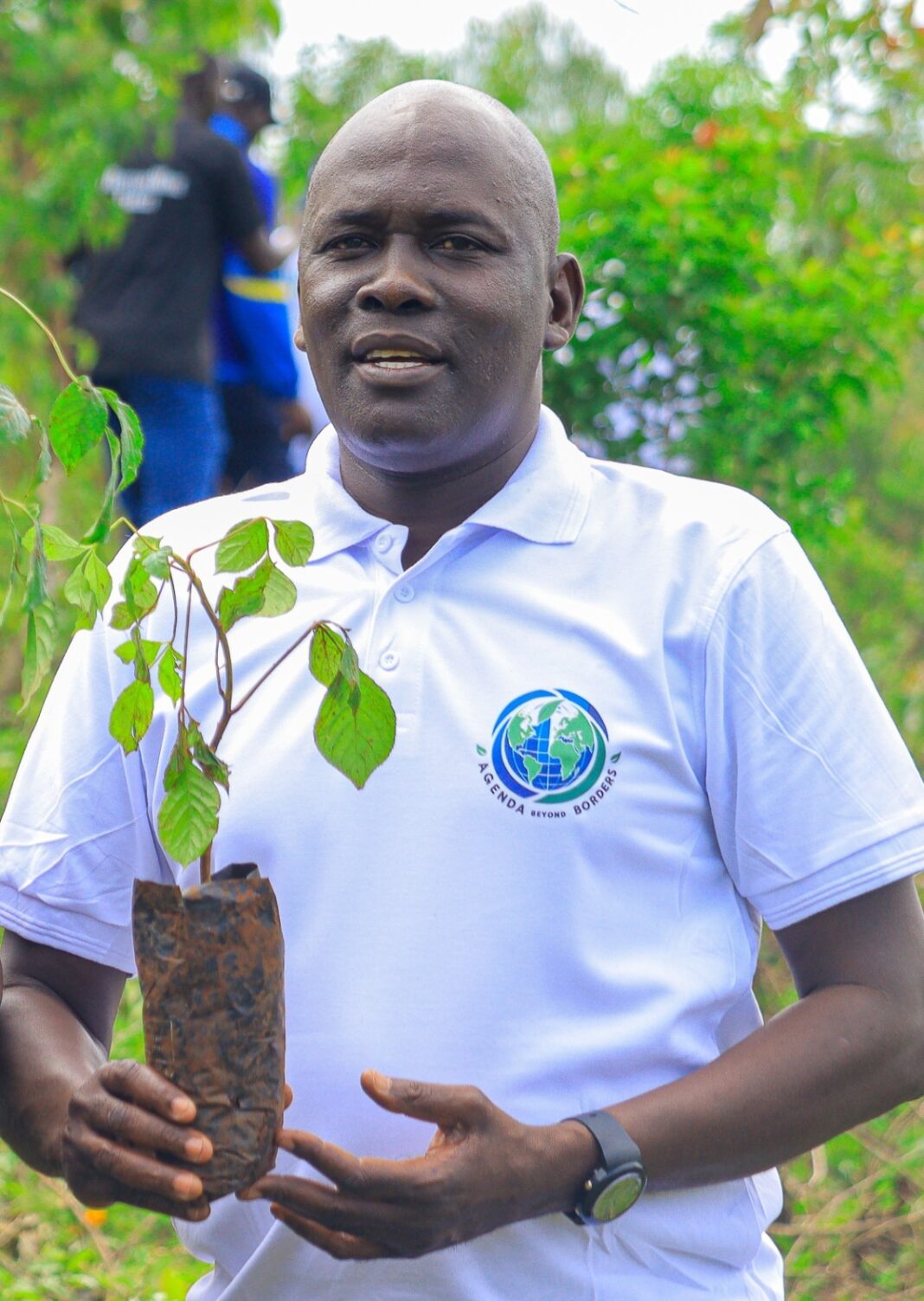
Simon Okola is an educator, project finance expert, UNFCCC negotiator and the Founder of Agenda Beyond Borders (ABB), a Kenyan-based policy and advisory organization focused on climate action, community development, and sustainable financing solutions.
Contact Agenda Beyond Borders:
Email: agendabeyondborders@gmail.com
Website: www.agendabeyondborders.org