

By James Okoth
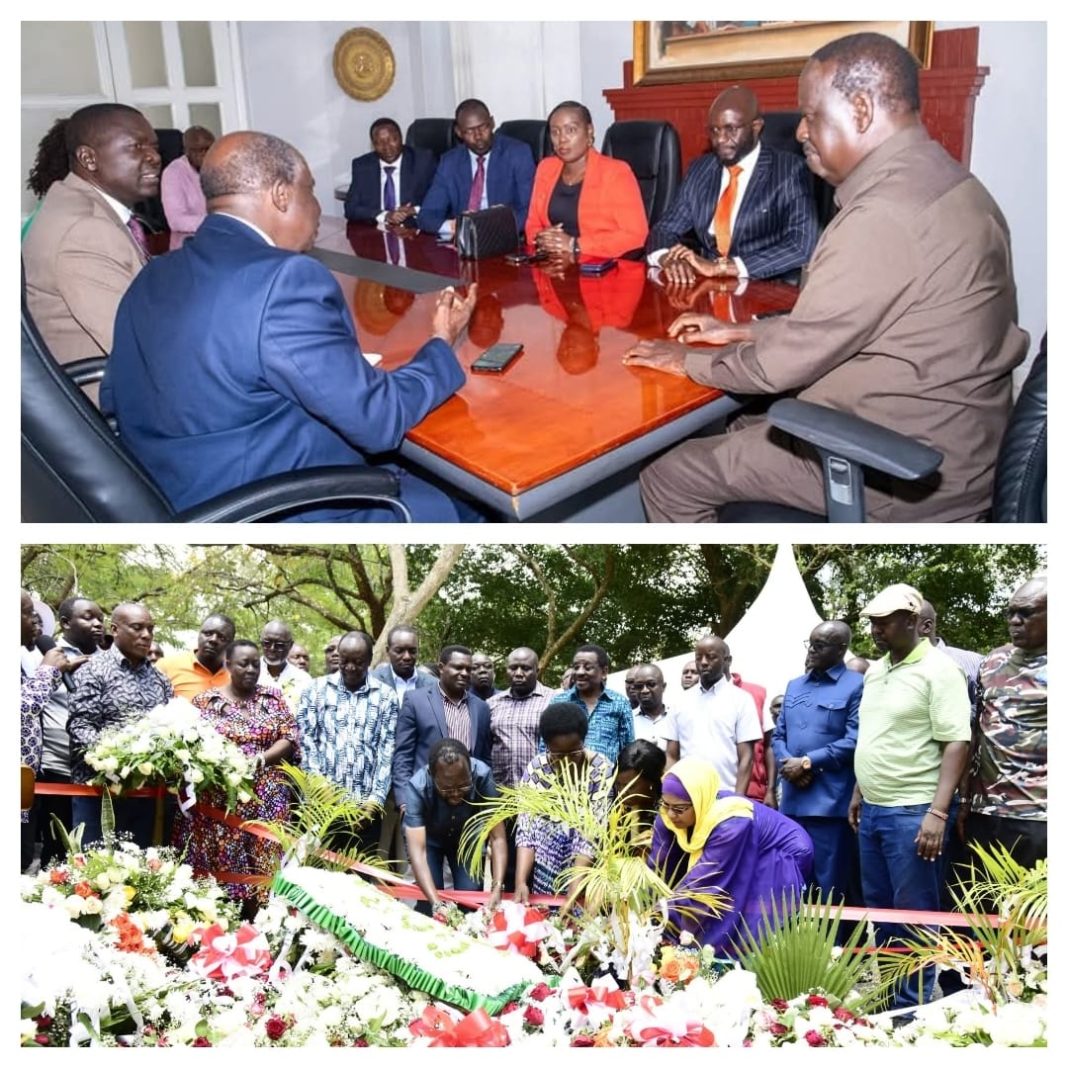
Kango ka Jaramogi, the resting place of the late Raila Odinga and once a tranquil homestead, is now pulsing with renewed political life. The site, marked by reverence and reflection, has quietly replaced Nairobi’s Capital Hill as the new axis of Raila’s influence.
Since his burial, the compound has turned into a magnet for leaders, allies and admirers seeking to affirm loyalty and draw inspiration. The air is charged with both emotion and strategy. Every visit carries the tone of renewal, each speech a reaffirmation of Raila’s enduring grip on the national soul.
On November 6th, Wiper leader Kalonzo Musyoka led a massive delegation of elected leaders and elders from Eastern Kenya to the Bondo compound. The group presented 150 herd of cattle to the Odinga family in a show of solidarity. Kalonzo declared that the visit symbolized “the spirit of unity Raila fought for,” and vowed that the opposition would guard his legacy with unwavering strength.
Earlier, on October 21st, Siaya Governor James Orengo and several Azimio figures made their way to Kango ka Jaramogi, calling Raila “a mighty tree under whose shade many found shelter.” Their visit, rich in emotion and symbolism, signaled the beginning of what many now call a pilgrimage to Kenya’s political shrine.
Even leaders from the Rift Valley, long seen as political rivals, made a powerful gesture of respect. A group of Kalenjin elders and MPs delivered 80 bulls to Bondo in tribute to Raila’s 80 years, declaring that “the unity he preached must live beyond him.” It was a rare show of goodwill that bridged Kenya’s deep political divides.
Since then, Kango ka Jaramogi has become a living stage of Kenyan politics. Meetings, declarations and quiet consultations unfold almost daily. Pilgrims continue to arrive from all corners of the country as visits reportedly remain fully booked until December 31.
To many, the shift from Capital Hill to Bondo is not retirement but rebirth. Raila’s spirit, now rooted in the soil of his ancestors, still stirs the nation. In life and beyond, his name remains the compass by which Kenya’s politics continues to find direction.


