
By James Okoth
It was broad daylight in Al Wakra, a quiet suburb of Qatar, when the world suddenly changed.
The neighbourhood known as Argentina was golden under the sun. Children played. A light breeze carried the scent of sand and sea. Peace lay thick in the air.
Moses Omondi, not his real name, stepped out for a midday walk. A Kenyan technician living in Qatar, he had earphones in and a familiar Luo tune in his ears, unaware he was about to witness terror.
Then came the first blast.
A sudden, violent roar split the sky like thunder from another world. The ground trembled. Windows shattered. Dust and debris shot into the air. Omondi froze.
“At first I thought it was an earthquake,” he recalls. “Then the second explosion came closer and fiercer, and I knew it wasn’t natural.”
In an instant, peace vanished.
Screams broke out. People scattered. Cars swerved out of control. Mothers grabbed children and ran, barefoot across dusty paths. The bright blue sky darkened, choked by smoke.
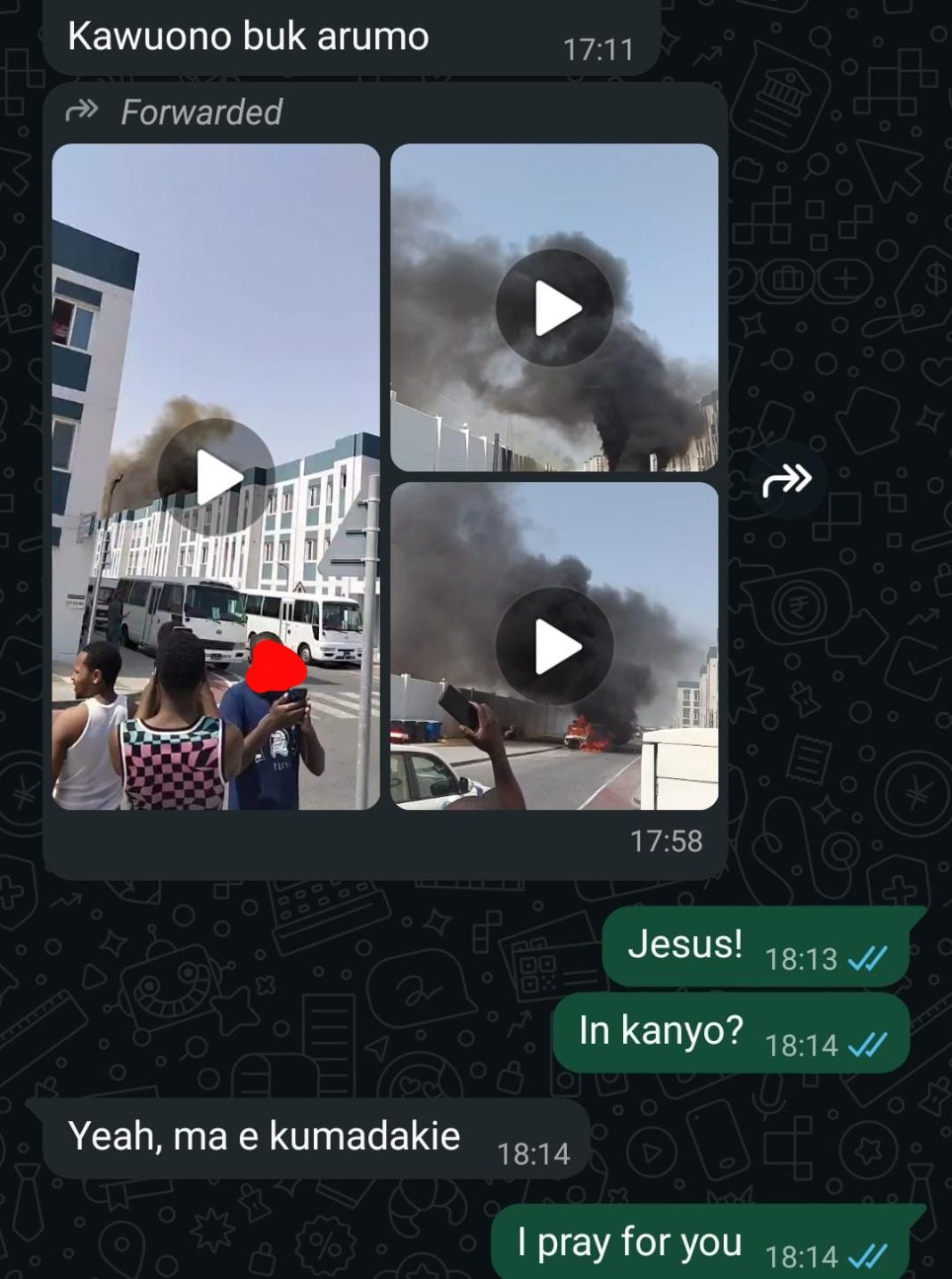
In the distance, flames rose from the nearby U.S. military base. Alarms bellowed. The explosion had struck close. Too close.
Sirens blared. Security teams drove hard through the chaos. Ambulances and fire engines raced everywhere.
Omondi dived behind a low wall as rubble fell. The air tasted of metal, fire and fear.
High above, streaks of light split the sky as Qatar’s air defence fired to intercept incoming missiles.
Boom after boom followed in deafening cracks that shook the earth.
“Everyone was shouting, ‘Ya Allah! Ya Allah!’” Omondi says. “I pressed against the wall, praying it wouldn’t fall.”
He ran into a nearby compound, where terrified people huddled together. Qataris, Filipinos, Indians and Africans, all swept up in the same shock.
A little girl asked if the sky was breaking. A man tried to call his wife at the base. The call failed. He dropped to his knees, silent with fear.
Phones buzzed with scrambled messages: Are you okay? Stay down. Don’t go outside. But the network was failing. So were people’s nerves.
Outside, explosions continued to shake streets and buildings. Flames flickered across the skyline. No one knew what would happen next.
Minutes felt like hours. The midday sun watched in silence as Argentina lay in dust and shock.
Omondi found a corner, sat on cold tile and whispered into his dying phone battery:
“Mama… I’m alive… it’s terrible. Tell everyone in Kenya I’m okay.”
Officials spoke of “escalation”, “retaliation” and “defensive measures.” But those words were distant. Too formal. Too removed.
For civilians on the ground, there were only trembling hearts and unanswered questions.
In Kisumu, Omondi’s family watched the breaking news in disbelief. Their son’s voice, shaky but alive, was all they had.
They prayed through the afternoon, hoping for his safety and for an end to violence, because when missiles fall, borders disappear.
Every mother’s prayer sounds the same.
Wars started by nations are felt most deeply by ordinary people like Moses Omondi, who never chose to be part of them.