
By Sandra Blessings
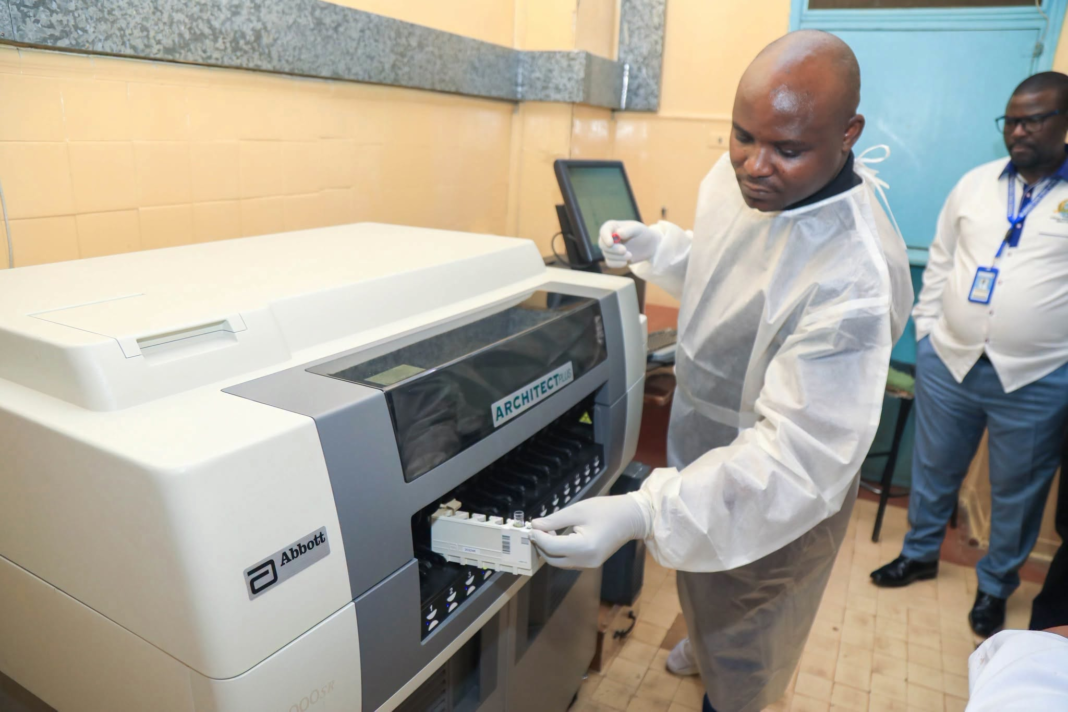
The introduction of a fully automated blood screening analyzer at Jaramogi Oginga Odinga Teaching and Referral Hospital (JOOTRH) has strengthened blood safety.
The fully automated blood screening analyzer has improved the speed, accuracy and reliability of screening.
This explains why blood donated by family members to their patients is delayed but goes through processes to determine the safety before it can be transfused.
For many, they believe that once blood was donated, it was immediately available for transfusion.
What is not known to them is that every unit must first undergo a rigorous process to ensure it is safe.
Mr Kenneth Onyango, Medical Laboratory Technologist at JOOTRH, explained that every donated unit was first treated as potentially unsafe until laboratory testing confirms otherwise.
“Blood is screened for transfusion-transmissible infections including HIV, Hepatitis B, Hepatitis C and Syphilis.
Any unit that tests positive is immediately discarded, regardless of demand,” he explained.
He said preparing blood for transfusion involves far more than screening, with each donation collected in a sterile blood bag before undergoing blood grouping, RhD typing and separation into components such as red blood cells, plasma and platelets.
“The products are then stored under a strictly monitored cold chain at 2°C to 6°C. Before transfusion, compatibility testing, including crossmatching, is performed to ensure the donor’s blood is safe for the recipient,” he said.
Onyango said the automated analyzer has replaced many manual processes, allowing multiple samples to be tested simultaneously while reducing the risk of human error.
“This has improved efficiency in a referral hospital serving thousands of patients across Kisumu County and the Lake Region,” he said.
Healthcare experts estimate that by the time one unit of blood has been collected, screened, processed, stored and safely transfused, the investment ranges between KES 5,000 and KES 7,500.
“The cost covers donor recruitment, laboratory reagents, equipment maintenance, storage, compatibility testing, transfusion consumables and waste management,” he said.
He said many people mistakenly believe hospitals sell blood, but in reality, patients were charged for the processing required to make donated blood safe, not for the blood itself.
“Under the Social Health Authority (SHA), eligible ward patients receive basic blood transfusion services free of charge or at a subsidised cost,” he said.
He said the delay was ultimately not a sign of inefficiency but of a healthcare system committed to ensuring that every unit of blood heals rather than harms.