
By Valentine Omondi
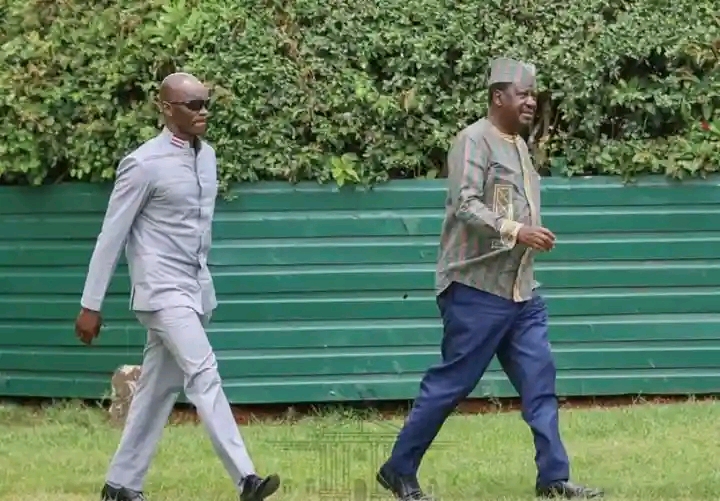
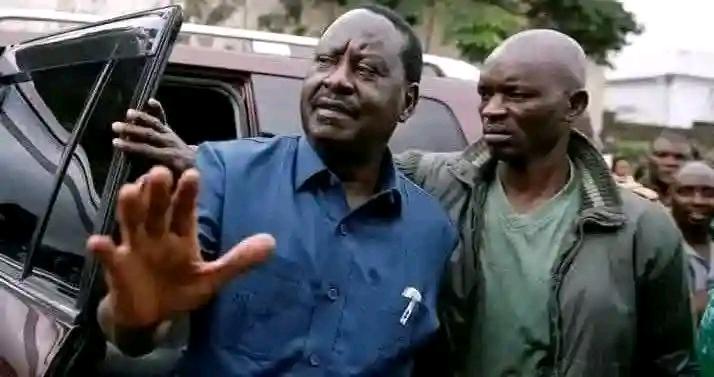
Maurice Ogeta, the longtime bodyguard of the late former Prime Minister Raila Odinga, has recounted a terrifying confrontation during the Pipeline demonstrations when he feared that both he and his employer would not survive an attack on their vehicle.
In a rare interview with the Daily Nation published on Sunday, October 11, 2026, Ogeta recalled how an officer in charge of Raila’s security, identified as Mr Chwanya, exclaimed that the former Prime Minister had been killed as their vehicle came under attack.
“For the first time, my blood registered that we were dead. The only thing I was waiting for is who is going to go first,” Ogeta recalled.
The former bodyguard said he understood that, as Raila’s protector, he could be the first person to die before the attackers reached the former Prime Minister.
He described a situation in which the vehicle was surrounded, tear gas and water cannons obstructed their view, and an attacker approached the car as the security team struggled to get away.
Security Team Feared Raila Had Been Killed
According to Ogeta, the confrontation was among the most dangerous experiences he shared with Raila during their 29 years together.
He recalled hearing the security commander say, “Wameua mzee,” meaning “They have killed Baba.”
But despite the frightening assessment, Ogeta said he tried to reassure Raila that he was still alive.
“I told him no, bado hajakufa… maintain mahali uko,” he said, explaining that he urged Raila to remain where he was as the team tried to turn the vehicle around.
Ogeta said Raila asked whether he was sure, forcing him to maintain his composure even as the situation grew increasingly dangerous.
He recalled that Raila wanted to see what was happening outside, but Ogeta pushed him down and kept him low to prevent the attackers from identifying his position inside the vehicle.
The former bodyguard said he was torn between confronting the attacker and protecting his employer. He considered whether to shoot but recognised that doing so could provoke further violence while the vehicle remained trapped.
Gunfire Shattered the Windscreen
In a separate account published by Citizen TV on October 9, Ogeta described an incident in which an officer approached Raila’s vehicle and repeatedly struck its windscreen until it cracked.
“There was a video that went viral of an officer coming to the windscreen of my boss’ car… that windscreen was hit so many times to a point where it gave in and cracked. After cracking, so many shots were fired in that car,” Ogeta said.
Image
He recalled the fear of watching the situation deteriorate while trying to protect Raila from harm.
“It reached a point where I registered in my mind and I could see my boss dead. In fact, it was like we are dead,” he told Citizen TV.
His account offers a glimpse into the dangers faced by the security team accompanying Raila during politically charged confrontations.
The allegations about the attack are based on Ogeta’s recollections. The circumstances of the incident and the identities and actions of those involved require independent corroboration.
A Protector Who Feared He Would Die First
Ogeta said his first concern during the confrontation was the possibility that he would be killed before the attackers reached Raila.
As the person tasked with protecting the former Prime Minister, he understood that he would be directly exposed if he attempted to confront the people surrounding their vehicle.
He described the difficulty of making decisions in a situation where visibility was poor, the vehicle was surrounded and the security team was struggling to escape.
Ogeta said he ultimately concentrated on keeping Raila down and concealing his position while the driver attempted to turn the vehicle around.
The incident left a lasting impression on the man who spent nearly three decades beside one of Kenya’s most prominent political figures.
His recollections also underline the risks that security personnel can face while protecting political leaders during volatile public demonstrations.
For Ogeta, the Pipeline confrontation remains one of the moments when the possibility of losing Raila became frighteningly real.