
By Valentine Omondi
The Kenya Anti Nuclear Referendum Movement (KANR) has engaged two international organisations to trace the financing of Kenya’s proposed nuclear power plant in Siaya County, intensifying scrutiny of a project the government says will boost electricity generation and industrial development.
In a press release dated 17 October 2026, the movement said the initiative would seek to establish who is financing the project, the conditions attached to the funding and the safeguards protecting the interests of Kenyans.
KANR said identifying the financiers would help establish the financial obligations the project could impose on the country and the interests of those expected to benefit from the investment.
However, the movement did not name the two international organisations or disclose the specific findings it expects from their engagement.
The announcement comes amid growing debate over the proposed nuclear power plant, with government officials promoting its potential economic benefits while opponents question whether adequate public participation, environmental safeguards and transparency have been guaranteed.
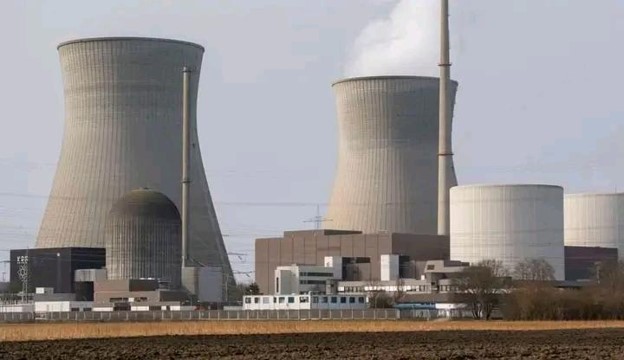
The proposed facility is expected to be Kenya’s first nuclear power plant, with the government planning an initial generation capacity of 2,000 megawatts.
KANR Seeks Disclosure of Financing Arrangements
The movement said the identity of the project’s financier was particularly important because the information could help determine whether the financial arrangements complied with international standards on human rights, environmental protection and corporate accountability.
It pointed to National Contact Points established under the Organisation for Economic Co-operation and Development Guidelines for Multinational Enterprises as one possible avenue for pursuing accountability where companies fall short of internationally accepted standards.
KANR also said the information could strengthen its pending legal challenge before the East African Court of Justice.
The movement maintained that decisions with potentially far-reaching consequences for the country should not be made without the informed participation of Kenyans.
“We also call on the Government of Kenya and all parties involved in the project to disclose full details of its financing arrangements without delay,” the organisation said.
KANR said it would release further updates as its engagement with the international organisations progressed.
It also renewed its demand for a national referendum on nuclear power, arguing that Kenyans should have a say in a project with implications extending across generations.
Ruto Projects Economic Benefits of Nuclear Power
The financing questions emerge as President William Ruto continues to defend the proposed plant as part of Kenya’s long-term strategy to increase electricity generation and support industrialisation.
On 14 September 2026, during his tour of Nyanza, Ruto announced that the proposed Siaya facility would generate between 2,000 and 5,000 megawatts of electricity.
Speaking in Kisumu, the President said the project would position the region as an electricity producer serving the national grid.
“We have agreed that here in Siaya, we will generate between 2,000MW and 5,000MW using nuclear power, so that Nyanza becomes one of the regions producing electricity for supply to the rest of Kenya,” Ruto said.
The President has argued that nuclear energy could help meet Kenya’s growing electricity demand, improve energy security and support industrial growth.
His administration has also pointed to the potential for employment creation and infrastructure development around the proposed facility.
However, the scale of the investment has intensified questions about how the project will be financed, the terms under which the money will be provided and the extent to which the public may ultimately bear its costs.
These are among the issues KANR says it wants to clarify through its engagement with the two international organisations.
Orengo Backs Project but Calls for Safety Measures
Siaya Governor James Orengo has publicly supported the proposed nuclear power plant, describing it as an opportunity to transform the county’s economy while acknowledging concerns that must be addressed.
In September 2026, Orengo attended the International Atomic Energy Agency’s 70th General Conference in Vienna, Austria, where he held discussions with agency officials on technical support, technology transfer and safety oversight for the proposed facility.
In a report published on 21 September, the governor said: “This is not about politics. It is about the future of our people and the future of this country.”
Orengo has argued that the project’s potential long-term benefits outweigh short-term political considerations, while emphasising the need to address public concerns.
During a consultative meeting with county leaders in April 2026, he called for a strong communication strategy to ensure residents understood the project and its implications.
He also highlighted the need to address safety protocols, emergency preparedness, radioactive waste management and other potential risks.
The governor’s position reflects the balancing act facing county leaders: pursuing the anticipated economic benefits while ensuring that the interests of affected communities are protected.
Oburu Urges Landowners to Support Project
ODM leader and Siaya Senator Oburu Oginga has also urged residents whose land is earmarked for the project to support its establishment while negotiating favourable compensation.
Speaking to landowners in Bondo on 18 August 2026, Oburu argued that the project could improve electricity supply and stimulate industrial development in the region.
“Raila meant well for the Nyanza region when he personally agreed that the project be hosted in Siaya County,” Oburu said, referring to former Prime Minister Raila Odinga’s support for the proposal.
Oburu urged residents not to be swayed by what he described as propaganda against nuclear energy, while cautioning them to negotiate carefully over land acquisition to avoid future disputes.
The position contrasts with concerns raised by sections of the public and civil society groups, who have demanded greater transparency and stronger guarantees on safety, compensation and environmental protection.
The debate has consequently expanded beyond whether nuclear energy can increase electricity generation to whether the project will deliver its promised benefits without exposing communities to unacceptable risks.
Legal Challenges Raise Environmental Questions
The proposed project has also faced legal scrutiny over environmental protection, public participation and the rights of communities likely to be affected.
In September 2026, a petition was filed at the Environment and Land Court in Kisumu seeking to halt certain activities connected to the project until questions about constitutional compliance, environmental safeguards, land acquisition and public participation were addressed.
The legal challenge added to calls for the government to demonstrate that the project would comply with Kenya’s environmental and land laws.
Concerns have also emerged over the plant’s proposed location in the Lake Victoria region, where communities depend on the lake for fishing, agriculture, transport and other economic activities.
Because Lake Victoria is shared by Kenya, Uganda and Tanzania, questions about possible environmental effects could also have cross-border implications.
The legal challenges do not, by themselves, establish that the project violates the law or that environmental damage will occur. Those questions remain subject to the relevant legal and regulatory processes.
Financing Details Remain Key Question
The government has maintained that nuclear power could provide reliable electricity for decades and help Kenya meet its industrialisation ambitions.
The Nuclear Power and Energy Agency has also identified financing, regulatory preparedness, community engagement and safety as important elements in developing the country’s nuclear programme.
However, the full financing arrangements for the proposed Siaya plant remain central to the debate.
KANR’s latest announcement signals an attempt to establish who stands behind the investment and what obligations the project could create for the country.
The movement has urged the government and all parties involved to disclose the financing details, insisting that transparency is necessary for meaningful public scrutiny.
It remains unclear when the two international organisations will complete their work or whether their findings will lead to formal accountability proceedings.