
By Team
Despite these external headwinds, domestic inflation in Kenya has remained within the government’s target range of 5 per cent, with a margin of plus or minus 2.5 percentage points.
Central Bank Governor Dr Kamau Thugge observed that global inflation had followed an upward trajectory throughout 2026, driven primarily by elevated energy and food prices.
“These energy shocks have been heavily influenced by ongoing supply disruptions stemming from conflicts in the Middle East. Consequently, global economic growth has moderated,” he said.
He said that despite elevated global risks, the domestic macroeconomic environment had remained stable.
“Hon. Chair and Members, overall inflation has remained within the target range. The exchange rate has remained stable, supported by adequate foreign exchange reserves. Economic growth has also remained resilient in 2026,” he said.
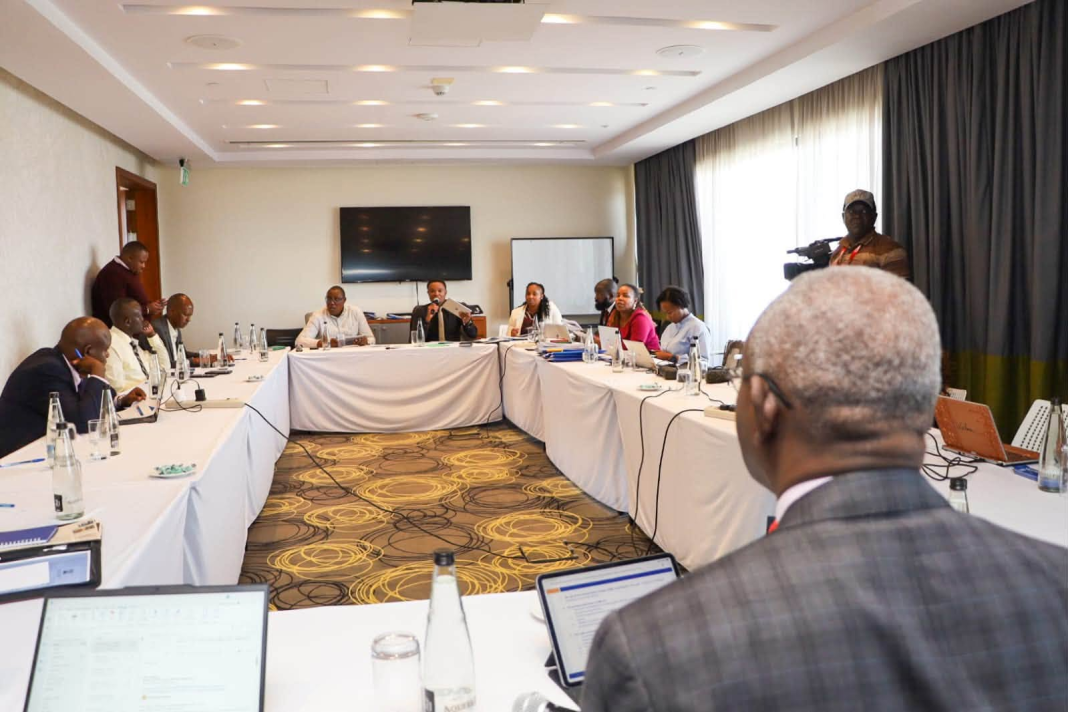
The Governor made the remarks during a meeting with the National Assembly Departmental Committee on Finance and National Planning to review the country’s monetary policy framework, the prevailing economic environment and ongoing developments in the financial sector.
The session centred on understanding how macroeconomic policies were navigating external shocks while fostering domestic stability.
Dr Thugge said the CBK’s primary mandate remained rooted in achieving price stability, fostering a sound market-based financial system and supporting the Government’s broader growth and employment objectives.
“Although overall inflation went up slightly to 6.8 per cent in September 2026, up from 6.6 per cent in August, it continues to be buffered by prudent monetary policy measures, active government interventions and a stable exchange rate,” he assured the lawmakers.
On domestic economic performance, the Governor shared an optimistic outlook with the Committee.
He said GDP growth averaged 5.1 per cent during the first half of 2026, prompting an upward revision of the annual growth projection to 5.0 per cent, up from 4.6 per cent in 2025.
Dr Thugge said the resilience was driven by strong performances across the services and industrial sectors, alongside robust activity in construction fuelled by affordable housing projects and infrastructure initiatives.
He said the implementation of the revised Risk-Based Credit Pricing (RBCP) model since March 2026 had enhanced transparency in loan pricing and improved the transmission of monetary policy decisions.
He said average commercial bank lending rates had trended downwards, resulting in stronger credit flows to critical economic sectors, including trade, agriculture, manufacturing and construction.
Dr Thugge emphasised that despite external challenges, the domestic macroeconomic environment remained firmly anchored.
“Global inflation has increased in 2026 on account of higher energy and food prices. Global growth has moderated in 2026 due to higher energy prices and elevated global uncertainties,” he observed.
He informed the Committee that the Monetary Policy Committee (MPC) had kept the Central Bank Rate (CBR) unchanged at 8.75 per cent since February 2026 to ensure inflation expectations remained anchored within the target range and the exchange rate stayed stable.
He observed that although average commercial bank lending rates had declined, credit growth to the private sector had improved. He further explained that the banking sector remained stable and resilient.
“Confidence in the economy remains strong, as reflected in sustained optimism in the economic prospects by respondents to the MPC surveys,” he told the Members.
Committee Members sought to know whether the CBK and the National Treasury had reached a convergence of views regarding core capital requirements for commercial banks.
Committee Chairperson Kuria Kimani observed that the two institutions had expressed differing opinions, with the National Treasury favouring a more flexible approach to allow local banks to grow.
“The Central Bank has expressed a different view from that of the National Treasury with regard to the Bank’s proposal for an increase in capital base requirements for different tiers of banks.
“Has there now been a convergence of thoughts in terms of capital requirements for commercial banks?” Kimani asked.
Dr Thugge underscored the necessity of building strong banks capable of withstanding emerging shocks, such as climate change and cyberattacks.
“Hon. Chair, we are engaging with the National Treasury because there’s a reason we felt we need banks to have a solid capital base so they can cushion themselves from emerging shocks. We have a few banks that are yet to meet our target of KSh5 billion, but we are talking to them,” he said.
Mr Kimani, however, pointed out concerns among local commercial banks that the proposal to raise capital base requirements might crowd them out to the benefit of foreign institutions.
“Governor, banks have expressed concerns that this new requirement will give dominance to foreign banks at the expense of their local counterparts,” he observed.
Dr Thugge stressed the importance of striking a balance and suggested that local commercial banks could merge to create larger, more resilient financial institutions, a proposal supported by Hon. David Mboni.
“I buy the idea that we need solid banks that can withstand shocks and syndicate loans that can fund local projects. We need solid banks that can fund projects like the Lamu Refinery,” Hon. Mboni stated.
Governor Thugge further advocated for a competitive banking market, arguing that increased competition would drive loan interest rates down.
The forum also addressed other key issues, including the adoption of AI in the banking sector, the implementation of the Virtual Assets Service Providers Act and the impact of non-performing loans on the broader economy.
Chesumei lawmaker Hon. Paul Biego inquired about the status of non-performing loans amid rising geopolitical tensions.
“What is the extent of bank exposures due to non-performing loans due to geopolitical tensions, and what measures are you taking to remedy this?” he asked.
Diaspora remittances
Turning to diaspora remittances, the Committee noted a decline in flows, particularly from traditional markets such as the Kingdom of Saudi Arabia.
Governor Thugge explained that changes in Saudi Arabia’s labour laws, which now prioritise skilled workers over semi-skilled labour, had reduced the number of Kenyan workers remaining in the country.
At the conclusion of the engagement, the Committee acknowledged that the shared insights had highlighted the resilience of Kenya’s financial architecture and confirmed the Central Bank’s readiness to implement proactive policy measures to safeguard macroeconomic stability.