
By Hon. Sammy Weya
The central lesson from India’s experience is that poverty reduction must be driven by productive economic activity, not simply by government handouts.
Kenya can adapt this approach by making agriculture the engine of employment, household incomes, food security and rural industrialisation.
Kenya has the land, water resources, agricultural knowledge and domestic market to produce considerably more of the food it consumes.
The question we should be asking is:
How can Kenya turn agriculture from a subsistence activity into a commercially organised wealth-creation system that lifts millions of households out of poverty?
This is also an opportunity to rethink the development of Siaya County and the wider Nyanza region within a national agricultural transformation framework.
What India Actually Achieved
The World Bank figures you have shared refer to a major reduction in India’s poverty over approximately 2011–12 to 2022–23.
The important lessons go beyond the headline number:
Agricultural productivity: Improving the ability of farmers to produce more from the same land.
Infrastructure: Investing in roads, electricity, irrigation, storage and market access.
Financial inclusion: Expanding access to bank accounts, credit and digital payments.
Social protection: Protecting vulnerable households against economic shocks.
Human development: Improving access to sanitation, education, healthcare and basic services.
Economic diversification: Creating employment outside agriculture through manufacturing and services.
One important qualification:
India’s poverty reduction cannot be attributed to agriculture alone. It resulted from a combination of economic growth, public investment, social programmes and improvements in household productivity.
Kenya should learn from the combination rather than copy one programme.
Kenya’s Opportunity
We Have a Food Production and Productivity Gap
There is an important distinction in the food import statistics.
I would not use the assertion that Kenya imports 80% of all its staple foods without qualification. The dependence varies considerably by commodity.
| Food commodity | Kenya’s approximate position |
|---|---|
| Rice | Imports 80–88% of consumption |
| Wheat | Imports approximately 90% of consumption |
| Maize | Production fluctuates around national demand |
| Sugar | Significant imports supplement local production |
| Vegetable oils | Heavy dependence on imports, particularly palm oil |
The rice and wheat figures are particularly important. Kenya imported approximately 785,930 tonnes of rice in 2025, costing KSh55.11 billion. Kenya Agri Atlas +2
The World Bank’s analysis also found that Kenya imported 3.2 million tonnes of cassava, maize, rice and wheat combined in 2022. World Bank
This is a remarkable economic opportunity.
Every tonne of rice, wheat, edible oil or other food that Kenya can competitively produce domestically represents an opportunity to:
- Create employment.
- Increase farmers’ incomes.
- Reduce pressure on foreign exchange.
- Strengthen rural economies.
- Create opportunities for agro-processing.
- Improve national food security.
However, import substitution must be commercially viable. We should not force domestic production where imports are cheaper and more efficient.
The objective should be to close the production gaps where Kenya has a comparative advantage.
The Kenya Model: Agriculture-Led Poverty Reduction
I propose a national programme called “THE KENYA AGRICULTURAL WEALTH & POVERTY ERADICATION PROGRAMME” (KAWPEP), with a proposed 10-year transformation framework covering 2027–2037.
The model would combine India’s approach to poverty reduction with Kenya’s agricultural potential, county governments, private-sector investment and digital technology.
Pillars
Pillar 1: Make Every Suitable Acre Productive
Kenya must move from subsistence farming to planned commercial agriculture.
This means:
- Mapping agricultural land and soil suitability.
- Identifying the best crops for each agro-ecological zone.
- Organising farmers into production clusters.
- Providing certified seeds and appropriate fertilisers.
- Expanding irrigation.
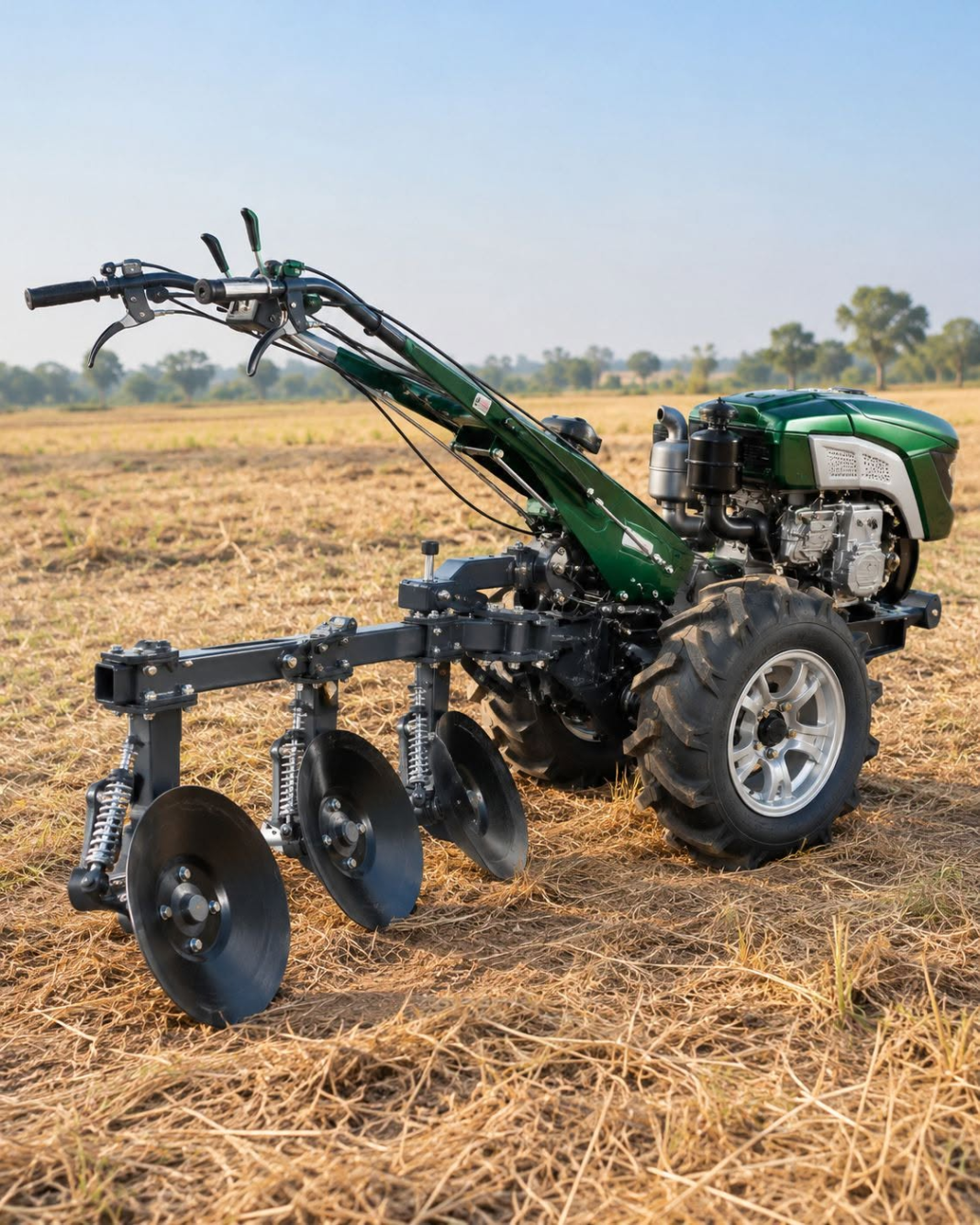
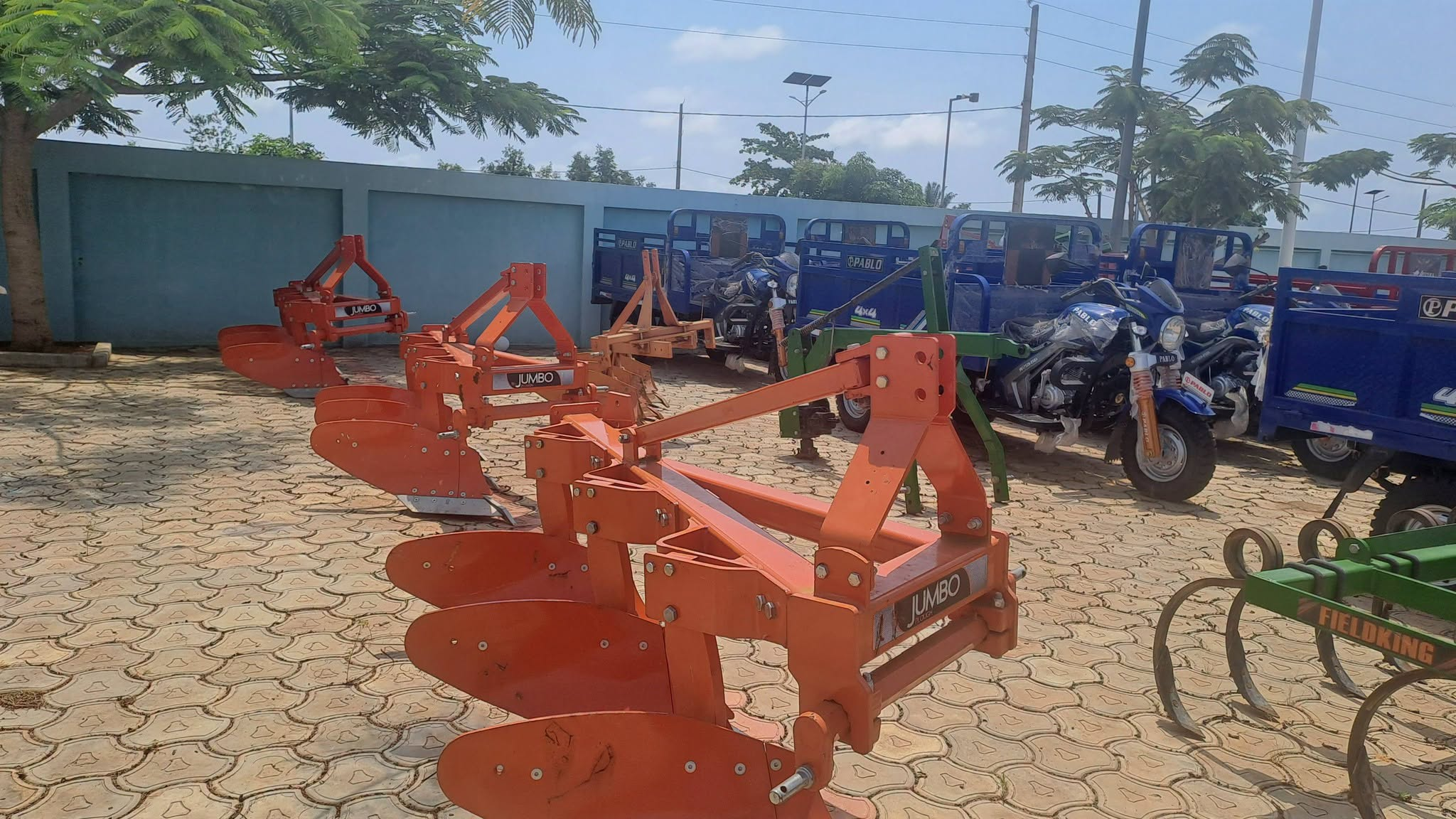
- Introducing mechanisation and modern farming techniques.
We should stop treating agriculture as a collection of individual farmers working independently.
Instead, we should create organised agricultural production zones.
Pillar 2: Target the Food Import Bill
Establish a national food import substitution programme.
| Commodity | Strategic intervention |
|---|---|
| Rice | Expand irrigation in Yala, Ahero, Mwea, Bunyala and other suitable areas |
| Wheat | Improve productivity in suitable highland areas |
| Sunflower | Develop commercial production for edible oil and biofuel |
| Soya beans | Build local animal feed and edible oil industries |
| Sorghum and millet | Promote drought-resistant food production |
| Cassava | Expand production and industrial processing |
| Sugarcane | Improve productivity and factory efficiency |
| Pulses | Expand beans, green grams and other protein crops |
The objective should be to set measurable five- and ten-year targets for reducing imports, rather than make blanket promises of self-sufficiency.
Pillar 3: Establish Agricultural Aggregation and Processing Centres
One of the biggest problems facing Kenyan farmers is that we produce commodities but do not adequately control their storage, processing, distribution and marketing.
Every major agricultural production zone should have an aggregation and value-addition centre.
These centres should provide:
- Grain drying and cleaning.
- Storage silos.
- Rice milling.
- Oil extraction.
- Cassava processing.
- Cold storage.
- Packaging and distribution.
- Quality control and certification.
This is where agriculture begins creating industrial employment beyond the farm.
Pillar 4: Establish a Revolving Agricultural Finance Facility
Farmers need affordable production capital.
I would propose an Agricultural Transformation and Revolving Fund.
It would support:
- Seasonal production loans.
- Mechanisation leasing.
- Irrigation equipment.
- Certified seeds and fertilisers.
- Storage infrastructure.
- Farmer cooperatives.
- Small and medium-sized agro-processing enterprises.
Financing should be linked to verified production plans, markets and repayment arrangements.
The government should not necessarily become the farmer’s banker. It should create a framework that attracts commercial banks, SACCOs, development finance institutions and private investors.
Pillar 5: Guarantee Markets Before Planting
One of the greatest risks farmers face is producing without knowing where they will sell.
The government should facilitate structured off-take agreements between:
- Farmer cooperatives.
- Millers.
- Food processors.
- Supermarkets.
- Institutional buyers.
- Exporters.
- Industrial users.
The farmer should know the expected market, quality requirements and pricing arrangements before planting.
India’s experience also demonstrates the importance of connecting rural production with broader economic markets.
Pillar 6: Digital Agriculture
Kenya already has a foundation to build upon.
The World Bank reports that a national digital farmer registry has reached 6.4 million farmers. It also reports support for farmer organisations and agricultural services. World Bank Group
We should develop this into a national agricultural information system.
Every registered farmer should progressively have:
- A digital farmer profile.
- Mapped farm acreage.
- Crop and production records.
- Soil information.
- Access to extension officers.
- Input subsidy records.
- Credit history.
- Market information.
- Traceability of produce.
This would make it easier to plan production against national demand.
Pillar 7: Water Is the Foundation of Agricultural Transformation
We cannot transform agriculture while remaining excessively dependent on rainfall.
The World Bank previously identified the low level of irrigation as a major constraint, reporting that only about 2% of Kenya’s arable land was irrigated in the period examined, against 37% in Asia. World Bank
Kenya needs:
- Smallholder irrigation schemes.
- Community water harvesting.
- Dams and water pans.
- Solar-powered irrigation.
- Rehabilitation of existing irrigation schemes.
- Better management of rivers, lakes and groundwater.
This should be a long-term national infrastructure programme.
Pillar 8: Agro-Industrialisation and Youth Employment
Agriculture must create jobs for people who may never want to become farmers.
We need to establish industries around:
- Fertiliser blending and production.
- Farm machinery assembly.
- Seed multiplication.
- Animal feed.
- Food processing.
- Packaging.
- Logistics and cold chains.
- Agricultural technology.
A young person should be able to build a business in the agricultural value chain without necessarily owning farmland.
4. What Should We Borrow Specifically from India?
India’s experience offers several useful institutional lessons.
| India’s development approach | Kenya’s adaptation |
|---|---|
| Digital public infrastructure | National digital farmer and land-production information systems |
| Agricultural research and improved seeds | Strengthen KALRO, universities and private seed companies |
| Irrigation investment | Expand smallholder and commercial irrigation |
| Rural roads and infrastructure | Connect production areas to markets and processing facilities |
| Financial inclusion | Affordable agricultural credit and digital payments |
| Rural enterprise development | Agro-processing and manufacturing hubs |
| Social protection | Targeted support for vulnerable farming households |
| Manufacturing expansion | Develop domestic agricultural input and food-processing industries |
5. How Do We Finance This Transformation?
This is where the proposal becomes practical.
Establish a three-level financing arrangement.
A. National Government
- Establish a National Agricultural Transformation Fund.
- Provide matching grants to counties.
- Finance major irrigation infrastructure.
- Support agricultural research and extension.
B. County Governments
- Ring-fence a proposed 10% of eligible county development allocations for agricultural transformation.
- Identify priority crops and production zones.
- Support farmer cooperatives and aggregation centres.
- Provide extension services and local infrastructure.
C. Private Sector and Development Finance
- Invest in milling and processing.
- Finance warehouses and cold chains.
- Provide production credit.
- Enter into off-take agreements.
- Invest in irrigation and mechanisation.
Proposed National Policy Framework: FEED KENYA, EMPLOY KENYA, WEALTH KENYA
An Agriculture-Led National Poverty Eradication and Economic Transformation Strategy 2027–2037
The Central Proposition
Kenya should transform agriculture from subsistence production into a commercially organised national economic system that guarantees food security, creates employment, increases household incomes and reduces poverty.
Three National Objectives
- Feed Kenya through competitive domestic food production.
- Employ Kenya through agricultural value chains and agro-industrialisation.
- Wealth Kenya through increased farmer incomes, rural enterprise and exports.
The writer is the former Alego-Usonga MP, an entrepreneur and farmer.