
By Sammy Weya
We must consciously make a fundamental change in how political leadership approaches development in Nyanza.
For many years, our political discussions have understandably centred on roads, hospitals, schools, bursaries, electricity and other public services. These remain essential. But we also need to ask a bigger question:
How do we make Nyanza a region where people have productive jobs, farmers earn money, industries operate, young people build businesses and households progressively move out of poverty?
India’s experience provides an important lesson. Its reduction in extreme poverty from 16.2% in 2011–12 to 2.3% in 2022–23, using the World Bank’s earlier international poverty line, happened alongside economic growth, rural infrastructure expansion and improvements in basic services. World Bank Group
Nyanza should adapt the institutional lessons, but build its own model around its most distinctive economic assets:
- Lake Victoria.
- Lake Kanyaboli.
- Lake Sare.
- Rivers Nzoia, Yala, Nyando, Sondu, Kuja and Migori.
- Existing and potential irrigation schemes.
- Fertile agricultural land.
- Fisheries and aquaculture.
- A large, youthful population.
- Proximity to Uganda, Tanzania and the wider East African market.
The six counties — Siaya, Kisumu, Homa Bay, Migori, Kisii and Nyamira — should think and plan as an interconnected economic region, while respecting their separate constitutional responsibilities.
Establish a Nyanza Regional Economic Transformation Compact, bringing together Governors, Senators, Members of Parliament and Members of County Assemblies.
This must be a development compact, not another political coalition.
Its purpose would be to agree on common economic priorities that survive changes of political leadership.
First, change the responsibility of political leadership
We need every elected leader to understand their economic development responsibility.
| Leadership | What they should deliver |
|---|---|
| Governors | Should execute county agricultural, water, infrastructure and industrial development programmes. |
| Senators | Must protect county resources, scrutinise county expenditure and champion national legislation and equitable financing. |
| MPs | Should champion national infrastructure investment, legislation, national budget allocations and oversight of national government programmes. |
| MCAs | Must ensure ward-level agricultural priorities are budgeted, implemented and monitored. |
The constitutional distinction is important.
Agriculture, including crop husbandry, livestock and fisheries, is primarily a county function. National irrigation infrastructure and water resource management involve national institutions and shared responsibilities. Kenya Law Reform Commission (KLRC) +1
This means our leaders must stop working in isolation.
For example, a Governor cannot independently construct a major national irrigation scheme. But the Governor can organise farmers, prepare county infrastructure, facilitate access to markets and work with the National Irrigation Authority to get the project implemented.
Similarly, a Senator cannot run an irrigation department, but can champion legislation, scrutinise county expenditure and defend county interests in national resource allocation.
We need coordinated leadership, not competing political projects.
Establish the Nyanza Regional Agricultural and Water Economy
This should become the centrepiece of our ten-year development programme.
Organise the six counties around interconnected economic zones.
Economic clusters
Cluster A: Siaya — Rice, Fisheries, Agroforestry and Food Processing
Priority investments:
- Expand Bunyala irrigation and accelerate development of the Lower Nzoia irrigation infrastructure.
- Develop the Yala area into a commercially organised agricultural production zone, subject to wetland and environmental safeguards.
- Establish rice milling, drying and storage facilities.
- Expand sunflower, soya and cassava production.
- Develop Lake Kanyaboli fisheries, aquaculture and eco-tourism.
- Establish agroforestry and commercial tree nursery enterprises.
An important example is Bunyala. The National Irrigation Authority reports potential irrigation coverage of 22,000 acres, but only 3,246 acres are currently under production, with annual rice production of approximately 12,000 tonnes. National Irrigation Authority
That gap between potential and actual production should be a priority for joint intervention.
Cluster B: Kisumu — Rice, Agro-industrialisation and Logistics
Kisumu should become a regional centre for food processing and agricultural logistics.
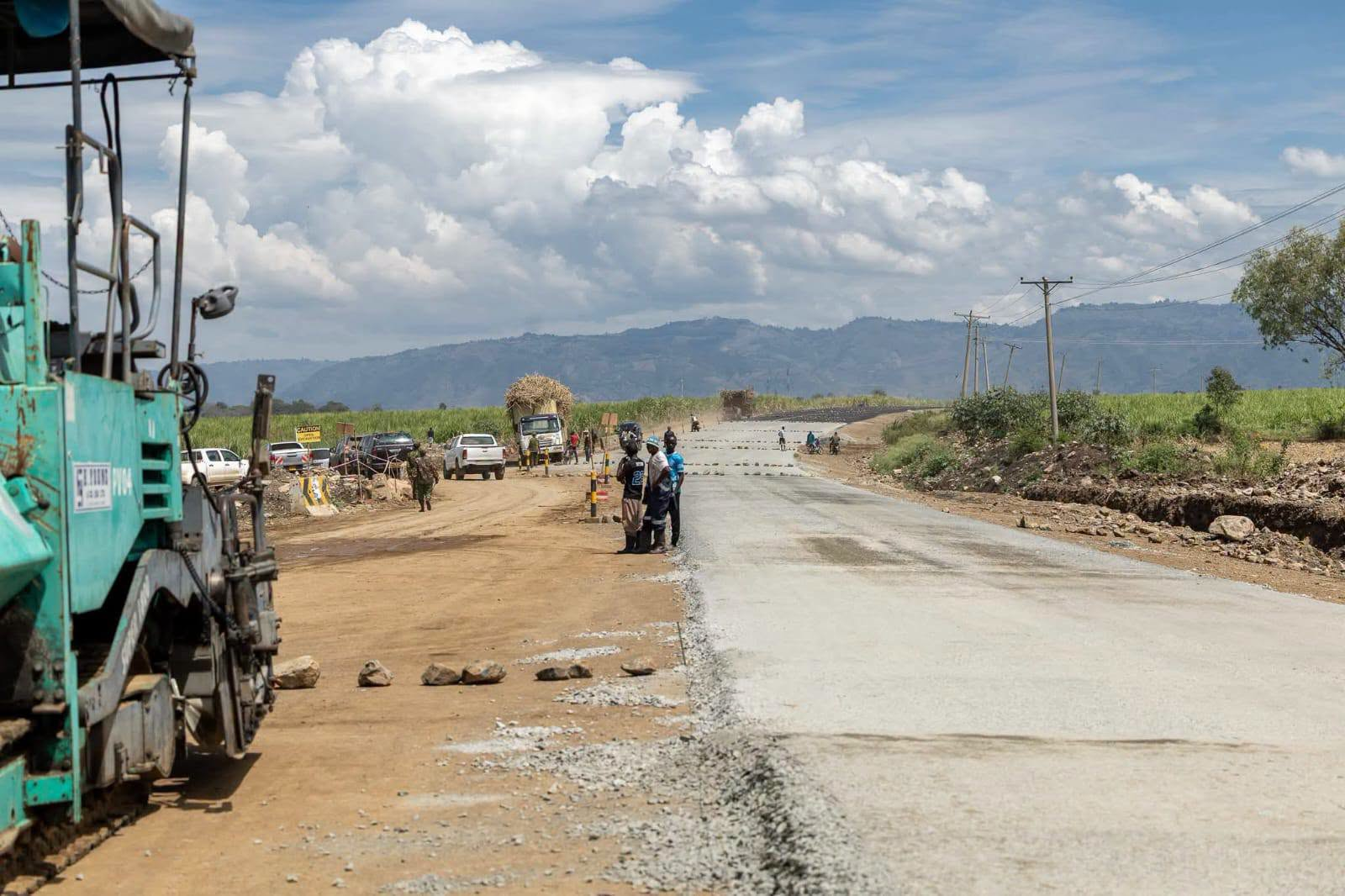
Priority investments:
- Expansion of Ahero and Kano irrigation.
- Rice milling and packaging.
- Animal feed production.
- Edible oil processing.
- Agricultural storage and distribution.
- Cold-chain infrastructure.
- Lake Victoria transport and logistics.
There is already a practical starting point. In February 2026, a KSh650 million Ahero–Kobong’o irrigation initiative was announced, including a solar-powered pumping component and an additional 1,000 acres targeted for irrigated production. Kenya News Agency
We should build on such existing investments rather than continually inventing new flagship projects.
Cluster C: Homa Bay — Fisheries, Irrigation and Agro-processing
Homa Bay should focus on:
- Commercial fisheries.
- Fish processing and cold storage.
- Aquaculture and fish feed.
- Irrigation-supported horticulture.
- Cassava and sorghum production.
- Fruit processing.
- Lake-based logistics and tourism.
We must move from simply catching and selling fish to building a proper fisheries economy, including processing, packaging, distribution and export markets.
Cluster D: Migori — Rice, Sunflower, Sugar and Agro-industry
Migori has a particularly important opportunity in irrigation and agricultural diversification.
The Lower Kuja scheme has a gazetted area of 19,000 acres, of which 7,500 acres have been developed for irrigation and approximately 5,400 acres are under crop production, according to the National Irrigation Authority. National Irrigation Authority
The ten-year priorities should include:
- Completing and expanding Lower Kuja.
- Commercial rice production.
- Sunflower and soya production.
- Edible oil extraction.
- Sugarcane productivity and processing.
- Cassava and horticulture.
- Agricultural transport and storage.
Cluster E: Kisii and Nyamira — High-Value Agriculture and Agro-processing
These two counties have opportunities to develop high-value agricultural value chains.
These counties should also develop collection centres, grading, cold storage and processing facilities so that farmers are not entirely dependent on selling raw produce.
Water as an economic asset
This is where Nyanza has a distinctive opportunity.
We have rivers and lakes, but the presence of water does not automatically translate into productive economic activity.
The missing link is the infrastructure, investment and organisation needed to turn water into agricultural production.
The Water Resources Authority identifies the Lake Victoria South Basin as a major catchment covering 26,906 square kilometres, with the Nyando, Sondu, Mara and Gucha among its major rivers. Water Resources Authority
A ten-year Nyanza Water-to-Wealth Programme
Its five components would be:
- Complete existing schemes: Audit every existing irrigation scheme, identify unfinished infrastructure and establish completion budgets.
- Expand irrigation: Develop suitable land around rivers and lakes through gravity-fed, solar-powered and efficient pumping systems.
- Harvest rainwater: Build community water pans, small dams and multipurpose reservoirs where environmentally and technically viable.
- Protect catchments: Invest in riverbank protection, wetlands, forests and sustainable water abstraction.
- Connect water to markets: Ensure every irrigation investment has a production plan, an aggregation centre and a buyer or market strategy.
We should establish a regional inventory of every irrigation scheme, river abstraction point, water reservoir and potential irrigable acreage.
Importantly, water abstraction must be based on hydrological assessments, permits, environmental flows and protection of existing users. We cannot sacrifice Lake Victoria’s ecology or wetlands in pursuit of production.
What should the Governors do together?
The six Governors should establish a joint regional economic development programme.
Not a new bureaucracy, but a coordinated delivery arrangement using existing institutions.
| Governor’s responsibility | Ten-year deliverable |
|---|---|
| Agricultural planning | County agricultural production master plans |
| Irrigation | Expand suitable irrigated acreage |
| Farmer organisation | Strong, commercially managed cooperatives |
| Agro-processing | At least one major value-addition hub in each county |
| Rural infrastructure | Farm-to-market roads and storage |
| Youth employment | Agricultural enterprise and technical skills programmes |
| Fisheries | Modernise fish landing, cold-chain and processing facilities |
| Accountability | Public agricultural investment dashboard |
Every Governor should submit an annual agricultural transformation report to the County Assembly.
That report should state how many acres were brought under production, how many farmers benefited, what was harvested, how much was processed locally and what happened to household incomes.
We should build on this data work rather than start from scratch.
Nyanza 2037 Development Compact
This should not be a partisan manifesto or a collection of campaign promises. It should be a common development framework that candidates and elected leaders can independently examine, debate and commit to.
The objective is to change the development conversation from what leaders promise to what they can collectively deliver.
The funding could be mobilised through:
- National government capital expenditure.
- County development budgets.
- Private-sector investment.
- Development finance institutions.
- Public-private partnerships.
- Agricultural financing facilities.
- Climate and water infrastructure financing.
It must be independently costed, phased and subjected to value-for-money assessment.
The institutional arrangement
Nyanza Regional Economic Transformation Council.
The Council would have a technical secretariat, not a political executive.
It would meet quarterly and publish an annual Nyanza Economic Transformation Report.
Its work would be organised around four committees:
- Agriculture, Irrigation and Food Security.
- Industrialisation, Trade and Investment.
- Infrastructure, Water and Environment.
- Finance, Legislation and Accountability.
NYANZA 2037
The Regional Economic Transformation and Poverty Reduction Blueprint
A Ten-Year Development Compact for Governors, Senators, Members of Parliament and Members of County Assemblies.
Six counties. One regional economic vision. Ten years of measurable transformation.