
By Reporter
The Public Investments Committee on Social Services, Administration and Agriculture (PIC-SSAA) has reprimanded the Tobacco Control Board (TCB) over widespread financial and administrative failures.
The lapses range from missing procurement plans to an unestablished audit committee, undisclosed state assets and a serious funding dispute.
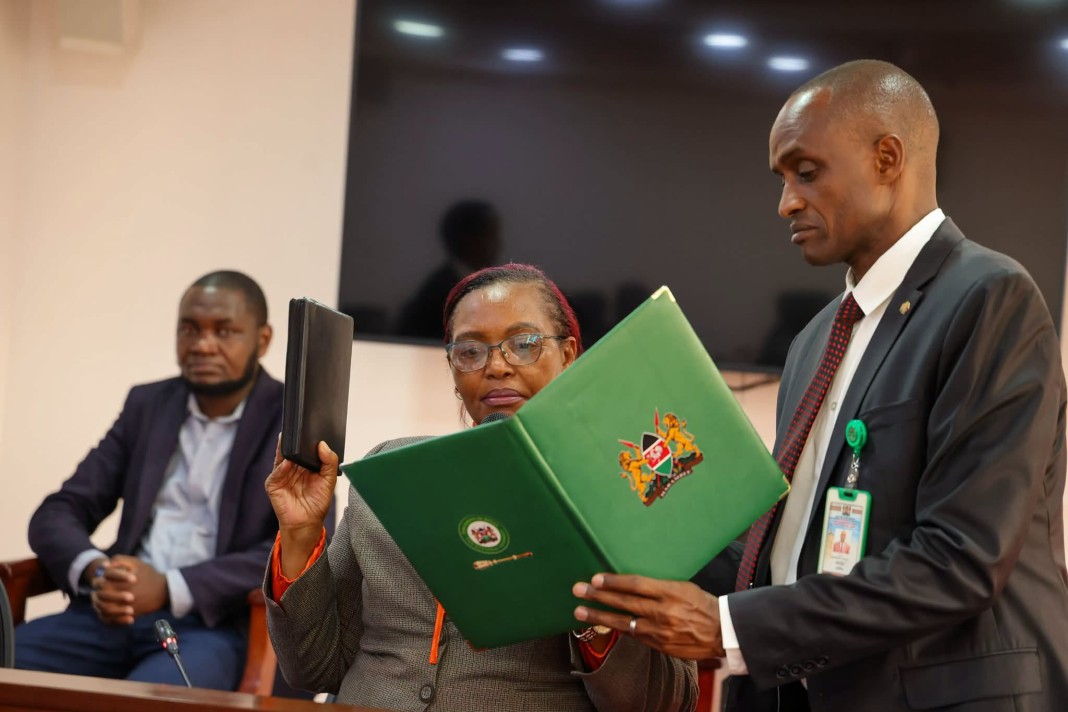
During Committee proceedings chaired by Hon. Emmanuel Wangwe (Navakholo), Members examined the board’s financial statements for the 2023/24 and 2024/25 financial years and raised some audit queries by the Office of the Auditor-General.
Among the key infractions were the failure to prepare an annual procurement plan, operating without an internal audit department, the lack of an imprest register, inadequate staffing and non-disclosure of property, plant and equipment.
The Committee heard that the Tobacco Control Fund generated over Kshs. 600 million in the 2023/24 financial year.
Under Section 3.8.2 of the Tobacco Control Operations Manual (2020), the board is entitled to a 10 per cent annual allocation, about Kshs. 60 million, to support its operations. Management, however, disclosed that it received only Kshs. 20 million, less than a third of its statutory entitlement.
Responding to the queries, the board’s Chief Executive Officer explained that the TCB operates as an advisory body rather than an independent corporate entity.
It therefore relies on the State Department for Public Health for staffing, accounting and funding disbursements. She added that a clash between the Public Finance Management (PFM) regulations and the tobacco operations manual had contributed to zero allocations in subsequent fiscal periods.
Hon. Wangwe questioned why the board was seeking funding without basic operational and procurement controls in place.
“You are looking for money, yet you have no reason to get that money,” the Chairperson declared, adding: “A procurement plan details what you expect to do in that financial year. What were you looking for this money for?” he asked.
On the missing 10 per cent allocations, the Chairperson ordered that the Principal Secretary of the State Department for Public Health be summoned to account for the funds not released since 2020.
“We need accountability from 2020 to date of the 10 per cent of the TCF, how it has been given, and if it has not been given, where is that money?” he enquired.
“We shall be inviting the PS before we write the report on the status of that Fund,” he added.
Hon. Wangwe also raised alarm over rising youth addiction driven by novel nicotine products.
“The manufacturers are just coming up with new products which are very attractive to the youth and yet the product itself has hazards. These products are also reportedly causing cancer. What are you doing to control the tobacco menace?” he asked.
Members further pressed management on asset accounting after the board reported zero property, plant and equipment, despite using donated desktop computers, printers and other office equipment.
Challenging the declaration, Hon. Michael Wainaina (Othaya) stressed that items in active use must be reflected at fair market value.
“You cannot say you have zero assets yet you are using them and they have economic value. You must register a value. You cannot say you don’t have anything you can count,” he argued.
In the Board’s defence, the CEO told the Committee that proposed legislative amendments were underway to transform the board from an advisory body into an independent corporate entity with direct Treasury funding. He added that the proposed law also seeks a total ban on synthetic nicotine pouches and vapes targeting young people.
The Committee directed that the management submit written responses by 18th November 2026 before the official report was compiled.