
By Reporter
The National Assembly’s Public Debt and Privatisation Committee has questioned the National Treasury over the utilisation of KSh103.54 billion raised from the privatisation of the Kenya Pipeline Company (KPC).
The Committee also raised concern over the continued rise in public debt despite ongoing fiscal consolidation measures.
Members sought assurances that the proceeds from the KPC Initial Public Offering (IPO) would be invested in long-term development projects rather than diverted towards settling pending bills or managing government liabilities.
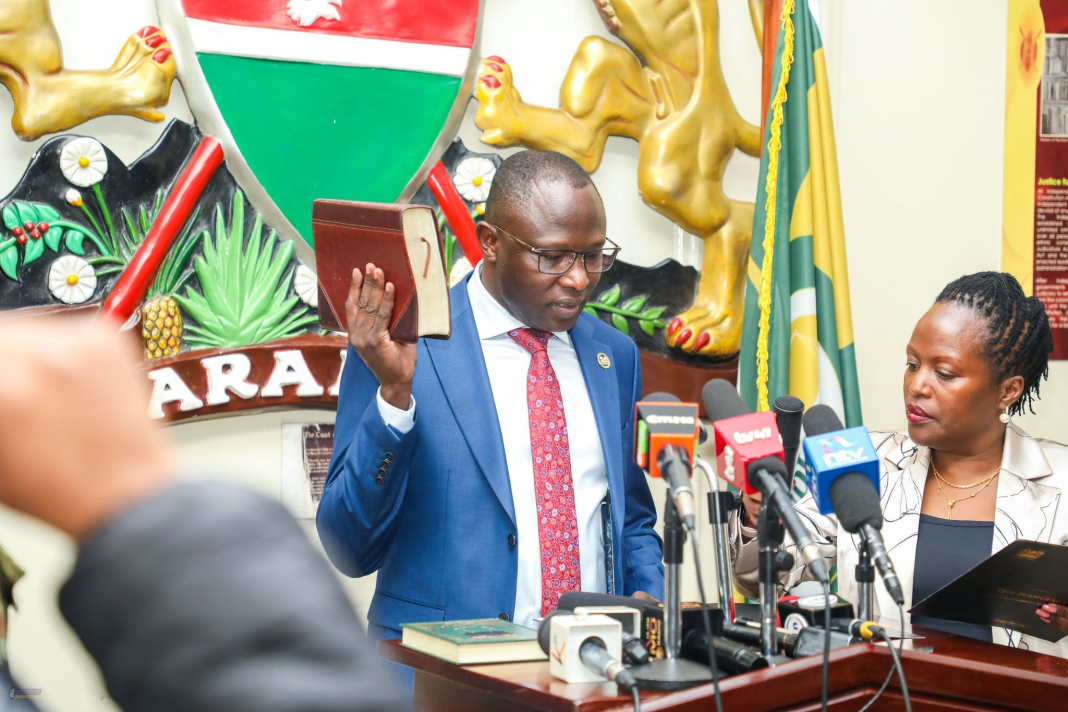
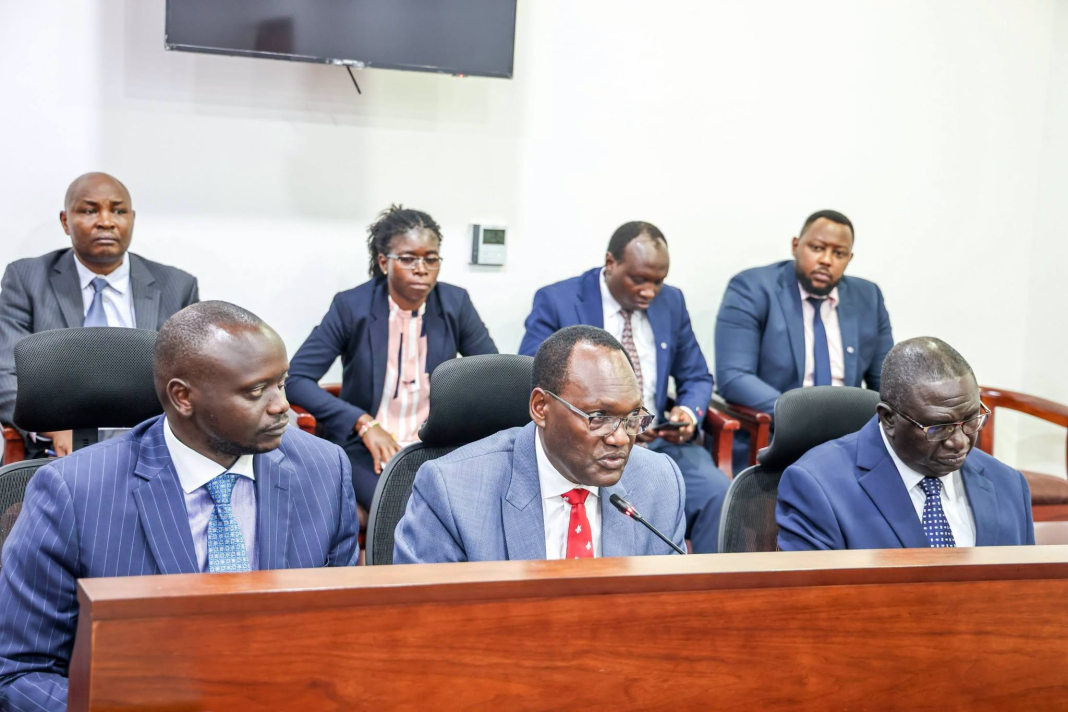
Appearing before the Committee, Treasury Principal Secretary Dr Chris Kiptoo said the privatisation had been completed through the Nairobi Securities Exchange (NSE), following Parliament’s approval of Session Paper No. 2 of 2025.
He explained that the Government offered 65 per cent of its shareholding, equivalent to approximately 11.81 billion ordinary shares at KSh9 each, between January 19 and February 24, 2026. The offer was fully subscribed, raising net proceeds of KSh103.544 billion and reducing Government ownership to the statutory minimum of 35 per cent.
However, questions emerged over Treasury’s presentation, which indicated that the proceeds could be used for development expenditure, pending bills or liability management.
Hon. Aden Daudi (Wajir East) questioned the proposed utilisation, noting that the National Infrastructure Fund (NIF) was established primarily to finance strategic capital investments and unlock additional resources for development.
“I am a bit confused. The presentation indicates that the proceeds will be utilised either for development expenditure, pending bills or liability management. I thought this money was going to the NIF, which was supposed to provide seed capital for development projects and help unlock more resources,” said Hon. Daudi.
He sought clarification on whether the proposed uses were consistent with the National Infrastructure Fund Act No. 4 of 2026, emphasising that settling pending bills was not among the Fund’s intended objectives.
Committee Chairperson Hon. Shurie Abdi Omar (Balambala) challenged Treasury to reconcile the information contained in its presentation with the provisions of the law.
“The member is simply asking because what you have stated in your presentation appears different from what you are telling us now. Are you confirming that what you have explained is the actual utilisation of the proceeds?” asked Hon. Shurie.
In response, PS Kiptoo clarified that the entire KSh103.54 billion had been transferred intact to the National Infrastructure Fund account at the Central Bank of Kenya (CBK), in accordance with Section 49 of the Act.
He added that the Fund operates under an independent Board and Chief Executive Officer, with the proceeds currently invested in Government securities earning returns of more than 10 per cent.
The PS further informed the Committee that the Fund’s capital had grown to KSh349 billion, assuring Members that none of the KPC proceeds had been utilised to settle pending bills.
Rising Public Debt and the 55 Per Cent Anchor
The Committee also examined Treasury’s 2027 Medium-Term Debt Management Strategy (MTDS), which places Kenya’s public debt at KSh13.532 trillion as at September 2026, equivalent to 72.6 per cent of Gross Domestic Product (GDP).
The debt portfolio comprises KSh5.748 trillion in external debt, representing 42.5 per cent, and KSh7.785 trillion in domestic debt, accounting for 57.5 per cent.
Members expressed concern over projections showing that the debt-to-GDP ratio would remain above 62 per cent through 2030, despite the statutory debt anchor of 55 per cent of GDP, with a permissible margin of plus or minus five percentage points.
Hon. Shurie challenged Treasury to demonstrate how its fiscal and borrowing policies would progressively bring public debt within the legally established threshold.
“Is there an overarching strategy to reduce the public debt stock in relation to GDP and move towards the debt anchor? The ratio has moved from 68 to 67 per cent and now stands at 72 per cent. I do not see a clear strategy showing how we intend to comply with the law,” he observed.
The Chairperson emphasised that the Committee was not demanding an immediate elimination of public debt but wanted a credible plan to progressively achieve the statutory target.
“Our debt anchor is 55 per cent, plus or minus five percentage points. That is what is provided for in law, not merely a policy guideline. We want to see a strategy that moves us towards compliance,” he said.
PS Kiptoo acknowledged that achieving the 55 per cent target under the prevailing fiscal pressures would be challenging.
However, Hon. Shurie urged Treasury to maintain a clear commitment to the legal requirement rather than lower expectations of compliance.
“PS, I would advise you not to say that you do not think we will achieve the target. We should instead be saying that we are working towards complying with the law,” the Chairperson said.
New Borrowing and Revenue Accountability
Treasury further disclosed that between January and October 2026, the Government contracted 13 new external loans and issued a US$2.2 billion dual-tranche international sovereign bond.
The transactions raised a combined KSh651.24 billion for liability management and budget support.
Hon. Zachary Kwenya (Kinangop) called for greater scrutiny of domestic revenue mobilisation, arguing that discussions on public debt should also examine the effectiveness of revenue collection and the tax burden on citizens.
“Public debt is a big issue, especially during this campaign period. Following the revenue reforms introduced by the Government, including the expansion of the tax base, how is our revenue growth performing? We cannot discuss debt without also examining where the money to finance Government operations is coming from,” said Hon. Kwenya.
He proposed the establishment of a public revenue dashboard to enable Kenyans to monitor Government collections in real time, similar to the debt-tracking platforms already available.
“Is it possible to have a dashboard where Kenyans can follow and see how much revenue is being collected? This would promote transparency and allow citizens to monitor collections just as they currently track public debt,” he added.
PS Kiptoo informed the Committee that Kenya Revenue Authority (KRA) collections had improved in recent months, with monthly performance exceeding targets. He welcomed the proposal, noting that Treasury already has the capacity to monitor revenue collections on a daily basis.
Treasury reiterated its commitment to fiscal consolidation, with plans to reduce the budget deficit from 5.5 per cent to 3.6 per cent over the medium term. The strategy also seeks to increase non-debt financing for capital projects through Public-Private Partnerships (PPPs) and the National Infrastructure Fund.
The Committee, however, maintained that accountability in public borrowing must be strengthened, insisting that all new external loan agreements be submitted to the National Assembly without delay to facilitate parliamentary scrutiny.
Members called on the Treasury to provide a clear and legally compliant roadmap for progressively bringing public debt within the statutory 55 per cent debt anchor, as Parliament continues to scrutinise Government borrowing and forthcoming budget proposals.