
By Reporter
Global lawmakers have been called upon to move beyond declarations and deliver tangible results in the fight against hunger and malnutrition, with the Food and Agriculture Organization of the United Nations (FAO) warning that the success of the Nairobi summit will ultimately depend on actions taken after delegates return to their respective countries.
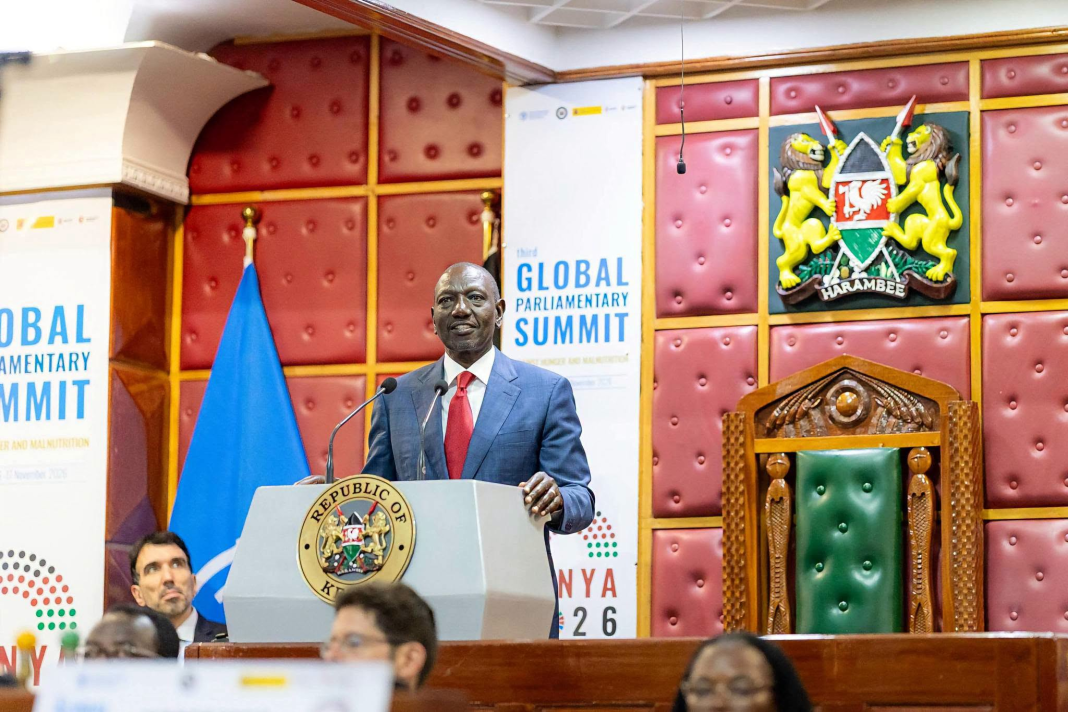
President William Ruto challenged parliaments worldwide to strengthen efforts to combat hunger and malnutrition. He said the world produces enough food to feed its population, but poor policy and investment choices continue to drive hunger.
Speaking at the Global Parliamentary Summit Against Hunger and Malnutrition in Nairobi, President Ruto called for stronger parliamentary action through legislation, budget allocation and oversight.
He warned that Africa could account for nearly 60 per cent of the world’s hungry people if urgent action is not taken. However, he said the continent has the resources to help end global hunger.
“Africa holds more than 60 per cent of the world’s uncultivated arable land, the youngest population and vast renewable energy resources. It is a choice we make when we fail to legislate, to fund and to follow through,” said President Ruto.
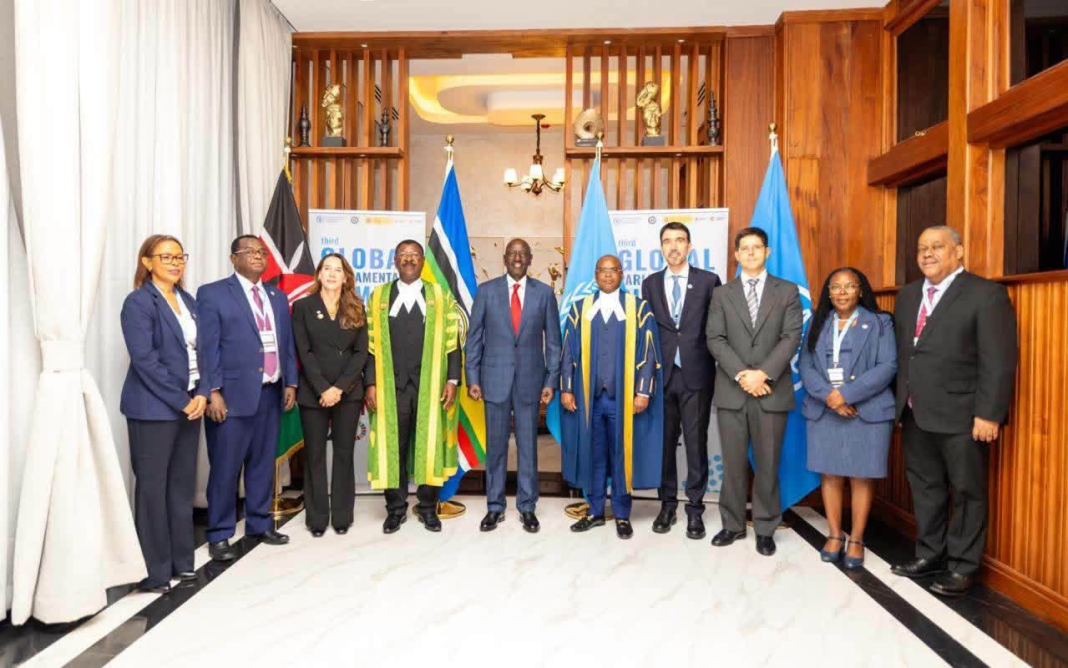
FAO Deputy Director-General Maurizio Martina told delegates attending the Third Global Parliamentary Summit Against Hunger and Malnutrition at the Parliament of Kenya that legislators must use their legislative, budgetary and oversight powers to turn political commitments into policies and programmes that improve food security.
“Our success will not be determined only by what we say here in Nairobi. It will be determined by what happens after Nairobi,” he said.
According to the FAO deputy chief, parliamentarians have a unique responsibility in ensuring that citizens’ concerns are translated into government priorities, adequately funded programmes and measurable results.

“Parliament is where people’s needs become priorities, where political commitment becomes action, and where national ambitions are translated into budgets and accountability,” said Mr Martina.
He identified legislation, budget allocation, oversight and representation as four powerful instruments lawmakers could deploy to strengthen food security and improve nutrition.
He urged lawmakers to enact laws that protect the right to food, promote better nutrition, support sustainable agriculture, address climate change and ensure responsible management of natural resources.
“Through legislation, parliamentarians can establish durable frameworks for the right to food, better nutrition, sustainable agriculture, climate action and responsible management of natural resources,” the FAO Deputy Director-General said.
Mr Martina warned that political declarations would achieve little without corresponding financial commitments, insisting that national budgets must reflect governments’ priorities in tackling hunger and malnutrition.
“Political commitment without resources remains an aspiration. Through public budgets, you determine national priorities,” he told the legislators.
On accountability, Mr Martina told the legislators that they must go beyond approving government programmes to ensuring that commitments were implemented and public resources produced tangible outcomes.
“You can ensure that commitments are implemented and that public resources deliver results,” he said.
He further challenged lawmakers to make their legislative work responsive to the needs of farmers, women, young people, indigenous populations and rural communities whose voices were often overlooked in national decision-making.
“These are not abstract parliamentary functions. They have consequences in people’s everyday lives. They determine whether a child receives a nutritious meal at school, whether a farmer can access water, finance, technology and markets, and whether communities are better protected from climate and economic shocks,” Mr Martina said.
He went further to add that parliamentarians had a responsibility to create opportunities for young people to acquire skills, establish businesses and secure decent employment across agricultural value chains.
The FAO official described Africa’s hosting of the global parliamentary summit for the first time as particularly significant, saying the continent represented both the greatest challenges and enormous opportunities in the fight against hunger.
“Africa is the continent where the challenges before this summit are most pronounced, but it is also a continent of extraordinary agricultural potential, a young and dynamic population, expanding markets, vast natural resources and capacity for innovation. In other words, it represents hope,” he said.
His remarks come against the backdrop of persistent global food insecurity, compounded by conflicts, extreme weather events, economic volatility, biodiversity loss and growing pressure on natural resources.
However, he urged lawmakers to approach the challenges with optimism, pointing to declining global hunger figures as evidence that progress was possible.
According to FAO estimates cited in his address, approximately 645 million people faced hunger in 2025, about 43 million fewer than in 2022, marking the third consecutive year of decline.
He identified legislation, budget allocation and oversight as the three key areas through which Parliament can address hunger.
The President also cautioned that access to food does not necessarily guarantee proper nutrition. He called for greater investment in food quality, agriculture and distribution systems.
He said the Government has distributed more than 38 million bags of subsidised fertiliser to about two million farmers since 2022. The programme has reduced the price of a 50-kilogramme bag from approximately USD 58 to USD 15.
He added that maize production has more than doubled, rising from 34.5 million bags in 2022 to 71 million bags in 2025. This has reduced Kenya’s dependence on food imports.
Milk production has also increased by one billion litres, making Kenya Africa’s largest milk producer. Sugarcane farmers are also receiving bonuses for the first time, he said.
The President expressed concern that Africa spends more than USD 100 billion annually on food imports while continuing to export raw agricultural products.
He called for the effective implementation of the African Continental Free Trade Area (AfCFTA) to connect farmers to markets across the continent. This, he said, would enable African countries to meet more of their food needs through local production and trade.
On financing, President Ruto urged African leaders to mobilise domestic resources instead of relying heavily on external funding.
He challenged parliamentarians to use their oversight role to ensure that national savings, pension funds and sovereign wealth are invested in agriculture and food production.
“Parliamentarians must play a decisive role in unlocking Africa’s potential through effective oversight and by mobilising domestic resources. They must ensure that our savings, pension funds and sovereign wealth are channelled towards supporting our farmers rather than working against them,” he said.