
By Valentine Omondi
For years, securing an Orange Democratic Movement (ODM) ticket in parts of Luo Nyanza was almost half the battle for anyone seeking an elective position. In places such as Siaya, Kisumu and Homa Bay, the party’s popularity, largely anchored in the political influence of its late leader Raila Odinga, gave its candidates a considerable advantage in general elections.
Consequently, political competition was often fiercest within ODM itself, where aspirants fought for nominations, knowing that the party ticket could place them in a favourable position ahead of the general election.
But following Raila’s death on October 15, 2025, a different political reality appears to be emerging.
Some of the politicians who were once considered among his closest political allies are now establishing, acquiring or reviving alternative political parties, raising questions about whether the ODM ticket still commands the political value it once enjoyed.
Nairobi Senator Edwin Sifuna, who previously served as ODM secretary-general, has established a political home through the Linda Mwananchi Movement, which transitioned from The Equitable Party following a delegates’ conference on November 13, 2026.
Embakasi East MP Babu Owino is associated with The Mwananchi Party, formerly Muungano Party, while Siaya Governor James Orengo has unveiled the Liberal Democratic Party (LDP) as his political vehicle ahead of the 2027 General Election.
These are not ordinary political developments. They could represent a calculated response by experienced politicians who understand that the political environment which existed under Raila may no longer offer the same guarantees.
Preparing for life beyond ODM
Raila was more than the leader of ODM. He was a political figure whose influence helped bring together politicians with different ambitions under one political umbrella.
He could influence nominations, settle disagreements, negotiate political arrangements and, perhaps most importantly, give political legitimacy to candidates seeking elective positions.
His death has left the party with the responsibility of managing those competing interests under a new leadership.
However, the emerging political formations suggest that some former allies are increasingly unwilling to leave their political futures entirely dependent on the direction ODM takes.
For a politician seeking a parliamentary seat, governorship or even the presidency, having an independent political vehicle offers a different kind of bargaining power.
Rather than approaching another party’s leadership to negotiate for a ticket, such a politician can enter coalition negotiations with an organisation, supporters and political interests of their own.
This is particularly significant as the country approaches the 2027 General Election, when coalition arrangements and political alliances are expected to shape the contest.
The developments also raise questions about whether some of these politicians are anticipating a future in which ODM’s traditional electoral influence may not be as decisive as it was during Raila’s lifetime.
The changing attitude of the electorate
There is another factor that senior politicians may be taking into consideration: the changing political attitude of younger voters.
For a long time, political parties in Kenya benefited from established loyalties, with voters often identifying themselves with particular political formations because of their leaders, history or regional influence.
However, a section of the younger electorate appears increasingly interested in leadership, accountability, economic opportunities and service delivery rather than party identity alone.
This does not mean that young people have abandoned political parties or that traditional loyalties have disappeared. It does, however, suggest that party affiliation is becoming less automatic among younger citizens.
An Afrobarometer survey published in March 2025 found that only 41 per cent of Kenyans aged between 18 and 35 felt close to a political party, compared with 57 per cent among those aged above 55.
The same research established that 77 per cent of Kenyans believe multiple political parties are necessary to give voters real choices.
The findings point to an electorate that values political competition while showing weaker attachment to individual parties, particularly among younger citizens.
For politicians positioning themselves ahead of 2027, this presents both an opportunity and a challenge.
A candidate may no longer need the backing of a historically dominant political party to attract voters, provided they can establish credibility, communicate a convincing agenda and demonstrate the ability to deliver.
This could explain why some experienced politicians are increasingly investing in independent political vehicles rather than waiting for established parties to determine their electoral fortunes.
The politics of independence and bargaining power
There is also a strategic calculation behind the proliferation of political parties.
In Kenyan politics, owning or controlling a political party can provide leverage during coalition negotiations. A party leader can negotiate on behalf of an organisation rather than simply seeking accommodation as an individual politician.
This becomes particularly important when politicians have ambitions that may not necessarily align with those of their former political homes.
The emerging formations also suggest that some leaders would rather have alternatives available before political negotiations begin than find themselves stranded when nomination arrangements become difficult.
For instance, a politician seeking a governorship or presidential position may find it more practical to build an independent political platform than depend on a party whose leadership has other preferred candidates.
In this sense, the emergence of alternative parties could be interpreted as political insurance against an uncertain future.
Will ODM retain its traditional advantage?
The biggest question, however, is whether ODM can retain the electoral influence it enjoyed when Raila was alive.
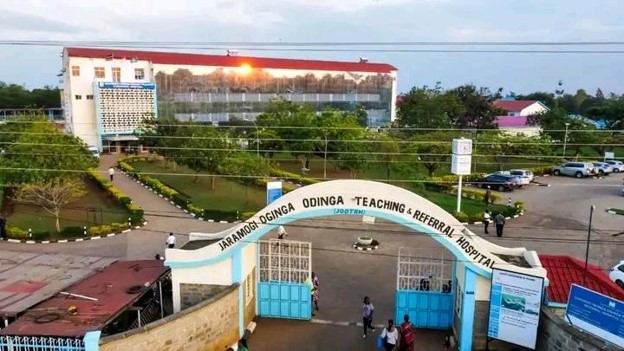
In Siaya, for instance, will a candidate seeking an elective position still consider an ODM ticket the most reliable route to victory, or will personal popularity and alternative political platforms become equally attractive?
Will voters remain loyal to the Orange symbol regardless of who carries its ticket, or was much of that loyalty tied to Raila himself?
These questions are particularly important because the 2027 General Election will offer the first major electoral test of ODM without the man who dominated its political identity for decades.
The alternative parties will also have to demonstrate that they can move beyond prominent personalities, establish grassroots structures and attract enough voters to compete effectively.
Ultimately, having a political party does not automatically translate into electoral victory. A candidate must still convince voters.
But one thing appears increasingly evident: the political calculations of some of Kenya’s senior politicians are changing.
Raila’s absence has created a succession challenge within ODM, while a younger electorate that is increasingly questioning traditional political loyalties is presenting a different set of political considerations.
Perhaps the biggest lesson is that the political future of individual leaders may no longer be tied exclusively to the strength of the parties that once gave them prominence.
The ODM ticket may still be valuable, but it is no longer the only ticket worth fighting for.