By Anderson Ojwang
Kondele
From a war zone, Kondele is shedding off the negative image that was previously associated with it, transforming into a 24-hour economy in the Lake City of Kisumu.
Feared and avoided by local and visiting politicians, Kondele has been the heart of violent political protests and crime for the last four decades.
Kondele is mainly a slum, with a majority of its population living below the UN’s definition of poverty of less than $2 per day. Recently, there has been an upsurge in economic activity, with the government aiming to lift Kondele out of poverty as part of Kenya’s Millennium Development Goals and Vision 2030.
But Kondele has a rich cultural and religious background that has endured alongside its persistent negative image.
The history of violent Kondele dates back to October 24th, 1969, during the opening of New Nyanza General Hospital by founding President the late Jomo Kenyatta. Kenyatta and his former deputy, the late Jaramogi Oginga Odinga, differed during the ceremony of this facility, which was built with Russian support, an ally of the latter.
Kondele became a gathering point for protests stemming from political discontent at both the local and national levels. The most notable protest can be traced back to 1969.
In February 1990, following the murder of former Foreign Affairs Minister Dr Robert Ouko, protestors gathered first at Kondele before proceeding to the CBD.
In 1992, during Kenya’s struggle for multiparty democracy, demonstrations began in Kondele before people marched towards the CBD.
Kondele saw post-election violence in 2007 that initiated a nationwide protest in which over 1,000 people died.
In 2017, a repeat of the 2007 violence erupted, with protesters killed by live police bullets in Kondele. The 2013 and 2017 general elections also witnessed protests centred in Kondele, marking it as a protest base.
Subsequent presidents, including the late Daniel Moi, Mwai Kibaki, Uhuru Kenyatta, and William Ruto, have all encountered unrest from Kondele. Even former Prime Minister Raila Odinga and nearly all local politicians have experienced the impact of Kondele’s protests.
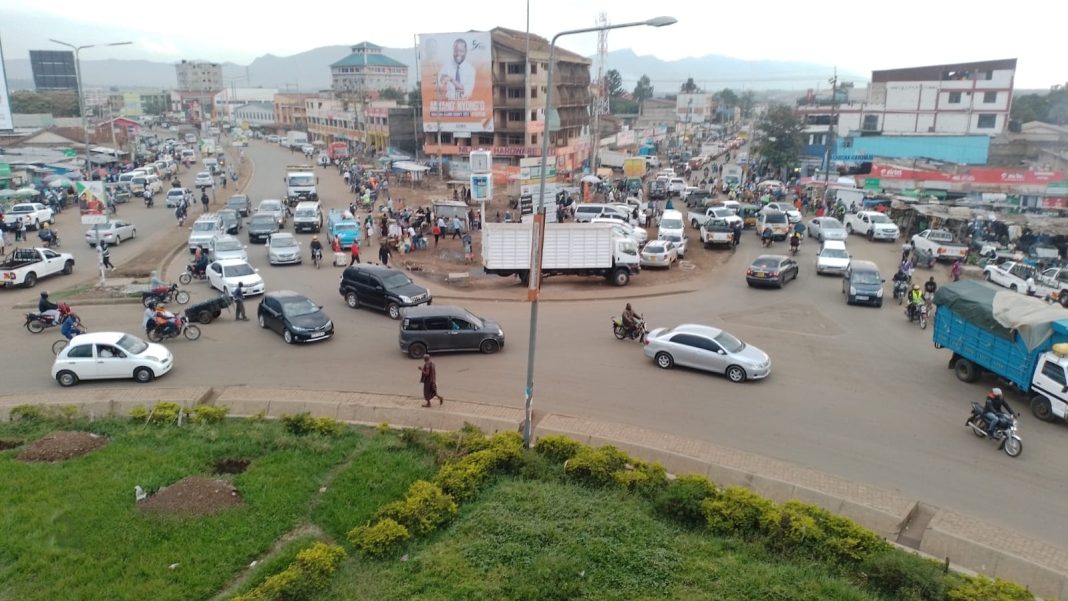
Commonly referred to as Darfur due to its war zone nature, Kondele has a reputation for violence and crime. However, Kondele is currently transforming into a business hub in Kisumu, attracting a variety of investors.
Kondele’s growth began with locals starting businesses after being excluded from the CBD by well-established enterprises. The area turned into a business hub for residents along the Kisumu-Kakamega Highway, Town-Kibos route, and adjacent estates.
Main businesses in Kondele now include supermarkets, hotels, restaurants, and apparel retail, drawing banks like Co-operative Bank, Equity Bank, and KCB Bank.
The return of peace and the superhighway’s development have fueled economic activity and raised land value—by 2016, land averaged KES 10 million per acre, up from KES 6 million in 2014.
Housing prices also rose, with two-bedroom rentals priced at KES 15,000–KES 20,000 (around US$150 to US$200) monthly by 2016.
Today, supermarkets, wholesales, and a growing entertainment industry flourish in Kondele. High-end hotels and restaurants and improved social amenities have placed Kondele in the spotlight for positive change.
The area also hosts top primary schools, the regional blood bank, Kenya Medical Training College, Jaramogi Oginga Odinga Teaching and Referral Hospital, and Knightdale Hospital.
Private healthcare is provided by notable facilities like Nightingale Hospital, Migosi Health Center, and Rapha Medical Clinic. There’s also an NGO-sponsored hospital called KMET.
Kondele’s 33 schools—28 primary and five secondary—highlight the region’s education infrastructure.
Kisumu’s Deputy Governor, Dr. Mathews Owili, notes that Kondele is rebranding from negative publicity to an economic front for the county. “Our first strategy is to rebrand Kondele and promote it as a potential investment hub. We aim to engage residents in economic opportunities. This is working, which is why we no longer see a restive Kondele,” he says.
Strategically positioned to connect Kisumu to Kakamega, Busia, and into Uganda and East Africa, Kondele’s stability is essential for regional economic health.
Kondele MCA Mr Joachim Oketch Swagga notes improved infrastructure and a better business environment following the county government’s upgrades.
Dr. Otieno Obondi, a Kisumu medic, sees economic revival in Kondele but remains concerned over insecurity and drug hubs. He stresses the need to combat insecurity and crack down on drug peddling to protect the new economy.
Capacity building for residents is crucial to maintaining calm and preventing political exploitation, he adds.