
By Dr. Paul Saoke – Author: Africa’s Atomic Odyssey
“Kenya’s energy future will not be defined by whether it has renewable resources, but by how effectively it transforms those resources into stable, scalable, and industrial-grade power systems. Green hydrogen offers the opportunity to bridge the gap between renewable abundance, industrial growth, AI-driven economies, and long-term climate sustainability without the financial and environmental burdens associated with nuclear energy.”
Green Hydrogen: Powering Kenya’s Future
Kenya today stands at a unique energy crossroads. On one hand, the country possesses some of the most promising renewable energy resources in Africa, including geothermal, solar, wind, hydro, and biomass potential. In fact, Kenya is already globally recognized for having one of the highest shares of renewable electricity generation in its energy mix, with geothermal energy serving as a major backbone of the national grid. Yet despite this renewable advantage, the country still faces a growing energy challenge driven by rapid urbanization, industrialization, population growth, digital transformation, electric mobility, and the emerging demands of artificial intelligence, advanced manufacturing, and data-driven economies.
The issue is therefore not simply whether Kenya has renewable energy potential. The deeper issue is whether the country can generate enough stable, affordable, scalable, and future-ready energy to sustain long-term industrial growth while simultaneously meeting climate commitments and avoiding energy insecurity.
As Kenya pursues industrial expansion through initiatives such as Special Economic Zones (SEZs), digital infrastructure, smart cities, electric transport systems, and AI-enabled industries, electricity demand is expected to rise substantially over the next two decades. Hyperscale data centres, advanced manufacturing facilities, logistics systems, and AI-driven digital economies require enormous and uninterrupted energy supply. This creates legitimate concerns about whether the existing renewable energy mix alone can support future economic transformation without creating supply constraints, grid instability, or escalating energy costs.
It is within this context that the debate around nuclear energy has increasingly emerged in Kenya. Advocates of nuclear power argue that it offers stable baseload electricity capable of supporting industrialization and long-term energy security. However, nuclear energy presents major financial, environmental, technological, geopolitical, and regulatory challenges that may not align easily with Kenya’s current economic realities or long-term sustainability priorities.
Nuclear power projects typically require:
- extremely high upfront capital costs,
- long development timelines,
- complex regulatory systems,
- advanced technical expertise,
- radioactive waste management,
- major water requirements,
- and long-term geopolitical and security considerations.
For many developing economies, including Kenya, nuclear energy risks becoming an expensive and inflexible infrastructure pathway that could create future fiscal and environmental liabilities.
Green hydrogen, by contrast, presents a far more adaptive, scalable, and strategically advantageous alternative for Kenya’s future energy transition.
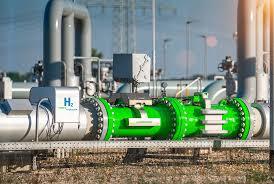
Kenya possesses exceptional natural conditions for becoming a major green hydrogen economy. The country’s abundant geothermal resources, high solar irradiance, wind corridors, and expanding renewable energy base provide ideal conditions for large-scale green hydrogen production through renewable-powered electrolysis.
Unlike nuclear energy, green hydrogen does not produce radioactive waste, does not require highly centralized mega-reactor infrastructure, and can be deployed incrementally and flexibly across industrial zones, transport corridors, ports, SEZs, and urban centres. More importantly, green hydrogen complements Kenya’s renewable energy strengths rather than competing with them.
One of the greatest advantages of green hydrogen is its ability to solve the intermittency problem associated with renewable energy. Solar and wind power generation fluctuate depending on weather and time of day. Green hydrogen allows excess renewable electricity to be converted into hydrogen and stored for later use, effectively functioning as long-duration energy storage. This capability could become critical as Kenya’s future energy system becomes more digital, industrialized, and AI-driven.
In practical terms, green hydrogen could support:
- industrial manufacturing,
- fertilizer production,
- green steel and cement industries,
- heavy transport and logistics,
- shipping and aviation fuels,
- power generation backup,
- AI-powered data centres,
- and export-oriented industrial zones.
This makes hydrogen not just an energy source, but an industrial development platform capable of transforming Kenya into a regional clean-energy manufacturing and export hub.
The strategic advantage over nuclear energy becomes even clearer when considering economic inclusivity and infrastructure scalability. Nuclear projects are typically centralized, capital-intensive, and dependent on foreign technology ecosystems. Green hydrogen systems, however, can support decentralized industrial growth, localized energy ecosystems, and integration with existing renewable infrastructure. Hydrogen production facilities can be developed near geothermal fields, solar parks, ports, industrial parks, and SEZs, creating new regional economic corridors and employment opportunities.
Green hydrogen also positions Kenya advantageously within emerging global carbon markets and international green supply chains. As Europe, Asia, and other global markets increasingly shift toward low-carbon industrial imports, countries capable of producing green fuels and low-carbon industrial products will gain significant competitive advantages.
Kenya could potentially export:
- green hydrogen,
- green ammonia,
- green fertilizers,
- low-carbon manufactured goods,
- and renewable-powered industrial products.
This creates opportunities not only for energy security, but also for export growth, foreign direct investment, industrial competitiveness, and climate financing.
Importantly, green hydrogen aligns more naturally with Kenya’s broader climate commitments and sustainability ambitions. While nuclear energy is often described as low-carbon, it remains burdened by concerns around waste disposal, decommissioning costs, water consumption, accident risks, and long-term environmental stewardship. Green hydrogen offers a cleaner and more publicly acceptable pathway that strengthens rather than complicates Kenya’s renewable energy transition.
In the context of the AI revolution and rapidly expanding digital economies, Kenya’s future energy strategy must therefore move beyond the traditional debate of “renewables versus nuclear.” The more strategic question is how Kenya can build an integrated energy ecosystem capable of powering industrialization, AI infrastructure, advanced manufacturing, and economic growth sustainably.
Green hydrogen may provide precisely that bridge.
Rather than locking the country into expensive and rigid nuclear infrastructure, Kenya has the opportunity to become a continental leader in renewable-powered hydrogen economies built on its existing geothermal, solar, and wind strengths. If properly developed, green hydrogen could simultaneously address:
- future energy demand,
- industrial decarbonization,
- renewable energy storage,
- climate resilience,
- export competitiveness,
- and long-term energy sovereignty.
In that sense, green hydrogen is not merely an alternative energy source. For Kenya, it could become the foundation of an entirely new industrial and economic era — one capable of powering both the country’s development ambitions and its climate future without forcing a compromise between economic growth and environmental sustainability.