
By Alfred Miluge Gogi
A Strategic Opportunity for Economic Transformation
Wars and geopolitical crises often reshape global economic flows in ways that few anticipate. While conflicts normally trigger instability and economic losses for the regions directly involved, they also create unexpected opportunities for countries that are stable, strategically located, and prepared to adapt quickly. The ongoing tensions and military confrontations in the Gulf region are beginning to disrupt global tourism, aviation routes, and maritime logistics networks that have, for decades, been centered in Middle Eastern hubs.
For Kenya, this moment could represent a strategic economic opportunity. Located on the eastern edge of Africa along the Indian Ocean trade corridor, Kenya sits at the crossroads of shipping routes linking Europe, Asia, and Africa. With major logistics infrastructure such as the Port of Mombasa, Lamu Port, and Jomo Kenyatta International Airport, the country has the foundations needed to reposition itself as a stable gateway for tourism, aviation, and trade.
If policymakers and private investors act decisively, Kenya could leverage the disruptions in the Gulf to attract more tourists, strengthen its aviation industry, and increase cargo volumes through its ports. In doing so, the country could improve foreign exchange earnings and gradually tilt its trade balance in its favour.
A Changing Global Landscape
For more than three decades, Gulf states have built some of the world’s most powerful tourism and aviation hubs. Cities like Dubai, Doha, and Abu Dhabi have invested hundreds of billions of dollars in airports, airlines, and luxury tourism infrastructure. Airlines such as Emirates, Qatar Airways, and Etihad have turned the region into the primary transit bridge connecting Europe, Asia, Africa, Australia New Zealand
However, the Gulf’s dominance has always depended on one key factor: political stability. When conflict threatens airspace safety, disrupts shipping routes, or creates travel anxieties, the global aviation and tourism industries react quickly including other businesses. Airlines reroute flights, shipping companies adjust logistics chains, and tourists shift toward destinations perceived to be safe and politically stable.
History shows that travel patterns can change dramatically during geopolitical crises. When parts of the Middle East experienced instability during the early 2000s, tourism flows shifted toward Southeast Asia and the Mediterranean. Countries that were ready to absorb that demand benefited immensely and even changed their tourism market and attraction, a position of which Kenya could easily find itself into now.
Tourism: A Window of Opportunity
Tourism is among the sectors most sensitive to perceptions of safety. When a region is affected by conflict, even indirectly, many travelers simply choose alternative destinations and this pattern often changes for a very long time. Kenya holds a very strong competitive advantage over this because of its major tourists attraction and geographical position.
Unlike the Gulf states, whose tourism offerings are largely urban and luxury-driven, Kenya offers a diverse range of natural and cultural attractions that few countries in the middle East can match. The country’s wildlife safaris, pristine beaches, and historic Swahili culture give it a unique appeal in the global tourism market. From the Maasai Mara’s spectacular wildlife migrations to the snow-capped backdrop of Mount Kilimanjaro seen from Amboseli, Kenya remains one of the world’s premier safari destinations. Along the coast, destinations such as Malindi, Watamu, Diani, and Lamu provide white sand beaches and warm Indian Ocean waters that rival any tropical resort in the world.
As travelers reconsider visiting parts of the Middle East, Kenya could position itself as a safe, exotic, and culturally rich alternative. With the right marketing strategy, the country could attract tourists who might otherwise have chosen destinations like Dubai or Qatar.
Luxury coastal tourism offers especially strong potential. The Kenyan coast already hosts a growing number of boutique resorts and private villas that cater for high-end travelers. By investing in improved infrastructure and international promotion, Kenya could market its coastline as the “Indian Ocean Riviera,” appealing to travelers seeking both exclusivity and natural beauty.
Another emerging opportunity lies in long-stay tourism. Remote work has enabled professionals from Europe, Asia, and North America to live abroad for extended periods. If Kenya simplifies visa policies and improves digital infrastructure, it could attract remote workers and digital nomads looking for safe and scenic destinations.
Aviation: Nairobi as Africa’s Gateway
One of the most significant global disruptions caused by conflict in the Gulf is the effect on aviation routes. The region lies at the center of the air corridors connecting Europe, Asia, and Africa. When airlines face airspace restrictions or security risks, they must rethink their flight networks. This creates a strategic opening for Nairobi.
Jomo Kenyatta International Airport already serves as one of Africa’s busiest aviation hubs, connecting the continent to Europe, the Middle East, and parts of Asia. With further expansion and policy support, Nairobi could strengthen its position as a key transit point between Africa and the rest of the world.
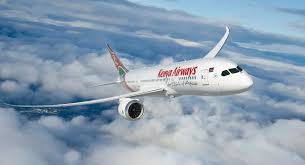
Kenya Airways, the national carrier, could play a central role in this transformation. By expanding routes to Asian destinations such as Bangkok, Singapore, and Seoul, the airline could offer travelers alternatives that bypass Gulf transit hubs.
Nairobi could also become a stronger link between Europe and southern Africa, serving passengers travelling between the two regions. With strategic partnerships and improved airport infrastructure, Kenya could attract more international airlines to establish regional operations in Nairobi.
Air cargo is another area where Kenya holds strong potential. The country is already one of the world’s largest exporters of fresh flowers, vegetables, and avocados. Expanding cargo capacity would allow Kenyan farmers and exporters to reach global markets more efficiently while boosting foreign exchange earnings.
Ports and Maritime Trade
Beyond tourism and aviation, maritime trade represents perhaps the largest long-term opportunity.
The Gulf region sits near one of the world’s most important shipping chokepoints: the Strait of Hormuz where 20% of worlds oil trade passes through and other goods to the middle east. Any escalation of conflict that threatens shipping security in this area has the potential to disrupt global trade flows and eventually create commodity price increase.
While Kenya cannot replace Gulf shipping routes, it can strengthen its role as East Africa’s primary logistics hub. The Port of Mombasa already serves as the gateway for several landlocked countries, including Uganda, Rwanda, South Sudan, and parts of the Democratic Republic of Congo. Improvements in port efficiency, cargo handling capacity, and digital logistics systems could significantly increase the volume of goods passing through the port thus attracting more shipping lines.
The development of Lamu Port presents an even more transformative opportunity. As part of the LAPSSET corridor linking Kenya with Ethiopia and South Sudan, the port has the potential to become one of Africa’s most important trade gateways. If infrastructure projects such as highways, railways, and oil pipelines are completed, Lamu could handle large volumes of regional and international cargo serving even countries like Ethiopia.
By strengthening both ports, Kenya could capture greater trade flows between Asia and East Africa while also supporting regional economic integration.
Economic Impact
If Kenya successfully leverages these opportunities, the economic benefits could be substantial and even job creation for its citizens.
Tourism revenues could increase significantly as international arrivals rise. Aviation expansion would generate jobs in airlines, airports, logistics, and hospitality industries. Increased cargo volumes through ports would stimulate trade and support industrial growth.
Perhaps most importantly, higher export earnings from tourism and logistics services would strengthen Kenya’s foreign exchange reserves and improve its balance of trade.
In a world where geopolitical uncertainty is increasingly common, economic resilience depends on adaptability and strategies. Countries that can reposition themselves quickly often emerge stronger from global disruptions.
A Moment for Strategic Leadership
For Kenya, the current Gulf crisis is not simply a distant geopolitical conflict. It is a moment that could redefine the country’s role in global tourism, aviation, and trade.
But opportunity alone is not enough. Realizing these gains will require strategic leadership, investment in infrastructure, and coordinated policy action between government and the private sector.
If Kenya can move decisively, expanding airports, modernizing ports, marketing its tourism assets, and strengthening regional trade corridors, the country could transform regional instability into a catalyst for economic growth.
History shows that crises often reshape global economic geography. With the right strategy, Kenya could emerge from this period not just as a beneficiary of shifting global flows, but as one of Africa’s most important gateways to the world.
The writer is a Project Management Consultant and Phd Student in Project Planning and Management