
By James Okoth
At just 28, Jemima Rasugu has endured more pain than many would in a lifetime. Born and raised in Eldoret, she has lived with sickle cell anaemia since she was eight months old — a chronic, life-threatening condition that causes severe pain, organ damage and frequent hospitalisations.
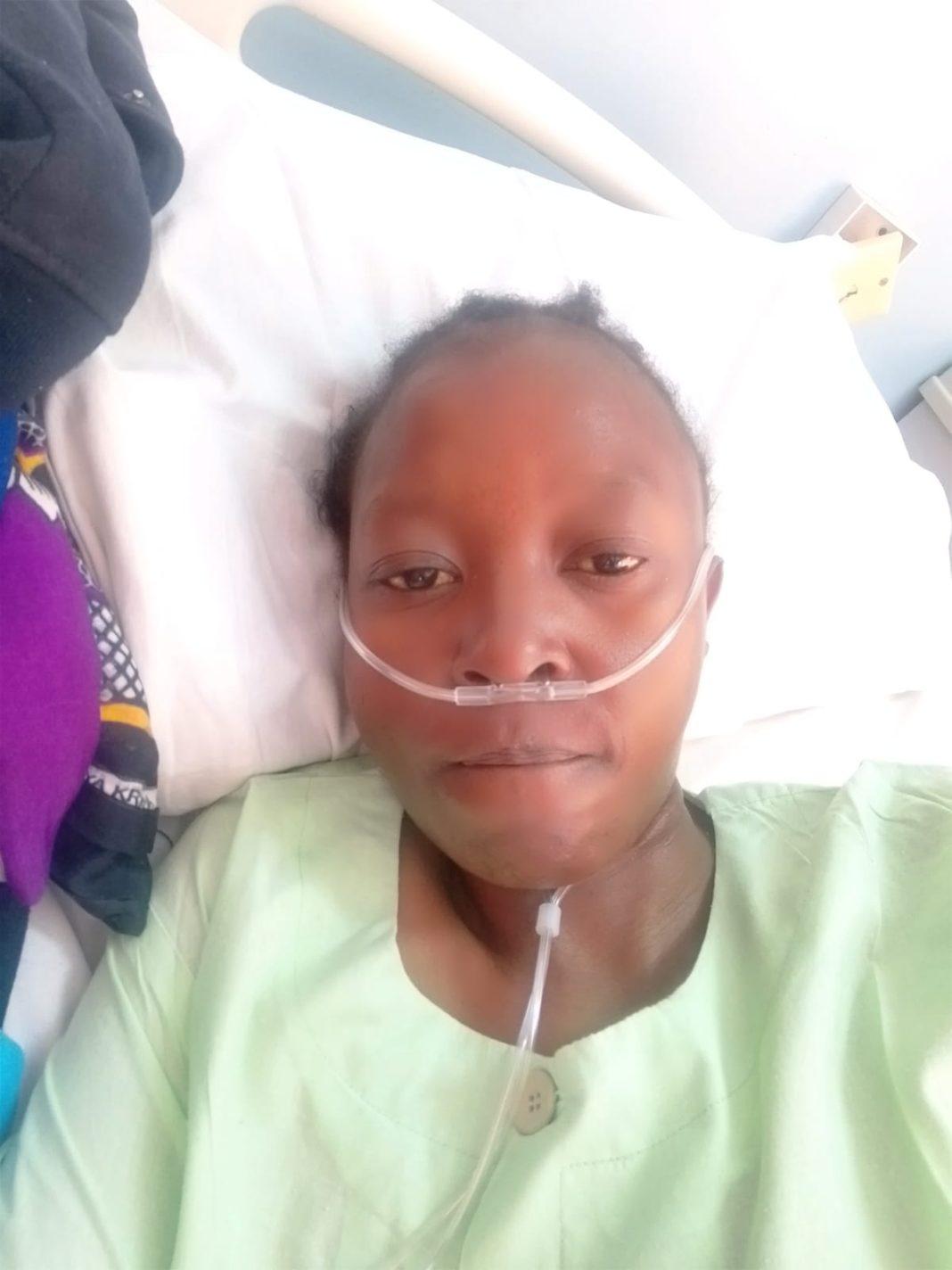
Today, Jemima lies in a hospital bed at Kisumu Specialist Hospital, her body weak but her spirit remarkably unbroken. She is fighting two battles at once: one for her health and another against a mounting hospital bill that has now surpassed KSh 650,000.
“I have lived my whole life in and out of hospitals,” she says softly, her voice fading between laboured breaths. “But this time, I am completely drained. I just want to go home, see my father and rest.”
Jemima’s story is one of survival, courage and unrelenting hope amid overwhelming odds. She lost her mother in 2009, and later both her brothers to the same illness. “I am the only one left,” she says quietly. “Sometimes I wonder why I am still here, maybe just to tell our story.”
Her only surviving family member is her 85-year-old father, who is battling stage two cancer. Once a hardworking man, he now depends entirely on well-wishers and cancer foundations for his medical care. “He sold everything we had trying to keep us alive,” Jemima says. “Now he is sick too, and I can’t even help him.”
When her condition worsened late last year, Jemima was taken in by her mother’s friend in Kisumu, who is also caring for children with sickle cell anaemia. There, she was referred to Jaramogi Oginga Odinga Teaching and Referral Hospital (JOOTRH) for wound management. Doctors later advised that, due to the complexity of her wounds, she would need specialised surgical care at Kisumu Specialist Hospital.
She was admitted, and surgeons successfully performed a skin graft to manage two chronic wounds. However, what should have been a relief has turned into a nightmare. The Social Health Authority (SHA) was expected to cover her surgical procedure but only released KSh 89,000 against a total cost of nearly KSh 400,000. The unpaid balance, combined with continued hospitalisation, medication and oxygen support, has pushed her bill to over KSh 650,000.
“Stress makes my pain worse,” she explains. “For the last three days, I have been on oxygen because the pain attacks got too strong. The doctors say I need to rest and heal, but how can I rest when the bill keeps growing?”
Despite her fragile health, Jemima’s determination shines through. After years of interrupted studies caused by her condition, she defied all odds to graduate in 2023 with a degree in English Literature. She has not yet secured employment with the Teachers Service Commission, and before her health deteriorated, she survived on short-term teaching contracts.
“I worked whenever I could, even with the pain,” she says. “Education was my way of fighting back, to prove that sickle cell does not define me.”
Now, confined to her hospital bed and dependent on others for everything, Jemima says her greatest wish is to be discharged and go home, not because she is healed, but because she longs to see her ailing father and recover her dignity.
“I am tired of hospitals. I have been here too long. I just want to go home, sit with my dad and thank God for one more day,” she whispers.
Her doctors confirm that the stress of her financial burden is slowing her recovery. “We have seen her go through immense pain,” said one medic at Kisumu Specialist Hospital. “But she is strong. What she needs now is peace of mind and community support.”
As she waits, her bill continues to rise daily. The hospital has since limited her medication supply due to arrears, leaving her in pain and uncertainty.
Jemima is now appealing to well-wishers, organisations and kind-hearted individuals to help her clear the bill so she can finally go home and continue her recovery.
Her story is a reminder of the silent battles many Kenyans living with chronic illnesses endure — courageously, but often alone.
“I am still hopeful,” Jemima says with a faint smile. “If I could survive this long, I believe there is still purpose for my life. I just need a chance to live it.”