
By Valentine Omondi
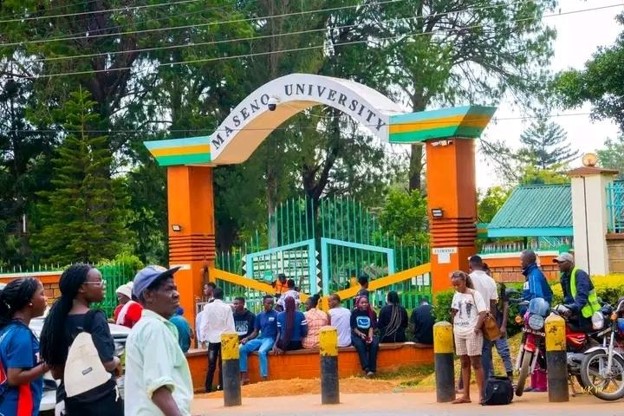
The ongoing recruitment of Maseno University’s substantive Vice-Chancellor has come under renewed scrutiny after the Students’ Organisation of Maseno University (SOMU) accused the Public Service Commission (PSC) of applying double standards in the selection process.
In a statement released on Thursday, November 26, the student leadership, led by Philian Onyango, questioned the criteria used to assess and rank candidates, alleging that the process lacked transparency and accountability.
SOMU also made allegations of bribery, claiming that some candidates had paid KSh3 million through individuals linked to the PSC and the University Council to influence the recruitment outcome. The claims have not been independently verified, and the accused institutions had not responded to the allegations in the statement.
The concerns come amid a wider dispute over the PSC’s decision to forward three candidates for consideration by the Maseno University Council, despite the outcome of the interviews raising questions about the selection criteria.
PSC’s Decision Raises Questions Over Interview Rankings
Professor Bulitia Godrick Mathews emerged top in the interviews with 79 marks, followed by Professor Bernard O. Aduda with 77.5 marks and Professor Francis Jakim Mulaa with 77 marks.
However, the PSC forwarded Mathews, Professor Kimani Chege Gabriel, who scored 76 marks, and Professor Mary Jepkemoi Kipsat, who scored 74 marks, to the University Council for consideration.
The decision to leave out the second- and third-ranked candidates while including candidates who scored lower brought the commission’s selection criteria into focus.
The PSC defended its decision by citing constitutional considerations, including ethnic diversity, gender representation and equal opportunities, arguing that public appointments should not be determined by interview scores alone.
The dispute subsequently found its way into court, with petitioners challenging aspects of the recruitment process and questioning the commission’s decision.
Court Clears Recruitment Process
On November 24, 2026, the High Court in Kisumu dismissed two consolidated petitions challenging the recruitment exercise.
Justice Joe Omido ruled that the PSC was not constitutionally required to forward candidates strictly according to their interview scores, noting that public appointments must also take into account constitutional principles such as diversity and equal opportunity.
The decision effectively allowed the recruitment process to proceed, although concerns over the selection criteria continued to emerge.
However, the recruitment encountered another legal hurdle on Friday, November 27, after the Employment and Labour Relations Court in Mombasa issued temporary orders stopping the Education Cabinet Secretary and the Maseno University Council from completing or approving the appointment of a new Vice-Chancellor.
The orders followed a fresh petition filed by Willy Otieno Sawe challenging the recruitment process.
The respondents were directed to file their responses within seven days, with the matter scheduled for mention on December 8, 2026, for further directions.
The latest intervention means that, despite the November 24 judgment clearing the way for the recruitment to proceed, the university cannot conclude the appointment while the fresh court orders remain in force.
Students Demand Accountability
Against this background, SOMU has called on political leaders from the Nyanza region to intervene, questioning their silence over the dispute and demanding that they support students in protecting the university’s institutional independence.
Invoking Article 37 of the Constitution, which guarantees the right to assemble, demonstrate, picket and present petitions peacefully, the student leadership warned that it would take action if its concerns were not addressed.
The organisation also declared its opposition to any incoming Vice-Chancellor, insisting that the University Council should not proceed with the leadership transition without first addressing the issues raised.