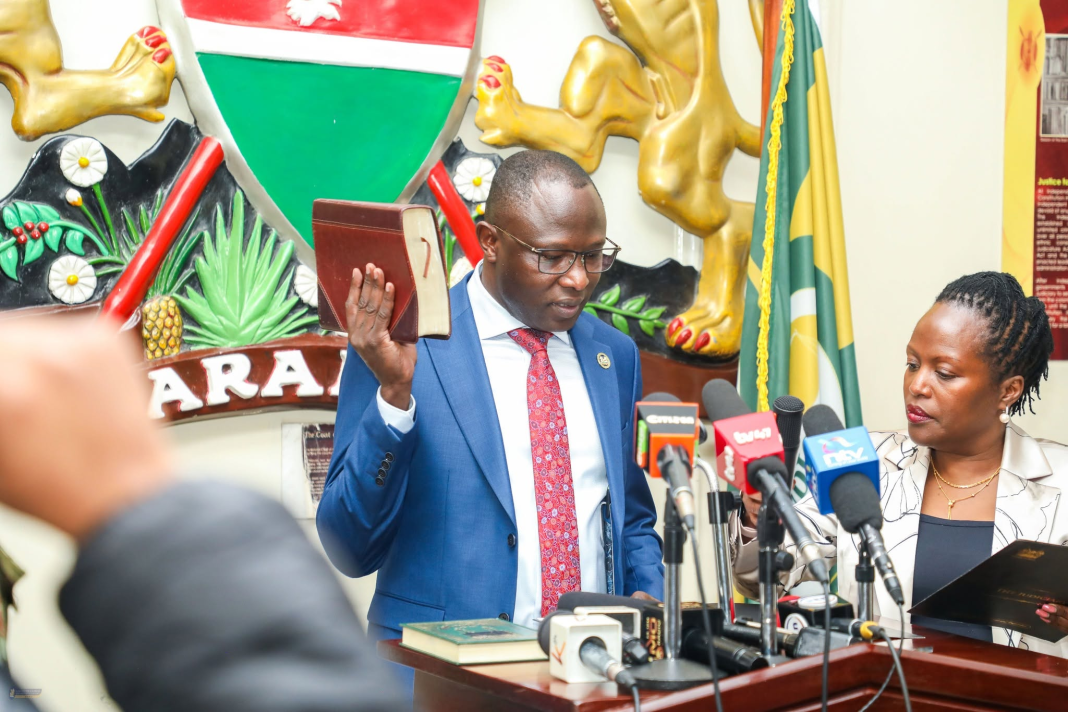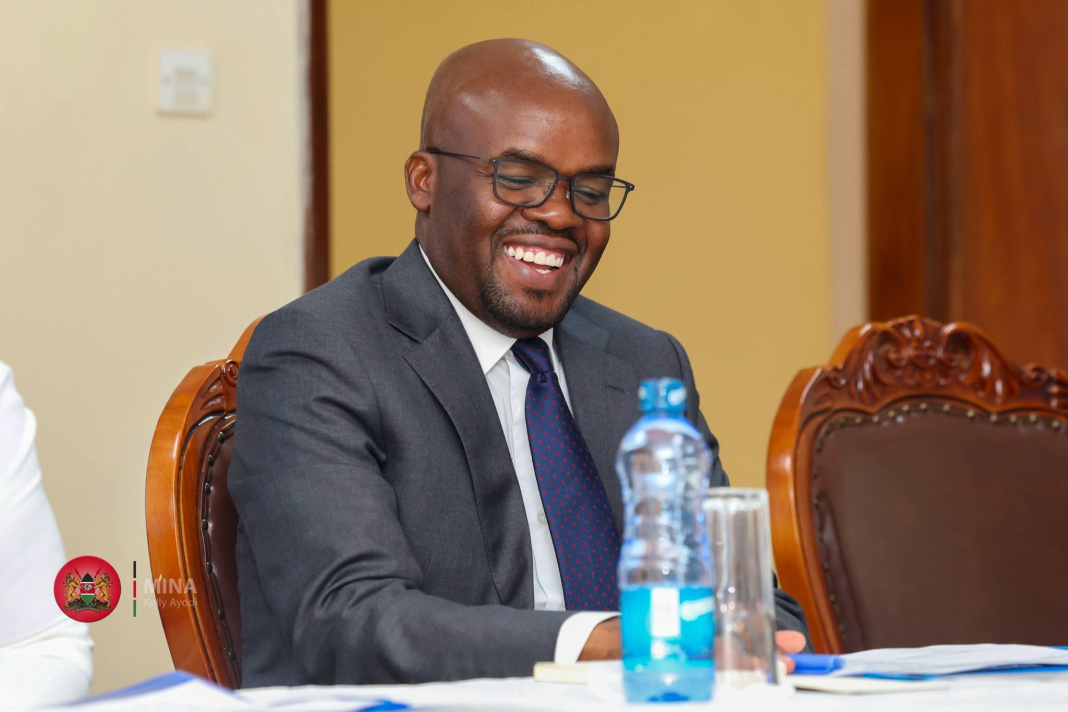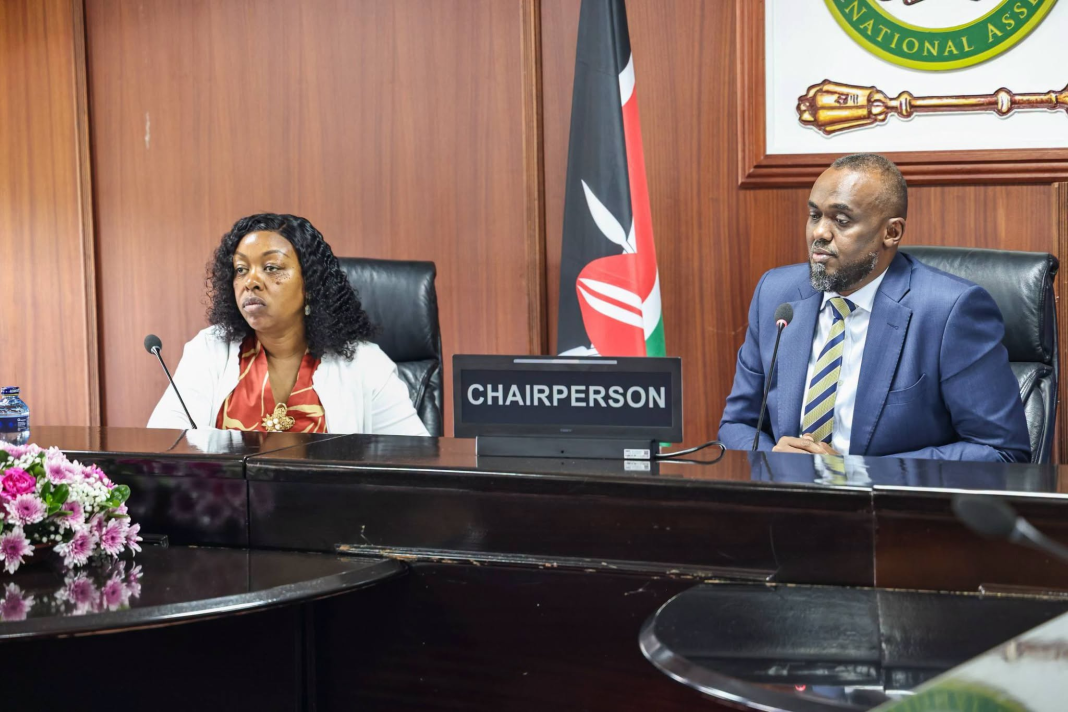

By Reporter
The National Assembly’s Public Debt and Privatisation Committee has expressed dissatisfaction with the State Department for ICT and Digital Economy’s report on externally funded projects, citing incomplete financial disclosures, missing loan details and questionable calculations of commitment fees.
The Committee, chaired by Hon. Abdi Shurie (Balambala), questioned the department’s accountability in managing donor-funded projects and demanded a comprehensive breakdown of loan terms, disbursements and the actual economic returns generated by the investments.
Lawmakers were particularly concerned that the department had accumulated approximately Sh1.455 billion in commitment fees over the past decade across four externally funded projects, yet failed to provide crucial information, including interest rates, loan commencement dates, maturity schedules and net disbursement balances.
Members faulted ministry officials for repeatedly referring the Committee to the National Treasury for critical loan information, insisting that the implementing department must fully understand the financial obligations attached to its projects.
They warned that continued borrowing without demonstrable economic returns could expose the country to further financial distress.
“The most important thing in our national discourse right now is public debt. As at the end of September, our public debt stood at Sh13.6 trillion, representing approximately 72 per cent of our GDP. This means we could soon find ourselves in a distressed position if we cannot meet our debt obligations,” said Hon. Aden Daudi (Wajir East).
He urged the department to take the Committee’s concerns seriously, emphasising the need to demonstrate value for money for loans contracted on behalf of Kenyans.
“We want to see value for money for the monies that we have borrowed on behalf of the public. If things go the wrong way, this country could find itself in a very difficult economic position,” he added.
Lawmakers also questioned the returns from the National Optic Fibre Backbone Infrastructure (NOFBI), which has cost an estimated Sh45 billion across its implementation phases but generates approximately Sh700 million annually from private telecommunications operators.
Hon. Daudi questioned whether the investment was delivering sufficient economic benefits, given the scale of public resources committed to the project.
“Are we getting value for money, or did we just bury Sh45 billion underground at a rate of Sh700 million annually?” he posed, challenging ministry officials to demonstrate the economic savings and other tangible benefits arising from connecting public institutions.
The session also saw Hon. Joseph Makilap (Baringo North) raise concerns over the accuracy and completeness of the financial schedules presented by ICT Principal Secretary Eng. John Tanui.
He particularly questioned the Konza National Data Centre and Smart City Facilities project, financed through an Sh18 billion China Exim Bank loan signed in April 2019, which had accumulated Sh184.8 million in commitment fees at a rate of 0.5 per cent per annum on undisbursed balances.
Hon. Makilap questioned how the department arrived at the figure of Sh184.8 million without providing annual disbursement schedules and the applicable interest rates.
“I don’t know whether the people preparing this document believe Parliament is made up of people who have not gone to school. Where are the interest rates of these loans that we borrow? The people of Kenya will ultimately pay for these loans, and we need to understand the figures. What numerical or research method are you using to calculate the 0.5 per cent to arrive at Sh184 million?” he questioned.
He also raised concerns over the Konza Horizontal Infrastructure project, implemented under an Italian Engineering, Procurement, Construction and Financing (EPCF) arrangement, which had accumulated Sh1.1 billion in commitment fees against disbursements of Sh54.1 billion.
The legislator called for the Committee to undertake physical inspections of the projects to establish whether the funds borrowed had translated into the intended infrastructure and public benefits.
“It is important that the Principal Secretary and his team lead this Committee to physically visit these projects so that we can establish what has actually been funded and what has been delivered,” he said.
In his defence, PS Tanui explained that commercial agreements handled by implementing agencies were distinct from financing agreements negotiated and held by the National Treasury.
He told the Committee that the financing agreements, which contain details such as interest rates and currency denominations, were managed by the Treasury, while commitment fees were standard charges imposed by lenders on undisbursed loan balances as funds remained reserved for projects.
According to the department’s submission, the four projects had incurred the following commitment fees:
Konza National Data Centre and Smart City Facilities (China Exim Bank): The project had accumulated Sh184.8 million in commitment fees against reported disbursements of Sh19.04 billion. The Tier III data centre is operational, serving more than 200 public and private clients and generating approximately Sh300 million annually.
National Optic Fibre Backbone Infrastructure (China Exim Bank): The project had incurred Sh44.9 million in commitment fees against Sh10.10 billion in disbursements. It connects all 47 county headquarters and sub-counties.
The department reported annual revenue of approximately Sh700 million, while PS Tanui said free connectivity provided to public institutions saves the Government between Sh4 billion and Sh6 billion annually.
Last Mile County Connectivity (KBC/KPC Bank, Belgium): The project had accumulated Sh124.9 million in commitment fees, with Sh3.93 billion disbursed across Phases One to Four. Phase Five is scheduled to commence.
Konza Horizontal Infrastructure (Italy EPCF): The project had incurred approximately Sh1.101 billion in commitment fees against Sh54.11 billion in disbursements.
Its infrastructure includes 40 kilometres of streetscapes, utility tunnels, water treatment facilities and automated waste management systems.
Despite the explanations, Vice Chairperson Hon. Irene Mrembo (Bahati) said the department had failed to adequately address members’ concerns, particularly on loan terms and other critical financial information.
She questioned why ministry officials could not provide details of financing arrangements for projects under their supervision, especially where they were directly involved in implementation.
“You have been saying, even when answering us, that we need to check with the Treasury.
I am wondering whether you do not have any representative who was involved when these agreements were signed, because some of the information members are asking for is not available to you, and you keep referring us to the Treasury,” she observed.
Hon. Mrembo said the Committee would require a further engagement with the department, this time involving representatives from the National Treasury, to ensure that all outstanding issues were comprehensively addressed.
“From where I sit, I feel we may need to have another meeting. You also need to give us a date because members have requested an opportunity to physically visit some of these projects,” she said.
The Committee directed the department to prepare a comprehensive and integrated report in collaboration with the National Treasury, providing a clear account of the loans, their financial obligations and the implementation status of the projects.
The report is expected to include loan commencement dates, applicable interest rates, maturity schedules, including repayment periods extending to 2076, outstanding balances and detailed disbursement records.
Members also called for physical inspection visits to selected projects to independently assess implementation progress and establish whether the investments are delivering value for money.
The Committee is expected to issue revised terms of reference to guide the next engagement, with the department required to address the outstanding concerns before further consideration of related budgetary proposals.