Home Blog Page 104

DG Owili: Why I Am the Best Candidate to Replace Governor Nyong’o in 2027 Election

0

By Hope Barbra

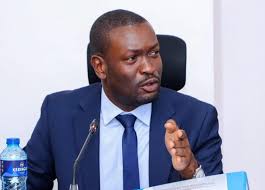
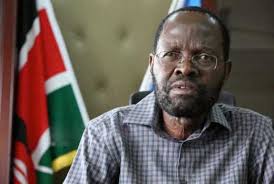
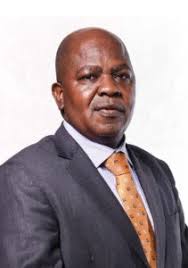
Kisumu Deputy Governor Dr. Mathews Owili has poured cold water on the candidature of a section of legislators from the county who seek to replace outgoing governor Prof. Anyang’ Nyong’o.

Owili said he has what it takes to be the third governor of Kisumu after gaining experience from Nyong’o and exposure to the management of county government.

The battle for the Kisumu gubernatorial seat is gaining momentum, with Owili dismissing his opponents as legislators who have failed to perform and hold any committee leadership positions in parliament.

Owili also claimed that his competitors, who are largely members of parliament from the county, have failed to articulate and demonstrate their competence in parliament through debates and committee leadership.

He said one of the MPs has been in parliament for the last 15 years but has never held any committee leadership position and has no track record of performance.

“Some of the MPs have hardly spoken in parliament, and even when the parliamentary committee leadership fell vacant, they failed to vie for the positions. How do you want to lead the county when you have never been tested in any leadership mandate in parliament?” he quipped.

Owili said the current governors in Nyanza—his boss Prof. Anyang’ Nyong’o, who was a minister and vibrant contributor in parliament, and Migori Governor Ochilo Ayako—had adequate parliamentary experience before assuming office and James Orengo was minister for land before he became the governor.

He added that Homa Bay Governor Gladys Wanga also held powerful positions in parliament leadership and was adequately prepared to lead her county.

“I have loyally served under Prof. Nyong’o for the first and second term. I have learnt the management skills and am well equipped to manage the county,” he said.

The seat has attracted Kisumu Central MP Dr. Joshua Oron, Nyakach MP Aduma Owuor, Kisumu Woman Representative Ruth Adhiambo Odinga, Kisumu West MP Rosa Buyu, and Kisumu Senator Prof. Tom Ojienda.

Kisumu Deputy Governor Dr. Mathews Owili has challenged his competitors for the Kisumu gubernatorial seat.

Owili is seen as ODM party leader Raila Odinga’s blue-eyed boy for his loyalty to Nyong’o and the party, while Buyu enjoys the support of Governor Wanga, who is the ODM national chairperson.

Wanga is credited with having sway over Raila and mastering her way in securing party tickets for her preferred candidates within ODM ranks.

Attempts to get comments from the legislators were fruitless as they did not respond to calls.

Owili said he was the most suitable candidate to complete various projects initiated by Nyong’o and would ensure continuity of development programs in the county.

Former Governor Jack Ranguma is also said to be interested in the seat and is preparing to make a comeback. Sources reveal that Ranguma is viewed by a section of party leaders as a possible compromise candidate should the race become too divisive within ODM.

Sacked health workers in Siaya suffer double pain after an alleged attack by goons at the County Headquarters

0

By Reporter

Sacked health workers at the County Government of Siaya on Monday suffered double pain after their peaceful demonstration was scuttled by goons who unleashed violence on them at the county headquarters.

The demonstrators sustained injuries, with some of them covered in blood after goons descended on them at the county headquarters.

The sacked employees had intended to present a petition to Governor James Orengo but faced the brunt of the goons who unleashed terror on them.

“We had a peaceful demonstration to present our petition to the governor but infuriatingly some people unleashed goons on us. We demand to be heard and not to be beaten,” they said.

The county recently sacked 382 health workers over what was termed as fraudulent employment after an exposé by the EACC.
Orengo calmed the situation and told the demonstrators that his government was committed to ending corruption in the county.

While addressing the group—many of whom had been working in the health department—he said:
“The law is clear. Public jobs cannot be bought or traded in backrooms. Those who colluded to exploit desperate job seekers will be exposed,” Orengo said, adding that beginning Friday, he would personally review each of the contested letters.

Earlier, Orengo had declared that he would not interfere with the ongoing inquiry on the sacked health workers by the County Public Service Board.

Orengo said he had received petitions from a number of persons expressing concerns for purportedly having been unfairly dismissed by the County Government of Siaya from service in the Health Department. He said a similar petition had also been presented to the County Assembly of Siaya.

“At this stage I do not wish to compromise or interfere with the enquiry or interventions that will be undertaken by the County Assembly or any other investigations that may be launched by the agencies of Kenya’s criminal justice system. I urge them all to carry out thorough investigations and expose this scam for what it is. It would also be necessary to conduct lifestyle audits on some of the individuals who could be persons of interest. Those found responsible and liable must be punished for this callous and criminal enterprise,” he said.

He said his government would cooperate fully and abide, in accordance with the law, with each and all recommendations and resolutions made by the County Assembly and other relevant state organs, including the enforcement of administrative action.
The governor said there was need to engage with the victims and address their plight in the context of the manner in which the issue arose.

“There are clear procedures for qualified persons to be appointed and deployed as part of the staff establishment. Jobs must be advertised. Applications must be made and interviews conducted. That is the only path for qualified persons to be appointed and become employees of the County Public Service,” he said.

Orengo said it was necessary to examine all the individual cases of the complainants to confirm whether indeed they got their appointment and deployment lawfully and regularly.

“The case is made worse when there are whispers that there was fraudulent activity. It is alleged that there were exchanges of money, which would completely taint and render any alleged appointment null and void,” he said.

He said the process initiated by the County Assembly of Siaya would give the petitioners an opportunity to establish the legality of the purported appointments.
“We urge the County Assembly to expedite the hearing and determination of the petition before them and note that the Assembly had directed that the Executive should not take any action until the conclusion of the proceedings before the Assembly. Noting the public outrage over this issue, we urge the Assembly to conclude this matter in a fortnight rather than a month,” he said.

Recently, 382 health workers were dismissed by the Siaya County Government over claims they were irregularly hired using forged documents.

The County Public Service Board said an audit carried out with the Directorate of Criminal Investigations revealed massive irregularities in the recruitment process.

Siaya County Public Service Board Chief Executive Officer, Wilfred Ouma Nyagudi, explained that the investigation uncovered glaring discrepancies.

“We noted several issues. Some of them were inconsistencies in the sequence of reference letters. Any letter we issue, such as deployments, must be signed by the chief of health. We had cases where somebody had a deployment letter dated earlier than their appointment,” Nyagudi said.

Murima erupts as Uhuru and Gachagua face off over Kingship ahead of 2027 Elections

0

By Anderson Ojwang

The once stormy, rough, and restive lake that captured national and international news for its political fights and rivalry seems to have exorcised the demons to the mountain.

The mountain, which previously was the Royal Palace, Seat of Power, and spoke in one chord, is today faced with a political volcanic eruption over kingship as River Chania roars and promises to sweep its path down the hills.

The stormy, roaring River Chania and the threat of a possible volcanic eruption in Mt. Kenya are opening up a new chapter in the country’s political landscape as Nyeri and Kiambu face off.

The current Murima war is similar to the political battle in Nyanza after independence between the first Vice President, the late Oginga Odinga, who controlled Siaya and Kisumu, and then KANU Secretary and Minister for Economic Planning Tom Joseph Mboya, who controlled Southern Nyanza.

After decades of sitting at the Palace and determining the socio-economic and political dispensation in the country, Murima is currently confined to the unfamiliar territory of the lonely opposition bench. The mountain is just about to erupt.

Former President Uhuru Kenyatta has a date with his once political assistant turned bitter rival, the impeached Deputy President Rigathi Gachagua, over the region’s kingpin seat and the 2027 presidential election.

Smarting from the loss to Gachagua in the 2022 general and presidential elections, Uhuru has his eyes trained on the community leadership through his party, the Jubilee Party of Kenya.

In the last general election, Uhuru supported Azimio la Umoja presidential candidate Raila Odinga but lost the battle for votes in all Mt. Kenya counties.

For instance, in Kirinyaga County, the home turf of Raila’s running mate Martha Karua, Ruto got 84 percent of the votes, accounting for 220,752 votes, while Raila got a paltry 14 percent, accounting for 37,978 votes.

In Kiambu County, the home ground of President Uhuru, Ruto managed 72.9 percent of the votes, amounting to 606,105, while Raila only managed 25 percent, accounting for 210,495.

Again, in Nyeri County, Rigathi’s village, Ruto received 82.79 percent of the votes, amounting to 272,577, while Raila got 15.3 percent, accounting for 52,043 votes.

Finally, in Murang’a, Ruto got 81 percent of the votes, accounting for 343,421, while Raila got a paltry 17 percent, accounting for 73,539 votes.

Through the Jubilee Party, Uhuru is grooming his former Internal Security Cabinet Secretary, Dr. Fred Matiang’i, to be the sixth president and possibly the community leader.

Meanwhile, Gachagua, through his new political vehicle, Democracy for Citizens Party (DCP), wants to control Murima and has formed a united opposition alliance with Wiper leader Kalonzo Musyoka, Eugene Wamalwa of DAP-K, Governor George Natembeya, and Martha Karua, while Matiang’i, who was once a member of the group, is now viewed as a pariah.

During the Jubilee National Delegates Conference, which was attended by Matiang’i but skipped by members of the United Opposition Alliance, Uhuru came out guns blazing and termed the move to balkanize a region to belong to a particular political party as retrogressive and against the tenets of democracy.

“I handed over the country’s leadership peacefully. What I got for that were abuses, theft of my sheep, and the burning of my farm. I have remained quiet. Our mission from the onset as Jubilee Party was to have a national party that is inclusive and not regional.

Balkanization of a region on a political divide is wrong and not in the interest of national unity. Let us have national parties that share common ideologies and are not grounded on ethnicity and regions.

We have begun a process of rejuvenating our party with a new crop of leaders inspired by a new generation.

We want our party Jubilee to give Kenyans an opportunity to lead and govern the country, and this is our objective.

I have decided that I will henceforth come out to popularize the party as we prepare for the next general elections, and it is our wish to field candidates for all elective positions,” he said.

But Gachagua has maintained that Mt. Kenya is a DCP stronghold and other political parties are being fronted by President Ruto.
DCP Deputy Party Leader Cleophas Malala claimed that the relaunch of the Jubilee Party was a tactic to undermine DCP in Mt. Kenya and was a scheme by President Ruto to weaken the popularity of the party in the region.

“If you are in united opposition, you should not come to divide our stronghold. Currently, DCP is the party of Mt. Kenya, and Jubilee has been sent to weaken us by President Ruto,” he claimed.

But Jubilee Secretary Jeremiah Kioni claimed Gachagua was trying to blackmail and bully the Jubilee Party into submission in the leadership of the region.

“Gachagua is trying to blackmail and bully Jubilee and Matiang’i out of the Mt. Kenya region. This is to delay Matiang’i’s presidency, and I don’t see that working. Gachagua was scared about our recent NDC.
DCP found Jubilee having run the country for 10 years, and Gachagua found me in the opposition wearing a sufuria and called me a mad man.

You cannot come to the opposition and start bullying us as if there was nothing we were doing. You were doing press-ups and teargassing us during the demonstrations.

Gachagua is like any other politician in Mt. Kenya, just like Moses Kuria. It is sad that he is trying to balkanize a region, which is not useful and is likely to create hatred and bad feelings in the Mt. Kenya region,” he said.

Kioni claimed that Gachagua was working with President Ruto after he was allegedly told so by a politician from Narok County who had visited the former DP.

Why counties should adopt former Governor Muriithi’s County Infrastructure Bond template to generate revenue

0

By Paul Njenga

As Kenya’s counties continue to face widening infrastructure gaps, growing development backlogs, and over-reliance on national transfers, the question arises: how can devolved units fund transformational projects sustainably?

In 2021, Laikipia County, under the leadership of then-Governor Ndiritu Muriithi, offered a bold answer by proposing and securing approval for a KSh 1.16 billion infrastructure bond, becoming the first subnational government in Kenya to seek development funding through domestic capital markets.

The goal was straightforward but visionary: to invest in “smart town” infrastructure — roads, drainage, street lighting, markets, and water for production — and unlock the county’s economic potential. More importantly, Laikipia’s initiative demonstrated that counties can, and should, tap innovative financing options to complement exchequer disbursements.

The bond was conceptualized and executed under the leadership of Governor Ndiritu Muriithi, a seasoned economist, former investment banker, and now Chairperson of the Kenya Revenue Authority (KRA). His background in fiscal policy and his current national role reflect a consistent focus on public finance innovation and revenue mobilization — both critical for sustainable development.

Despite the challenges that followed, this bond should be seen not as a failure — but as a blueprint worth refining and replicating.

A Model of County-Led Financial Innovation

Laikipia’s infrastructure bond broke new ground by showing that subnational governments can engage capital markets responsibly and legally. The county obtained all requisite approvals: from the County Assembly, Intergovernmental Budget and Economic Council (IBEC), the National Treasury, and even Cabinet. The bond complied with the Public Finance Management Act and was backed by a structured, multi-year development pipeline with clear economic returns.

This marked a shift in county-level thinking — from waiting on delayed transfers to crafting self-driven, revenue-backed development solutions.

But even the best-designed financial models can collapse without political maturity and administrative continuity. That’s the real lesson from Laikipia’s experience.

The Danger of Disrupted Continuity

After the 2022 general elections, many of the smart town projects funded by the bond were scaled down, paused, or quietly shelved. Contractors were left unpaid, works halted, and investor confidence shaken — not due to mismanagement or financial constraints, but due to a change in administration.

Innovations like the Laikipia bond must be seen through to their logical conclusion, regardless of changes in leadership. When visionary projects are abandoned with every electoral cycle, counties lose more than momentum. They lose credibility, with citizens, investors, and future development partners.

To safeguard such progress, counties must institutionalize long-term projects through legislation, inclusion in County Integrated Development Plans (CIDPs), and cross-party consensus. Vision should never be tied to one governor’s term.

A Playbook for Other Counties and other subnationals

Laikipia’s journey offers a valuable roadmap for other counties that wish to unlock market-based financing and achieve fiscal independence:

1. Start with bankable, impactful projects. Investors want to see infrastructure that stimulates local economies and can indirectly or directly support debt repayment.

2. Build cross-party and legal continuity. Embed major projects into legally binding fiscal frameworks and ensure incoming administrations respect them.

3. Ensure clean, audited, and transparent books of account.

No investor will support a county with chaotic finances. During Governor Muriithi’s tenure, Laikipia invested in robust financial management systems and compliance, earning it the credibility to issue a bond.

4. Strengthen Own Source Revenue (OSR).

Sustainable financing depends on a county’s ability to generate and manage its own revenue. Laikipia digitized revenue streams, broadened the tax base, and reduced leakages, reforms that were critical in building investor confidence and ensuring a predictable repayment path.

In Laikipia, this effort was supported by the institutionalization of the Laikipia Revenue Board, a semi-autonomous entity established through legislation to manage county revenue collection.

By removing direct political interference and professionalizing revenue administration, the board helped improve efficiency, transparency, and accountability, all essential for counties looking to access long-term capital.

Other counties would benefit from creating or strengthening similar revenue boards, with clear mandates and oversight mechanisms embedded in law.

5. Engage citizens and communicate clearly.

Public participation builds trust. Citizens must understand what the funds will do, how they’ll be repaid, and why such innovations matter.

Counties are not just administrative units they are corporate entities with legal obligations and reputational risk. To access private capital, they must demonstrate professionalism, fiscal discipline, and stability beyond politics.

Reviving the Spirit of Devolution

Kenya’s Constitution envisioned devolved units as engines of grassroots development with the capacity to plan, finance, and implement based on local priorities. But for this vision to succeed, counties must go beyond waiting for Nairobi’s disbursements.

The national government should support such innovation by providing guarantees, streamlining approvals, and offering technical assistance. But the bold thinking must start at the county level.

Laikipia, under Governor Ndiritu Muriithi, took that bold first step. That he now chairs the Kenya Revenue Authority is no coincidence it’s a testament to the value of smart, structured, and transparent fiscal leadership.

The Laikipia bond should not be remembered for its political turbulence, but for the precedent it set. It remains a milestone in Kenya’s fiscal devolution journey one that other counties must build on, not abandon.

Now is the time to pick up that baton and run with it.

The writer is former Chief Officer of Finance, Laikipia county and currently CEO of  KLDC

University Don Murdered Over Land Dispute in Suba North

0

By Hope Barbra

In a shocking incident, a university don, Prof. Thomas Tonny Onyango Mboya, was on Tuesday morning brutally murdered in his Waware village, Suba North Sub-county, following a land dispute.

Prof. Mboya, who was an Associate Professor and Director of the School of Mathematics and Statistics at the Technical University of Kenya (TUK), was attacked while erecting beacons on the disputed parcel of land.

According to witnesses, the assailant, who had allegedly encroached and built on the contested property, became enraged after a court ruling directed him to demolish his structures. Instead of complying, he reportedly stormed the site armed with a panga, beheading Prof. Mboya before turning on his father.

Mboya’s father suffered deep panga cuts during the attack and is currently fighting for his life at a hospital in Homa Bay County. The suspect fled the scene after residents raised alarm, narrowly escaping a mob that pursued him.

Suba North MP Millie Odhiambo strongly condemned the incident, urging police to move swiftly and apprehend the suspect.
“The murder of Professor Thomas Mboya of Rusinga Island is unfortunate. Violence never sorts out issues. May the killer and any persons who may have aided or abetted in his death be brought to book,” she wrote on her Facebook page.

Prof. Mboya was widely respected in academic circles. Born in 1970, he completed his O-Level education (KCE) at Kokuro Secondary School in 1987 before joining Homa Bay High School for his A-Level studies in 1989. He later pursued a Bachelor of Education (Science) degree at Egerton University, graduating in 1993.

In 1994, he began his teaching career under the Teachers Service Commission (TSC). Three years later, he took study leave to pursue a Master of Science degree in Mathematics at the University of Nairobi, graduating in 1999.

Afterward, he returned to teaching before joining the Catholic University of Eastern Africa (CUEA) in 2002 as a lecturer. In 2005, he proceeded to the United Kingdom, where he earned his PhD in Inverse and Ill-posed Problems from the University of Leeds in 2008.

Between 2009 and 2012, he resumed teaching at CUEA before moving to the Technical University of Kenya in March 2012 as a Senior Lecturer and Chair of the Department of Statistics and Computational Mathematics. From February 2013 to January 2016, he served as the Head of the Department of Industrial and Engineering Mathematics.

Until his untimely death, Prof. Mboya was serving as the Director of the School of Mathematics and Statistics at TUK, leaving behind a legacy of excellence in academia and research.

FORMER CHESUMEI MP AND BOSTON MARATHON CHAMPION ELIJAH LAGAT DIES

0

By Remmy Butia

The nation is mourning the loss of former Chesumei Member of Parliament, Elijah Kiptarbei Lagat, who passed away on Tuesday while receiving treatment at a hospital in Eldoret.

At the time of his death, Lagat was serving as a board member of the National Campaign Against Drug Abuse Authority (NACADA), a role in which he continued his long-standing commitment to public service.

Lagat’s political career began in 2007 when he was elected to Parliament as the Orange Democratic Movement (ODM) representative for the then Emgwen Constituency. He later transitioned to the Jubilee Party and, following the creation of the new Chesumei Constituency, made history by becoming its inaugural Member of Parliament after winning the 2013 general election.

Before his foray into politics, Lagat was celebrated on the global stage as an elite athlete. He secured his place in sporting history by winning the prestigious 104th Boston Marathon in the year 2000, a victory that cemented his status as a Kenyan sporting legend.

Born on June 19, 1966, Lagat’s life was marked by significant achievements in both the athletic and political arenas. Tributes from colleagues, constituents, and the sporting community have begun pouring in, remembering him as a dedicated leader and a national hero.

Further details regarding his funeral arrangements are expected to be released by the family in the coming days.

Babu Owino Declares Support for Kalonzo as He Is Offered Deputy Party Leader Position in Wiper

0

By Anderson Ojwang

Could Embakasi East MP Babu Owino be edging closer to joining the Wiper Democratic Movement after party leader Kalonzo Musyoka announced major reforms within the outfit?

On Monday, during a meeting at SK Centre, Babu declared his support for Kalonzo’s 2027 presidential bid, describing him as a steadfast leader best suited to face President William Ruto.

Kalonzo, on his part, revealed that Wiper was in the process of amending its constitution to expand its leadership structure, borrowing heavily from the Orange Democratic Movement (ODM) model. He extended an invitation to Babu to join Wiper and serve as one of four deputy party leaders.

“We will have four deputy party leaders just like ODM, and one slot will go to Babu Owino. The national delegates’ conference will ratify these changes. We are even ready to face a by-election in Embakasi East if Babu resigns and joins Wiper. We want to bring more leaders on board and give them roles to strengthen the party ahead of 2027. We are transforming political leadership in this country forever. Babu, join the Patriotic Front and let’s finish this job. I foresee a stampede in Kenya Kwanza,” Kalonzo said.

Wearing a Wiper cap, Babu praised Kalonzo’s loyalty to Raila Odinga in the 2022 elections, adding that it was now time to return the favor.

“In 2027, Kalonzo fits the bill for president. If he was good in Azimio, why is he now bad in opposition? Kindly tell us his mistake. If we say ‘Kalonzo Tosha,’ they say Babu is bad. We must register as voters and disappoint Ruto by appointing Kalonzo,” Babu said.

Babu, who has expressed interest in the Nairobi gubernatorial seat, is seen as likely to benefit from Kalonzo’s Kamba support base in Nairobi. He also enjoys significant backing in Nyanza, where many view him as Raila Odinga’s heir apparent.

His move to back Kalonzo is a blow to ODM, which is yet to decide whether to front its own presidential candidate or support President Ruto in 2027.

Recently, Babu alleged in a TV interview that ODM would deny him the ticket to contest for Nairobi governor, claiming the party favored incumbent Johnson Sakaja. Despite this, he exuded confidence that he would beat Sakaja at the ballot.

“I can clearly tell you I won’t get the ODM ticket, but I will still defeat Sakaja. I know ODM prefers him, but I will deliver the Nairobi seat. I will bring it home, don’t ask me how,” Babu said.

He accused ODM of openly endorsing Sakaja during a prayer meeting at Bomas of Kenya, where Raila Odinga urged Nairobians to support the governor for stability.

“I keep asking myself, why can’t they allow me even the crumbs? Some prefer to sweep them to the dustbin just so Babu doesn’t get them,” he lamented.

At the Bomas event, Raila declared his wish for Sakaja to remain in charge of Nairobi as he heads to the African Union Commission (AUC) bid. “I want Nairobi to remain stable, and for Sakaja to continue leading firmly,” Raila said, as the crowd cheered.

Sakaja, in response, hinted at strengthening ties with ODM grassroots leaders, while ODM chairperson Gladys Wanga and Makadara MP George Aladwa urged him to ditch UDA and officially join ODM.

The political realignments now place Babu Owino at a crossroads: between his loyalty to ODM, his ambitions for Nairobi, and his newfound alliance with Kalonzo Musyoka.

Africa needs to stop its dependency on aid and work on building its trade capacity: Mudavadi

0

BY OPCS PRESS SERVICE

Africa must work on building its global capacity and partnerships that will create opportunities for trade, investment, and domestic resource generation to spur economic growth.

Prime Cabinet Secretary Musalia Mudavadi has said the era of depending on foreign aid is gone, and African nations must become more self-sufficient.

Mudavadi noted that the evolving global geo-political, geo-economic, and geo-technological dynamics show a clear move away from aid dependency.

“It is upon us, individually and collectively as a continent, to take more seriously any opportunities of consolidating trade and other investment arrangements with our trade partners,” he said.

He urged African leaders to make “immediate, radical, and aggressive policy changes” to generate resources for critical programs or risk being left behind.

“This is critical for Kenya and critical for Africa, bearing in mind that we are seeing a lot of volatility in the trading arena. Africa requires predictable, reliable, and consistent trade arrangements with its partners,” noted Mudavadi.

Mudavadi was speaking when he graced the 76th anniversary of the founding of the People’s Republic of China at the Chinese Embassy in Nairobi.

He noted that partners like China are important players in global affairs, China being the second-largest global economy.

He acknowledged the success stories from China and other developed nations to be an eye-opener for Kenya and Africa to leverage opportunities presented by these trade partners.

“Through the Forum on China-Africa Cooperation (FOCAC) arrangement, great strides have been made, spanning aspects of infrastructure, broad governance issues, and technological transfer between China and the African continent. This relationship has definitely yielded positive results,” said Mudavadi.

He added: “China is now Africa’s largest bilateral development partner, providing African countries with necessary resources for the development of priority sectors including infrastructure, agriculture, health, manufacturing, mining, energy, and housing, among others. Chinese foreign direct investment (FDI) has increased significantly over the last two decades, supporting Public-Private Partnerships (PPPs) in these key sectors. This demonstrates the critical role of FOCAC in advancing the Africa-China partnership for Africa’s development.”

Mudavadi, also the Foreign and Diaspora Affairs Cabinet Secretary, revealed that owing to President William Ruto’s state visit to China earlier this year, Kenya is making strides in advancing 21 key bilateral agreements reached on that occasion.

He noted that Kenya is pursuing critical projects among them the extension of the Standard Gauge Railway from Naivasha to Kisumu and the Malaba border, and the dualling of the Rironi-Mau Summit to Malaba road, whose completion will open up and boost Kenya’s trade, making it a critical regional business and investment hub.

“Our target is to enhance the efficiency of trade between us and our neighbour Uganda and open up opportunities within the Great Lakes region and beyond,” he said.

“As of today, something important is going on in China. Kenya has a delegation which is in deep negotiation, so that within the framework arrangement of FOCAC, and the pronouncement about China offering Africa the Free Preferential Trade Agreement for products in Africa, Kenya is defending its portion of the arrangement with the Chinese government. We hope that in a few weeks’ time, we shall be able to report progress, indicating that we have struck a deal within the free preferential trade agreement framework,” revealed the Prime CS.

Mudavadi also noted that within the emerging global dynamics in different areas, the place for multilateralism is becoming even more important and should not be weakened or undermined.

He said that with China’s position on multilateralism and being a dependable partner and strong voice in advancing the principles of the Global South, Kenya stands ready to further deepen its ties and work with China in advancing and accelerating a “Shared Future” of strategic significance in promoting multilateralism and enhancing cooperation for the mutual benefit of the citizens of the two countries.

“A strong message that will continue to send the signal that the absence of multilateralism is dangerous for humanity is extremely essential at this point in time. We will not be able to deal with the conflicts that we see if we weaken and undermine multilateralism. The position taken to consolidate multilateralism is a shared position,” he emphasized.

Why hospitals will no longer detain bodies over accrued bills but sue for civil debts

0

By Anderson Ojwang

In what could be a historic and hallmark ruling by a Nairobi High Court Judge, and precedent-setting, hospitals may no longer detain bodies of deceased persons while demanding full payment of medical bills incurred during hospitalization and treatment.

Instead, the hospitals will pursue the bill relating to hospitalization and treatment as a civil debt, while the bereaved will be required to pay the accrued mortuary bills.

Justice Prof. Nixon Sifuna, in his ruling dated September 23rd, 2025, ruled in a case where Moses Mutua had sued Mater Misericordiae Hospital for continued detention of the body of Caroline Nthangu Tito, demanding an accumulated medical bill of Ksh 3,345,784/11.

Justice Sifuna, in his ruling, granted a mandatory injunction and directed the hospital to release forthwith the body/remains of the late CAROLINE NTHANGU TITO for burial, upon the family paying the mortuary charges only.

That the rest of the bill, relating to hospitalization and treatment, be pursued as a civil debt.

The applicants, who are sons of the deceased, had moved to court on 19th August 2025 after the death of their mother on 2nd August 2025, who had been admitted and undergoing treatment at the hospital.

They sued the MATER MISERICORDIAE HOSPITAL, which is managed by the trustees of an organization known as THE SISTERS OF MERCY (KENYA), trading as and managing the said hospital.

In their application, they argued that at the time of their mother’s demise, she had been hospitalized at the facility for several months, in the course of which the hospitalization and treatment bill had accumulated to Ksh 3,345,784/11, which the hospital was claiming from her family.

They argued that the hospital had detained and refused to release the deceased’s body and continued to retain it at the hospital’s mortuary until the bill was settled.
They argued that mortuary charges for the preservation of the said body were Ksh 2,000 per day, and with the continued stay of the body at the mortuary, the charges continued to accumulate.

They sought orders vide their Plaint dated 19th August 2025 for:

  • An injunction restraining the Defendant from continuing to detain the said body as security for payment of the said bill.
  • An order directing the Respondent, by itself, its servants, and/or agents, to forthwith unconditionally release/deliver to the Applicants the remains/corpse of the late CAROLINE NTHANGU TITO for burial.
  • A declaration that the Defendant’s remedy is by enforcement through civil suit for recovery against the deceased’s legal representatives.
  • A declaration that it is contrary to public policy and health to detain a corpse or remains of the dead as security for payment of a debt, hospital bill, or mortuary fees.

That the 1st and 2nd Applicants were students at tertiary level, presently undertaking their higher education studies in college, and are therefore without a stable source of income as they had been relying on their late mother for financial support.

Analysis and Determination

Justice Sifuna said in his analysis and determination that in Kenya, there is no law providing for a hospital’s right of lien over patients or over their remains should they die while hospitalized or while undergoing treatment. This is an informal action that has become habitual and gained so much ground that it is almost becoming a practice, despite its lack of legal backing.

It is also a practice that is oppressive, unconscionable, and repugnant to justice and morality. And despite superior courts having held that there is no property in a dead body:

“There being no property in a dead body, I hold that correspondingly, there cannot be a right of lien on it.”

After a person has died, his or her body remains should be dealt with in accordance with the provisions of the Public Health Act (Cap 242 Laws of Kenya) and the protocols thereunder — one of which is that the body should be disposed of.

Socially, the detention of bodies by mortuaries and hospitals for debt claims traumatizes the bereaved families and disrespects the departed. It has, in many instances, been employed to blackmail, embarrass, traumatize, and coerce bereaved families into submitting to the monetary demands by the hospitals.

“I hold that debts related to treatment and mortuary charges are recoverable as civil debts and should be pursued as such, through demand and litigation if need be.”

In the premises, this Court finds that the detention and continued detention of the remains of the late CAROLINE NTHANGU TITO by the MATER MISERICORDIAE HOSPITAL is wrongful and without any legal or lawful justification. Apart from the mortuary charges, the part of the bill related to treatment and medication, and which the Plaintiffs have not contested, should be pursued through civil means as an ordinary debt, and through the lawful methods of debt collection.

While courts usually do not grant mandatory injunctions at the interlocutory stage, they do so in exceptional circumstances and in the clearest cases. This is one such case.

Malava by-election is do-or-die for Mudavadi and Natembeya in the new political order in the Luhya community

0

By Anderson Ojwang

The Malava constituency by-election offers both a testing ground and a launching pad in a battle that pits the older generation of Luhya leaders against the ambitious younger generation.

It is a marking scheme for the new political divide in the community — one that could usher in a fresh dispensation or become a graveyard for others in Luhya politics.

Prime Cabinet Secretary Musalia Mudavadi and National Assembly Speaker Moses Wetang’ula are under pressure from the younger generation led by Trans Nzoia Governor George Natembeya.

For Mudavadi, the Malava seat carries special significance. It was previously held by the late Moses Malulu Injendi, a member of the Amani National Congress (ANC), before Mudavadi dissolved the party to join President William Ruto’s UDA.

In the 2022 general election, Malulu (ANC) won with 22,891 votes, followed closely by UDA’s Seth Panyako with 20,133 votes, while ODM’s Joab Manyasi came third with 11,983. Caleb Sunguti of DAP-K managed 876 votes, while Ford-K’s Peter Shitanda came last with just 275. Malava has 57,378 registered voters.

In the current realignments, Panyako has defected from UDA to DAP-K and is considered one of the frontrunners in the by-election. For this reason, President Ruto has entrusted Mudavadi with delivering the seat for UDA.

But Mudavadi faces the battle of his political life after Natembeya was recently installed as the Maragoli community spokesperson — a direct affront in his backyard. Natembeya’s style of politics has become a nightmare for Mudavadi and Wetang’ula, as it resonates strongly with the public and is gaining massive traction across the Luhya community.

Kakamega County Minority Leader David Ndakwa will fly the UDA flag in Malava after winning the nomination with 6,477 votes, defeating Ryan Malulu who got 3,783. Ndakwa will face off against Panyako of DAP-K and Edgar Busiaga of DCP, the party linked to former Deputy President Rigathi Gachagua.

UDA is enjoying the support of broad-based government partners, with both ODM and Ford-K backing Ndakwa. Kakamega ODM County Chairman and Governor Fernandes Barasa confirmed that ODM would not field a candidate in Malava “In the spirit of the broad-based arrangement” between the party and UDA, as they prepared their joint campaign machinery ahead of the November 27, 2025, mini polls.

Mudavadi has already held a series of meetings with elders, religious leaders, professionals, and various groups from Malava to woo support for UDA and President Ruto.

“Malava was in government, and it should remain in government if it is to benefit more as a constituency. Let us not be swayed by a few individuals running around, proclaiming to be holier than thou and spreading propaganda about government. Let us join government under this broad-based initiative that is transforming Kenya,” Mudavadi said.

He assured residents of continuity:
“Until you elect a new Member of Parliament, I stand as your patron in Malava. We must move forward together, build on the strong foundation left by our late brother Hon. Malulu Injendi, and ensure the development agenda remains on course.”

He added:
“Leadership is not about theatrics or short-term promises. Malava deserves a predictable, consistent, and dependable leader — someone who can be trusted to put the interests of the people first. Do not let temporary excitement blind you. If you sell your father’s land to buy a trumpet, where will you stand to blow it?”

But Natembeya is also leaving nothing to chance, branding the Malava by-election a make-or-break moment in his political journey.

At a rally, he declared:
“Malava by-election is the reawakening moment for the Luhya community to make its own political choice and to avoid being controlled by outsiders. We are the second-largest community in the country, yet we are nowhere at the negotiating table. Malava presents us with an opportunity for a fresh beginning.”

The Western Community Professional Caucus has also weighed in, linking the Malava contest to broader political reawakening.

In a statement, the Western Community Stakeholders Forum (WCSF) said the November 27 by-elections in Malava, Kisa East, and Kabuchai were a test for voters to rethink their political unity.

The group challenged voters to punish Mudavadi, Wetang’ula, and Raila Odinga by electing DAP-K candidates.

WCSF Secretary General Daniel Mukhonge argued that voters should reject Kenya Kwanza and ODM candidates for ignoring the Luhya community after the 2022 elections. He claimed only DAP-K represents the true political will of the community heading into 2027.

DAP-K is the only Luhya-led parliamentary political party of the moment. Let’s identify with this party and fortify our positions to earn respect as a people who can also lead. Malava presents us with an opportunity to exorcise the ghosts of supporting political parties owned by outsiders,” he said.