Home Blog Page 127

BEYOND THE MOUNTAIN: GACHAGUA’S DIVISIVE FALSE PREMISE AND “UNITY” NARRATIVE

0

By Remmy Butta

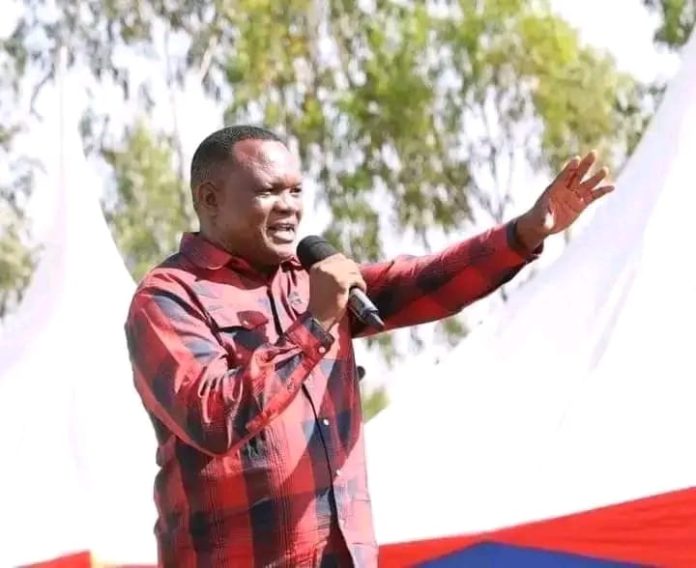
Rigathi Gachagua, the impeached former Deputy President, has embarked on a mission.

Ostensibly, it’s about “uniting the Mountain.”

He cloaks his pronouncements in the language of regional solidarity, positioning himself as the singular champion of Mt. Kenya’s interests.

But Kenyans must see this narrative for what it truly is: a calculated, self-serving strategy built on a foundation of false premises and dangerous exclusion. Kenya is bigger than Rigathi Gachagua, and far bigger than any single region.

The False Premise: “The Mountain” as a Monolith Under Siege

Gachagua’s entire edifice rests on the deliberate construction of a myth: that Mt. Kenya is a homogenous entity facing existential threats requiring his unique brand of “unifying” leadership. This narrative is fundamentally flawed.

Diversity Within: Mt. Kenya is not a monolith. It encompasses diverse communities, economic strata, political opinions, and aspirations. Gachagua presumes to speak for millions whose voices he has not genuinely sought, silencing internal dissent and complexity under the banner of imposed “unity.”

“Us vs. Them” Manufactured: His rhetoric implicitly, and often explicitly, pits “Mt. Kenya” against the rest of Kenya. He frames national discourse as a zero-sum game where the region’s gain comes at others’ expense, or vice versa. This is a toxic, outdated, and deliberately divisive tactic.

Exaggerated Siege Mentality: By constantly amplifying perceived slights or threats (real or imagined) to the region, Gachagua fosters an unhealthy siege mentality. This distracts from substantive issues and fuels unnecessary tension.

The Real Agenda: Personal Rehabilitation and Political Survival

The fervent cries for “unity” ring hollow when viewed through the lens of Gachagua’s own political trajectory:

The Shadow of Impeachment: Gachagua was impeached as Deputy President. This is not a minor footnote; it’s a significant mark questioning his fitness for high office and judgment. His current crusade is, first and foremost, an attempt at political rehabilitation, laundering his image by portraying himself as a regional savior.

Power Consolidation: By positioning himself as the indispensable voice of Mt. Kenya, he seeks to corner the region’s political influence. This is about controlling votes, resources, and wielding power, not fostering genuine regional development or national harmony.

2027 Calculations: His sudden, intense focus on “uniting the mountain” is nakedly transactional. It’s laying the groundwork for his perceived relevance and potential candidacy in the next election cycle, using the region as a steppingstone for personal ambition.

Kenya is More Than 50 million Reasons to Reject This Narrative

Gachagua’s narrative deliberately shrinks Kenya. He acts as if the concerns, needs, and futures of over 50 million Kenyans outside his chosen mountain are secondary, or worse, adversarial. This is not only arrogant but profoundly dangerous:

National Cohesion Undermined: True unity is built on recognizing our shared Kenyan identity, celebrating diversity, and seeking common ground. Gachagua’s brand of “unity” does the opposite – it deepens fissures and entrenches ethnic and regional fault lines for his gain.

Distraction from Real Issues: While Gachagua obsesses over “uniting the mountain,” Kenyans across all regions grapple with the crushing weight of the high cost of living, unemployment, corruption, inadequate healthcare, and climate change impacts. His narrative is a noisy diversion from the tangible struggles of ordinary citizens nationwide.

The Danger of Tribal Kingpins: Kenya’s history is scarred by the destructive politics of tribal kingpins who prioritized ethnic mobilization over national progress. Gachagua’s rhetoric is a regressive echo of this dark past, threatening to roll back decades of efforts towards a more cohesive nation.

The Path Forward: Rejecting Division, Embracing Kenya

The people of Mt. Kenya, like all Kenyans, deserve leaders who offer more than narrow, self-serving agendas disguised as unity. They deserve leaders who:

Focus on Tangible Development: Address economic hardships, create jobs, improve infrastructure, and deliver services within the region and nationally.

Build Bridges, Not Walls: Actively seek partnerships and collaboration with other regions for mutual benefit and national advancement.

Uphold National Values: Champion integrity, inclusivity, and the rule of law – values essential for all Kenyans.

Respect Kenyan Diversity: Recognize that Kenya’s strength lies in its rich tapestry of cultures and regions, non-superior, all essential.

Rigathi Gachagua’s “unity” campaign for Mt. Kenya is a Trojan horse.

Behind the facade of regional solidarity lies a project of personal rehabilitation, political ambition, and divisive ethnic mobilization.

It is a narrative that deliberately diminishes the importance of the other 50 million Kenyans and threatens the fragile fabric of national cohesion.

Kenyans, especially those within Mt. Kenya, must see through this charade.

True leadership serves the nation, not just a constituency weaponized for personal gain.

Kenya’s future depends on rejecting the politics of exclusion and embracing a vision where every citizen, from the coast to the lake, from the northern deserts to the slopes of Mt. Kenya, matters equally.

The mountain is part of Kenya’s majestic landscape, but Kenya is infinitely greater than any one mountain or the ambitions of one impeached politician. Let us focus on building that greater Kenya, together.

Police officers in compassion program to foster good relations with Kenyans.

0

By Correspondent

Police officers who are still actively working in Kenya and those who have retired in Kenya have come together under the International Police Association-Kenya to begin outreach programmes to express empathy and compassion with the less fortunate in the society.

The outreach programme that took the officers to Precious Kids Centre, Kitale to donate various items come in the wake of deteriorating relations between police and the public following claims of brutality meted on priorities in the anti-government demonstrations witnessed in the county recently.

The IPA Section Kenya, under the leadership of the Association ‘s President Jared Ojuok expressed joy that they were unable to offer assistance to the less fortunate in the society, urging all Kenyans to remember those who are not privileged amongst them.

“We are excited to be part of those who are showing compassion to the less fortunate.

We are doing this to show that everyone is capable of assisting another irrespective of their careers or positions in the society,” said Ojuok.

Located in Kitale, the Precious Kids Center (PCK) serves children 121 with various disabilities to provide the support they need to learn, grow, and reach their full potential.

Each child is cared for according to their individual needs.

The IPA team was received by the Center’s Founder and Director, Ms. Samantha Hammock and a host of other directors

Additionally, PKC works to equip parents and educate the community to be more accepting and supportive of children with disabilities.

The IPA team traveled from Nairobi and arrived at the home with goodies, including diapers, blankets, maize and wheat flour, beans, green grams, maize, rice, cooking oil, and cash donations.

The IPA Section runs a quarterly activity whereby members put together donations, both in cash and in kind to support the less fortunate members of the community.

The center’s management expressed deep appreciation to the Association’s leadership and the Patron, Inspector General of the National Police Service.

Also present were local police command representatives.

Last month, Interior Cabinet Secretary Kipchumba Murkomen warned Kenyans against disrespecting police officers while they are on duty.

He said that just as police conduct is held to account, Kenyans are also responsible for their actions towards police officers.

“As we relentlessly advocate for appropriate conduct by the police, there must be a reciprocal emphasis on the responsibility of citizens to show respect towards police officers as they discharge their lawful duties.

Just as police officers are held accountable and subjected to public scrutiny, citizens too must accept that their actions are not beyond reproach,” Murkomen said.

He said the challenges must not be ignored because they point to a broader need to foster mutual understanding, accountability and respect between police and Kenyans.

In a bid to work closely with the police, Murkomen, and the Inspector General of Police Douglas Kanja on 22 July 2025, presided over the launch of the revamped ‘Fichua kwa DCI’ call center at the DCI Headquarters, Nairobi.

Established with the support of the British High Commission and launched on 10th December 2020, the ‘Fichua kwa DCI’ call center facilitates anonymous criminal intelligence reports from both local and international sources.

The center enables the public to share real-time crime information confidentially and safely, leading to valuable intelligence that has resulted in recoveries, arrests, interceptions, and interventions.

End Chopper Rides and Fund Free Education

0

By Billy Mijungu

The time has come for Kenya to abandon the culture of luxury and embrace a disciplined, people-centered approach to public service.

We can no longer allow Cabinet Secretaries and Principal Secretaries to soar above us in privately hired helicopters at the expense of a struggling nation.

Unless it is the President on urgent national duty, no public officer should be travelling in helicopters funded by taxpayers.

Let us normalize flying commercial. Kenya Airways and other airlines are efficient and reliable, and they represent the very standard we must support.

The government should put in place standing travel agreements with national carriers, ensuring that Cabinet Secretaries and Principal Secretaries have seats reserved when needed.

This is a simple responsibility the Transport Ministry can coordinate with ease, saving the country billions annually.

Public service is not a luxury.

Meetings are planned well in advance.

Diaries are organized with precision.

There is no justification for last-minute helicopter charters disguised as urgent engagements.

These rides, often taken by people who would never afford them privately, are draining public resources that should be channeled toward national priorities.

It is a shame that at a time when Kenya is struggling to finance free basic education, we are watching public officials rise into the skies for routine duties.

This is a betrayal of our values, and a mockery of the struggles parents and learners face across the country.

Education remains one of the most effective tools against poverty, yet we are choosing opulence over opportunity.

We must demand a full and transparent audit of government helicopter travel. How much do these chopper rides cost the public each year.

How many classrooms could be built with that money.

How many teachers employed.

How many children supported through bursaries and school feeding programmes.

These are the hard questions that must be answered.

This obsession with helicopters has become a dangerous symbol of political ambition.

Many leaders today are driven by a desire to own flying machines rather than serve the people.

This fuels corruption.

It leads to inflated tenders, misappropriated funds and public money being siphoned off to fund private prestige.

The costs are high and the consequences far-reaching.

Kenya is in a debt crisis.

We are overtaxed.

We are stretched thin.

The youth are unemployed.

Small businesses are struggling.

What we need is a national culture of austerity.

We must cut unnecessary spending.

We must stop the greed that parades as leadership.

We must invest in the future by focusing on education, healthcare, jobs and national development.

The Treasury Cabinet Secretary must take immediate action.

Mobilize departments to reduce travel costs.

Ground the unnecessary flights.

Champion structured, efficient and affordable travel for all government officers.

Leadership is not about flying high while citizens suffer below.

It is about making choices that reflect compassion, responsibility and national interest.

The next election must be a referendum on waste.

It must be about leaders who understand the weight of public trust.

We must ask them to choose between chopper rides and classrooms, between luxury and learning.

Kenya has the potential to rise, but not on the back of helicopters.

It will rise when we lift its children through education.

A section of elders from Homa bay seek Owalo’s support to spur development

0

By Habil Onyango.

Elders from Kanyada in Homa Bay county under the Nyada Ralek umbrella are seeking support from Deputy Chief of Staff Mr. Eliud Owalo to spur development in Homa Bay Town Constituency.

The over 400 elders said they have already acquired a 5-acre land along Homa Bay-Rongo Road but still lack resources to develop it.

The group’s chairman, Mzee Arthur Opundo said the elders have requested for a meeting with the Deputy Chief of Staff in charge of delivery office of the President.

In a meeting which brought together the Associations Officials and representative from Eliud Owalo’s Foundation, Mr. Juma Owuor the elders want to be incorporated in the foundation activities just he has been doing in other regions across the County.

“We all know what Hon Owalo has been doing in many parts of the Country to support Youths, Women and even the elders to uplift their economic status,” he said.

“However we want to request him to incorporate us in his Foundation activities, we already have a 5-acre piece of land which remains undeveloped, and we want to collaborate with his Foundation to ensure that it does not remain unused, “he said.

The chairman said parcel of land can be used to construct rental houses and a social hall to empower them economically.

The request barely comes days after the Foundation initiated a program to empower Homa Bay County Women through a formation of SACCOs in each and every Sub County in Homa Bay.

Homa Bay women are set to benefit from a grant from Eliud Owalo’s Foundation, aimed at forming eight Savings and Credit Cooperative Organizations (SACCOs).

This follows a sensitization and capacity-building workshop held for 52 women group leaders from all 40 wards at a hotel in Homa Bay Town.

Awuor told the elders that he will present their request to the relevant office for consideration.

“I have engaged the elders and listened to their issues, I have seen the land which is located just next to the road and if well utilized can change the elders’ fortune.” he said.

PS Oluga names the Technical Transition Committee to oversee JOORRH as national parastatal 

0

By Hope Barbra

A technical transition committee has been appointed by the Ministry of Health to oversee the transition of Jaramogi Oginga Odinga Teaching and Referral Hospital (JOORRH) to a national parastatal following the recent gazettement.

A letter signed by Principal Secretary Dr. Ouma Oluga formally appointed Mr. James Ntabo to chair the committee. 

Other members committee include Dr. Richard Lesiyampe, who is the Chief Executive Officer (CEO)of JOOTRH, Dr. Rebecca Kiptui, Dr. Ruth Bosire, Mr. Stephen Macharia, Mr. Francis Muteti, Ms. Edith Torome.

Other are Dr. Joshua Ojwang Lusi, – Kisumu County’s Chief Officer of Health, Mr. Martin Opiyo. Kisumu County’s Chief Officer- Finance, Dr. Racheal Nyamwai,  Ms. Alice Machanga and Ms. Judy Chepkirui.

The committee’s mandate is broad, focusing on a seamless transition. 

Key areas of deliberation include Human Resources instruments, encompassing the transition of staff, salaries and grading, pension management, and the overall staff establishment.

Beyond human resources, the committee will also oversee the grading of the facility to ascertain its level as a national parastatal.

 A crucial aspect of their work will be managing the comprehensive handover of all assets and liabilities of JOOTRH, including its infrastructure and land, as well Victoria Hospital.

To facilitate this complex transition, the committee will collaborate closely with key national bodies: the Public Service Department (PSD), the State Corporations Advisory Council (SCAC), the Salaries and Remuneration Commission (SRC), and the Retirements Benefits Authority (RBA).

Defunding Basic Education Embodies Inequality

0

By Billy Mijungu

Today’s note is for my brother FCPA John Mbadi, Cabinet Secretary for the National Treasury.

One word: Defunding basic education is a path to poverty.

I am certain, as a seasoned financial expert, you would prefer to leave behind a legacy of growth, not stagnation or regression.

The ongoing debate about defunding education and the disturbing support it receives from some MPs, like Florence Jematiah, underscores how deeply we have misunderstood the role of education in nation building.

Her remarks suggesting that free education lowers standards and breeds irresponsibility among parents are not only unfortunate, they are ignorant and dangerous.

It is ironic that someone who benefits from public office can stand against the very foundation that builds future leadership.

If she had been truly empowered by quality education, she would know that free, accessible education is not a luxury, it is a constitutional promise and a developmental necessity.

Treasury must heed the wisdom of Horace Mann, who said, “Education is the great equalizer of the conditions of men.”

Mann championed public education as the tool through which societies bridge inequality and unlock individual and collective potential.

Kenya cannot afford to walk backwards.

We must invest more in free basic education, not less.

The money exists.

It is in the bloated budgets for empowerment workshops, endless helicopter rides, unchecked per diems, and inflated domestic subsistence allowances.

It is in efficient tax collection reforms.

It is in anti-corruption campaigns.

It is buried deep in the inefficiencies of our public systems, including overpriced contracts and questionable payouts in public health.

CS Mbadi, let us redirect these funds toward what matters: free education, universal healthcare, subsidized seeds and fertilizers, social housing, and affordable mobility for all.

A country that truly believes in dignity must prioritize education.

Because education must be free.

Murkomen announces creation of new administrative units in Nandi

0

By Remmy Butta

In a move aimed at enhancing service delivery and security, Interior Cabinet Secretary Kipchumba Murkomen today announced plans to establish additional administrative units within Nandi County.

Speaking at the “Jukwaa la Usalama” (Security Forum) meeting held in Kapsabet town, CS Murkomen emphasized the government’s commitment to decentralizing services and bringing them closer to the citizens.

“The government is committed to ensuring that services reach every Kenyan effectively,” Murkomen stated.

“To achieve this in Nandi County, we will be creating new administrative units.

This will bring chiefs, assistant chiefs, and other government services nearer to the people, improving accessibility and responsiveness.”

The CS framed the initiative as a direct response to the needs expressed by local communities.

The creation of new units typically involves deploying additional National Government Administrative Officers (NGAOs) to manage smaller, more focused jurisdictions.

Jukwaa la Usalama

The announcement came during the “Jukwaa la Usalama” meeting, a forum specifically designed to foster dialogue between security agencies, national government administrators, local leaders, and the community.

These forums aim to address local security concerns collaboratively and build trust.

Murkomen’s announcement served as a tangible government action point emerging from this dialogue, demonstrating responsiveness to local input.

The planned creation of new administrative units represents a significant administrative shift for Nandi County.

It signals the national government’s intention to invest in grassroots-level infrastructure to bolster both service delivery and security management.

The move was welcomed by residents who have faced challenges accessing distant government offices but will also necessitate careful planning regarding resources, staffing, and infrastructure for the new units.

Further details on the specific areas to benefit and the timeline for implementation are expected to be communicated by the Ministry of Interior in due course.

Why Kasipul by-election is a do or die for Wanga and Magwanga ahead of the 2027 elections

0

By Hope Barbra

The expected Kasipul parliamentary by-election is shaping up to be the battle ground for Homa bay governor Gladys Wanga and her deputy Joseph Oyugi Magwanga.

The by-election is so crucial and strategic for both Wanga and Magwanga ahead of the 2027 general elections where they may face each other at the ballot box for the county seat.

For Wanga, the demise of the area MP Charles Ongondo Were left a vacuum and avoid that she must fill with her preferred candidate, Boyd Were, the son of the deceased.

Ongondo was the checkmate to Magwanga and the two were bitter rivals and rarely shared a podium. Ongondo was used by Wanga to checkmate, tame her deputy and control his political influence in the constituency.

For Magwanga, he wants to have a say in the constituency that he once represented for two terms before he decided to have a stab at the gubernatorial seat in 2017 and 2022 elections.

Kasipul remains his fulcrum if he intends to pursue his ambition and wants a new MP allied to him to take over from Ongondo.

This explains the recent meeting of some aspirants from the area who converged in Nairobi to champion a united front in the party nominations.

In Kasipul two teams have emerged with Wanga leading the call for direct ticket to Boyd Were.

While the other team is led by Magwanga wants the party to conduct a free and fair nomination without having to force a candidate on the electorates.

Last week, a secret meeting by a section of the aspirants in Nairobi agreed that the aspirants will campaign but will rally behind one of them should be the party fail to conduct nomination.

In a statement signed by Rateng Kotiende, Philip Aroko, Kepha Ogada, Okindo Majiwa, Robert Ouko and Collins Okeyo they resolved to work together, engage in constructive dialogue and promote peaceful campaigns in the area.

Magwanga welcomed the meeting saying it was important for the aspirants to chat their own destiny without any interference from the outside.

“The meeting is in the public knowledge.

There is nothing wrong if the aspirants meet and chart their own political course.

I know all the aspirants and all we ask for is a free and fair nomination to allow democracy to mature in the party,” he said.

Orange Democratic Movement (ODM) is facing unprecedented moment in the coming by-election in Kasipul  constituency as the local and national leadership are sharply divided over nomination of the candidate to fly the party ticket.

Top ODM leadership fearing a fall out in the party and possibility of losing the seat should they opt to give direct nomination ticket, have resolved to conduct nomination.

The party secretary Edwin Sifuna, during a live TV interview with Citizen Tv revealed that the excitement over ODM ticket was waning and that aspirants were opting for other parties are part of the concern the party have to contend with.

The differing political stand between Wanga and Magwanga was observed after the former visited the latter at his home with a view to seek his support for Boyd Were.

Wanga and her team tried to prevail over Magwanga to support Ongondo’s son, Boyd Were, but the latter was reluctant and did not commit to the proposal.

On the table, sources told Western Insight, that Wanga asked Magwanga to support Boyd and in return she would support his candidature for Orange Democratic Movement (ODM) Homa Bay County chairman seat.

Magwanga confirmed the visit saying they discussed various issues and neither denied or confirmed whether he was approached to support the son of his political nemesis and would return get the county ODM chair seat.

“The Governor visited me last night and we discussed several issues. 

You are free to speculate whatever we discussed.

I have been having several visitors to my home and everyone is welcome,” he said.

Recently, Western Insight report that attempts by a section of MPs from Nyanza led by Wanga, who is ODM national Chairperson to have Boyd get direct nomination was hitting a snag and had split the party.

Wanga and the leaders recently presented Mr. Boyd Were at a local church and asked the residents to support his candidature to inherit his father’s seat.

Wanga, Homa Bay Town MP Opondo Kaluma, Senator Moses Kajwang, minority whip Millie Odhiambo and Roza Buyu (Kisumu West) said late Were’s son was the best suited family member to replace his father as Kasipul member of parliament.

The team promised to support Boyd who swore to stand strong with the people of Kasipul during his late father’s burial on his quest to become the next Constituency MP.

But the party top leadership hierarchy was uncomfortable with the move and want free and fair nomination conducted to avoid any fallout in the party.

“Kasipul constituency is volatile and that party is not ready to take any risk.

I do not see Were’s son getting endorsement from the party leadership.

ODM wants to contain any internal rebellion and that is why once election is called, they will prefer nomination to award of direct ticket,” said our sources.

According to the ODM brigade from Homa Bay and other parts of the County, Boyd was seen as the best person to inherit his late father’s seat

The seat has attracted Otiende, Boyd,  Aroko, Majiwa, Okeyo Ouko Robert Ajwang Mabior, Omondi Swaleh, George Otieno, Victor Mbaka and Ogada.

Kenya to further deepen relations with Egypt

0

By OPCS Press Service

Trade, investment and tourism new frontiers for future collaboration.

Kenya and Egypt are working to increase their trade and investment partnership, as evidenced by recent high-level discussions and agreements.

These efforts aim to strengthen bilateral relations, boost trade volumes, and foster economic growth in both nations, Prime Cabinet Secretary Musalia Mudavadi has said.

“Trade between Kenya and Egypt has been on an upward trajectory, with the total trade volume estimated at between 600 million and 700 million US Dollars in 2025.

Notably, Egypt is Kenya’s second largest tea market in the world.” he added.

Mudavadi said the signing of a joint declaration for a strategic and comprehensive partnership between Presidents William Ruto and Abdel Fattah El-Sisi early this year was a major milestone in further deepening the collaboration between the two nations.

“The State Visit by President Ruto to Egypt in January 2025 was historic, marking the first State Visit by a Kenyan President to Egypt.

Our two Heads of State made a commitment when they jointly witnessed the signing of 12 Memoranda of Understanding in various fields.” noted the Prime CS.

Mudavadi was speaking when he graced the national day celebrations of the Arab Republic of Egypt at the residence of the Egyptian Ambassador to Kenya in Nairobi, a celebration that marked the 105th anniversary of Egypt’s independence.

While congratulating President Abdel Fattah el-Sisi and the People of the Arab Republic of Egypt on behalf of President William Ruto, Mudavadi said Egypt’s triumph over colonialism serves as a powerful reminder that the struggle for freedom, though difficult, is necessary and achievable.

He noted that the 62 years of flourishing diplomatic relations between Kenya and Egypt have continuously enriched the citizen-to-citizen relations while cementing the cordial and longstanding partnerships between the two nations.

“Our mission in Cairo is Kenya’s second diplomatic post to be established abroad.

This milestone reflects the depth of our historical, cultural, and economic bonds, as well as our shared commitment to cooperation and mutual prosperity.” he said.

“Kenya is home to several Egyptian businesses, while Egypt hosts a vibrant Kenyan diaspora community, comprising professionals, students, businesspeople and skilled workers” added Mudavadi.

“Our import from Kenya amounts to almost 14% of the total exports of Kenyan tea. On the Investment side a number of new Egyptian investments are flocking Kenya.

With 76 Egyptian companies now registered with Kenya Invest.” said Attiya, the Egyptian Ambassador toe Kenya.

Mudavadi also the Foreign and Diaspora Affairs Cabinet Secretary, pointed out Egypt as Kenya’s strategic partner in the region notably in the cooperation within the fields of Education, research & Technical Training, Health, Agriculture & Food Security, Tourism & Culture, and people-to-people exchanges among others.

According to the Prime CS, Kenya is working towards actualizing the 12 memoranda signed in January 2025 which span across political consultations, Diplomatic Training & Capacity Building in Foreign Service and Investment Cooperation.

Other memoranda are Gender Equality, Maritime Partnerships between the Lamu Port Authority and the Alexandria Port Authority, Red Sea Port Authority and Kenya Ports Authority.

Youth Empowerment, Higher Education and Scientific Research, Telecommunication and IT, Space Cooperation, Governance and Sustainable Development, and Housing, Construction and Urban Development are the other agreements aimed at unlocking immense opportunities for the two nations and their citizens.

“Kenya and Egypt’s active participation in regional frameworks such as Common Market for Eastern and Southern Africa (COMESA) and the African Continental Free Trade Area (AfCFTA) reflect our commitment to advancing economic integration and boosting intra-African trade in alignment with the African Union’s Agenda 2063.” said Mudavadi.

“The Commercial International Bank, CIB is Egypt’s largest private bank, and it now operates seven branches in Kenya under its own branch name CIB-Kenya, reflecting the political will to intensify and further deepen economic and commercial ties with Kenya and the commitment to support Kenya’s development plans.” noted Attiya.

In his remarks, Mudavadi also acknowledged that Kenya and Egypt remain steadfast in supporting multilateral efforts to promote peace and stability in conflict-affected regions such as Sudan, South Sudan, Somalia, Libya, and the Sahel.

He said this is achievable through active participation in the African Union led missions, and in close collaboration with the United Nations in championing for African-led solutions to African challenges.

The celebrations were also used to bid farewell to Amb. Wael Nasreldin Attiya, the outgoing Egyptian Ambassador to Kenya who is concluding his tour of duty.

Mudavadi conveyed his sincere appreciation to the outgoing Ambassador lauding him as a friend to Kenya whom during his tenure he played a pivotal role in deepening the bonds of friendship and cooperation between Kenya and Egypt.

“Under Ambassador Attiya’s stewardship, we witnessed the successful State Visit of His Excellency President William Ruto to Egypt in January 2025.

He also oversaw the convening of the 7th Session of the Joint Commission for Cooperation (JCC) in Nairobi in March 2024.” Mudavadi remarked.

Mudavadi said Amb. Attiya distinguished himself as a dedicated champion of economic diplomacy and further under his leadership, business engagements between Kenya and Egypt grew significantly, as exemplified by the successful Kenya–Egypt Business Forum held alongside the Joint Commission for Cooperation in March 2024.

Why I think Mbadi is doing a good job at the Treasury

0

By Kiboga Warandah

I have always believed that the appointment of John Mbadi as the cabinet secretary that came at a time when Kenya’s economic ship was sailing through turbulent waters was a good decision by the president considering how he has performed so far.

We have been experiencing rising debt, inflationary pressures, public discontent over opaque fiscal policies and a widening gap between policy and people the appointment of John Mbadi as Cabinet Secretary for the National Treasury was not just a political decision; it was a national imperative.

A seasoned politician with a deep understanding of finance, accounting, economics and governance, Mbadi arrived at the Treasury not as a bureaucrat removed from the people, but as a leader forged in the furnace of public service.

His ability to balance the delicate line between politics and administration has been nothing short of transformative.

While most technocrats are often swallowed by the complexity of economic planning or paralyzed by the rigidity of political interests, Mbadi has skillfully navigated both realms; bringing policy to the people, and people into policy.

Perhaps one of Mbadi’s most incredible feats is his oversimplification of financial and economic gobbledygook.

For decades, fiscal policy was viewed by the average Kenyan as the domain of elites — spoken in acronyms, models, and concepts that excluded the majority.

Mbadi changed that.

He introduced “People’s Budget,” summaries of the national budget communicated into Kiswahili for the locals complete with relatable analogies, and town-hall explainer sessions.

He launched a Treasury communication unit specifically tasked with converting economic data into digestible content for radio, social media, and rural forums.

Now, Kenyans no longer wait for commentators to explain the budget to them; they hear it from the Treasury itself, clearly and directly.

In doing so, he restored the link between public finances and public participation.

When he took office, inflation was threatening household stability.

Prices of basic commodities had risen beyond the reach of many.

Mbadi initiated bold, well targeted interventions: subsidies were redirected to production rather than consumption; strategic reserves were managed transparently; and import-export policies were recalibrated to favor local markets.

Today, inflation is within manageable bands.

The cost of living is more predictable, and confidence in the government’s ability to manage economic shocks has returned.

Even more significantly, taxation long viewed as punitive and arbitrary is now better understood and gradually being accepted.

Mbadi’s overhaul of the tax code wasn’t just administrative; it was psychological.

He pushed for civic tax education in Bunge la wananchi who to him are wenye nchi, social and mainstream media, and expanded digital platforms for easier filing and payment, and held national tax dialogue forums.

Through this, Kenyans have begun to see taxes not as a burden, but as a collective contribution to national development.

Transparency has always been a buzzword, but under Mbadi, it became policy.

He opened the Treasury to public scrutiny, setting up online and physical interactive avenues where citizens can track expenditure in real time, from major infrastructure projects, national government outlay, down to county-level disbursements.

For the first time, the Annual Financial Statements are no longer hidden in 500-page PDF documents, but are accessible, summarized, and interpreted for the average citizen.

Budget-making is no longer an exclusive affair in Nairobi.

Mbadi institutionalized public hearings of what would be styled “treasury mashinani” ensuring that resource allocation reflects the ambitions and aspirations of the people.

Civil society and media are now partners in economic oversight a radical departure from previous cultures of secrecy.

Mbadi’s vision for Kenya isn’t short-term; it’s strategic and generational.

He understands that moving Kenya to a middle-income economy is not a miracle but a process — one that requires consistency in leadership, clarity in communication, and courage in execution.

As he marks a year in this coveted office, he has laid the foundation: stabilizing the macroeconomic environment, restoring fiscal discipline, bridging the gap between government and citizens, and making economic literacy a national agenda.

But transformation takes time. Kenya now needs more years of Mbadi to deepen these reforms, embed them into institutional culture, and ensure that we do not slip back into the opaque, top-down, inefficient systems of the past.

Under his stewardship, the Treasury is no longer a fortress it is a forum.

The economy is no longer an abstract idea it is a lived experience.

And public finance is no longer a mystery it is a shared responsibility.

John Mbadi is not just a Cabinet Secretary.

He is the economic bridge between Kenya’s potential and its prosperity.

And we must walk that bridge with him into a future where every Kenyan is part of the economy, not just a spectator.

The writer is a public policy analyst and commentator on economic issues.